

We aren't afraid of the weeds. The people living in rural America deserve a serious and in-depth look at the issues and forces impacting their communities.
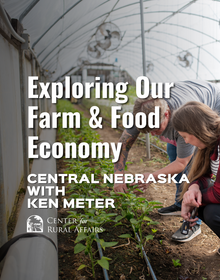
Central Nebraska’s farm economy is robust, with more than 8,600 farms producing $7.6 billion in crops and livestock in 2022. Despite producing more than a quarter of Nebraska’s crops and livestock in 2022, food insecurity remains a key concern in the region. One in four residents lives near or below...
- Farm and Food
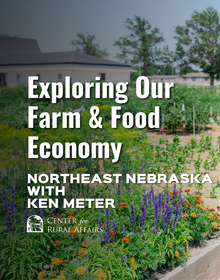
Despite being a top agricultural producer, most of the food consumed in Northeast Nebraska is imported. In fact, consumers spend more than $800 million per year on food sourced outside of the region. 1.8% of Northeast Nebraska farms sold $2.6 million of farm products directly to household consumers...
- Farm and Food
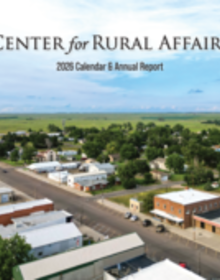
This calendar illustrates the impact you helped achieve during the past year. We appreciate your commitment to creating vibrant family farms and ranches, small businesses, and communities. Thank you from the staff and board of the Center for Rural Affairs. A note from our executive director... Dear...
- Lending
- Small Towns
- Farm and Food
- Policy

Noticias sobre Pequeñas Empresas del Center for Rural Affairs, incluyen historias seleccionadas de éxito de empresarios de Nebraska asistidos por nuestros programas e información que puede necesitar para iniciar o expandir su negocio.
- Lending

Check out the latest edition of our Small Business News packed full of resources for entrepreneurs, those looking to own their own business, and small business managers.
- Lending
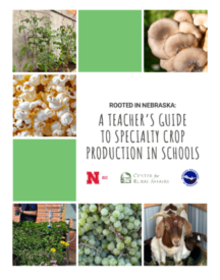
“Rooted In Nebraska: A Teacher’s Guide To Specialty Crop Production In Schools” is a resource created to highlight the power of farm to school education across Nebraska.
- Farm and Food
Editor's note: This summer, I told quite a few people in my network that I was on a literal “field trip” to southwestern Nebraska. It was exciting. Andrew Tonnies and Kalee Olson, Center staff who work on agriculture policy, invited me to join them for a conservation field day featuring Vance McCoy...
- Lending
- Small Towns
- Farm and Food
- Policy
Lincoln, the capital city of the major farming state, Nebraska, spends $1.1 billion each year on food sourced from outside its region. According to the "Lincoln Metro, Nebraska Local Farm and Food Economy" report, compiled by author and food food systems expert Ken Meter, the Lincoln Metro area has...
- Farm and Food
Iowa has been a national leader in wind energy, and each installment has brought numerous economic benefits to the communities where projects are located. These benefits include direct payments to landowners who host turbines, employment opportunities during the construction and operation of a...
- Policy
As the demand for clean, renewable energy grows, so does the opportunity to explore how to best manage the land used to host these projects. Solar energy development, often seen as a trade-off with agriculture or natural ecosystems, can be a powerful tool for conservation and good land stewardship.
- Farm and Food
- Policy
A medida que crece la demanda de energía limpia y renovable, crece también la oportunidad de explorar cómo manejar mejor la tierra utilizada para albergar estos proyectos. El desarrollo de la energía solar, que a menudo se percibe como un intercambio con la agricultura o los ecosistemas naturales, puede ser una poderosa herramienta para la conservación y el buen manejo de la tierra.
- Farm and Food
- Policy
If each consumer in the Omaha Metro Area purchased (or had purchased for them) $5 of food directly from a farm in the region each week, $211 million of new farm income would be generated for Omaha Metro farmers. This would provide vital economic support for agriculture and increase access to fresh...
- Farm and Food
This case study series showcases rural grocery stores across Iowa, highlighting four small-town groceries, their histories, and what it takes to run a small grocery store in rural America. The Center for Rural Affairs provides one-on-one counseling to store owners in southwest Iowa and advocates for...
- Small Towns
- Farm and Food
- Policy
A guide for farmers and producers with an emphasis on selling within Native communities.
- Small Towns
- Farm and Food
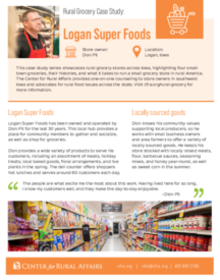
This case study showcases a rural grocery store in Iowa, highlighting what it takes to run a small grocery store in rural America. The Center for Rural Affairs provides one-on-one counseling to store owners in southwest Iowa and advocates for rural food issues across the state.
- Small Towns
- Farm and Food
- Policy

As renewable energy development expands across agricultural landscapes, solar projects present a unique opportunity to promote soil health and long-term land productivity. With energy developers’ and farmers’ increased interest and investment in solar projects, concerns have emerged about potential...
- Farm and Food
- Policy
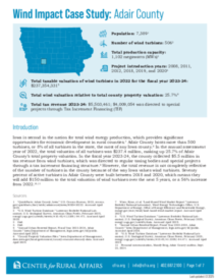
Iowa is second in the nation for total wind energy production, which provides significant opportunities for economic development in rural counties. Adair County hosts more than 500 turbines, or 8% of all turbines in the state, the most of any Iowa county. In the annual assessment year of 2022, the...
- Policy
The U.S. Department of Agriculture (USDA) offers financial and technical assistance to producers who wish to implement conservation practices on their land while maintaining agricultural production. The Conservation Stewardship Program (CSP) and the Environmental Quality Incentives Program (EQIP)...
- Farm and Food
- Policy
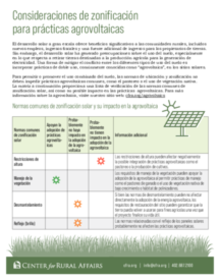
El desarrollo solar a gran escala ofrece beneficios significativos a las comunidades rurales, incluidos nuevos empleos, ingresos fiscales y una fuente adicional de ingresos para los propietarios de tierras. Sin embargo, el desarrollo solar ha generado preocupaciones sobre el uso del suelo, especialmente en lo que respecta a retirar tierras destinadas a la producción agrícola para la generación de electricidad. Una forma de mitigar el conflicto entre los diferentes tipos de uso del suelo es incorporar prácticas de doble uso, comúnmente conocidas como “agrovoltaica”, en los sitios solares.
- Farm and Food
- Policy
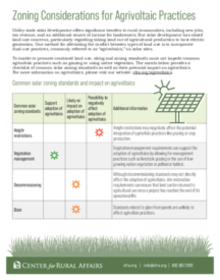
Utility-scale solar development offers significant benefits to rural communities, including new jobs, tax revenue, and an additional source of income for landowners. But solar development has raised land-use concerns, particularly regarding taking land out of agricultural production to host electric generation. One method for alleviating the conflict between types of land use is to incorporate dual-use practices, commonly referred to as “agrivoltaics,” on solar sites.
- Farm and Food
- Policy