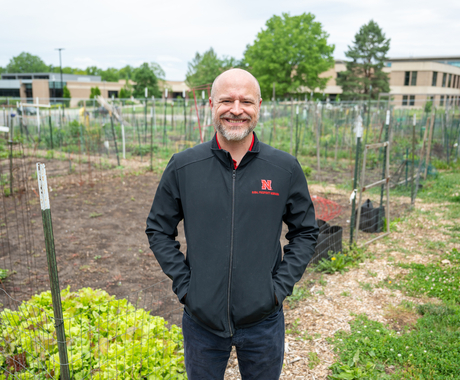

Madeline Faber, former staff member, contributed to this blog.
Recent actions taken by the federal administration have left many individuals wondering about the status of a small-town staple—the U.S. Department of Agriculture (USDA) county office. Staff terminations and funding uncertainty for important USDA programs have major implications for the rural communities these county offices serve.
The recent federal funding freeze has created significant questions for USDA programs and staff across the country. The freeze, coupled with unexpected staff terminations, has disrupted vital services that support rural communities, agricultural producers, and small businesses. With funding for essential programs in limbo, many individuals and families who rely on USDA assistance now face delays, reduced access to resources, or complete service shutdowns, raising concerns about the long-term sustainability of federal agricultural support and the economic well-being of rural areas.
In February, the administration laid off USDA staff across the nation by sending unexpected termination notices to probationary employees. The mass layoffs resulted in the loss of thousands of staff that directly serve farmers, ranchers, small business owners, and rural community members. On March 11, after a ruling by the Merit Systems Protection Board, USDA issued a 45-day stay on terminated employees, returning them to paid status. However, questions remain about what the future holds beyond the 45-day mark.
Funding uncertainties for important programs
The federal funding freeze has left many programs that rural communities rely on in a state of limbo, including those administered by Rural Development and the Natural Resources Conservation Service (NRCS).
Rural Development
At Rural Development, funding cuts have significantly impacted rural housing programs, particularly the 502 and 504 programs.
The Section 502 Direct Loan Program provides low-interest loans with flexible credit requirements to help low to moderate income families buy homes in rural areas. The loans can be used to buy, build, rehabilitate, or even relocate homes and often require no down payment, making homeownership more accessible to families who might not qualify for conventional loans. The program includes direct loans, which are subsidized based on income levels, and guaranteed loans, which are provided by private lenders but backed by the USDA to reduce risk.
The Section 504 Home Repair Program offers loans and grants to low-income homeowners, particularly elderly residents. Grants of up to $10,000 help seniors address urgent safety issues such as roofing repairs, well replacements, and accessibility improvements. However, the program often runs out of funding before the year ends, delaying critical home repairs.
With fewer resources available, many rural families are left without safe, livable housing. Some may be forced to leave their homes if they cannot afford necessary repairs. The reduced funding also leads to longer wait times for assistance, as staff shortages slow down the processing of grant and loan applications. Those facing urgent safety hazards, such as leaking roofs or lack of running water, may not receive help for months.
Beyond housing, Rural Development programs such as the Rural Energy for America Program (REAP) have also been impacted. Historic and much-needed funding added to the program through the Inflation Reduction Act (IRA) is currently unavailable, and the future of the additional funding remains uncertain.
REAP provides critical assistance to farmers, ranchers, and small businesses in rural areas by funding renewable energy and energy efficiency improvements. The lack of IRA funding limits opportunities for rural businesses to invest in cost-saving and sustainable energy solutions, potentially stalling economic growth in their communities. In Iowa, for example, farmers who installed solar panels through the program have not received expected payments, leaving them in financial limbo.
NRCS
Similar to REAP, NRCS working lands conservation program contracts funded by the IRA were in question. Payments owed to producers through the Environmental Quality Incentives Program (EQIP) and Conservation Stewardship Program (CSP) contracts were on hold due to the federal administration’s review of projects tied to climate change mitigation, regardless of their benefits to soil health, farm and ranch sustainability, and producers’ bottom lines. In March, these payments were fortunately released to producers. Both EQIP and CSP provide farmers and ranchers with financial and technical assistance to implement conservation practices on their operations while maintaining production.
Similarly, pending Regional Conservation Partnership Program projects funded by or proposed through the IRA money are now under review, including one in northeast Iowa that will reduce field sediment and nutrient loss by restoring wetlands on marginal lands in the Driftless Floodplain.
Staff terminations effect on individuals, rural communities
USDA staff at the local level provide valuable services to their communities. NRCS staff help producers implement farming and ranching practices that build soil health and protect water quality. FSA staff process farm loans and disaster assistance. Rural Development staff assist with rural housing and energy projects.
Cuts to these staff mean that many producers and rural community members will face delays in accessing important services or not receive essential services at all. In addition, layoffs mean that remaining employees are left with more work, culminating in the slower processing of grant applications and loans. Offices that previously provided face-to-face support are now understaffed or closed, forcing farmers to navigate complex processes alone.
The sudden layoffs have also exacerbated job and staffing issues. For example, 12 Rural Development employees in Nebraska were let go with just a one-day notice, under the official explanation of "poor performance," despite positive job reviews. Such layoffs further strain the agency’s ability to support rural housing and energy projects. The layoffs did not follow the usual "reduction in force" process. Before the layoffs, teams had finally reached an adequate staffing level after struggling with a backlog. Additional employees had been hired to handle an increasing workload, but with those employees now gone, remaining staff are doing the work once allocated among multiple people. Similar layoffs happened across NRCS.
Unwarranted layoffs affect not only workers but also local economies. Laid-off employees have less money to spend, which negatively impacts local businesses. Many will apply for unemployment and pursue private-sector jobs, possibly leaving public service permanently. The loss of government jobs that can be staffed locally further reduces overall economic activity in rural areas.
In the long term, unjustified workforce reductions make it difficult to attract and retain public service employees. Government jobs have traditionally been seen as stable, but sudden layoffs are likely to discourage potential applicants. If staff shortages persist, rural communities will continue to suffer due to a lack of funding and assistance for projects. Additionally, legal challenges surround the recent layoffs. Discussions have emerged about reinstating probationary employees through legal rulings, as a more structured reduction in force process could have been used instead of abrupt terminations.
The Merit Systems Protection Board’s temporary order on March 11 reinstated USDA employees who were recently fired. The 45-day stay affects nearly 6,000 probationary workers who were removed on or after Feb. 13, allowing them to return to work while the Office of Special Counsel investigates potential violations of federal personnel practices.
The Office of Special Counsel argued that USDA did not follow proper procedures for conducting a reduction in force and that the terminations were improperly justified as performance-based without evidence. Any reinstatements are not final at this point, but the decision highlights broader concerns about mass firings across federal agencies. The legal entanglement adds to the emotional whiplash and overall uncertainty individuals are facing.
The implications of these layoffs extend beyond individual job losses. Funding cuts and staffing reductions are directly impacting rural families, agricultural producers, elderly homeowners, and government workers. The loss of USDA staff will make it significantly harder to provide important rural services.
Protecting programs, jobs, and rural communities
The Center for Rural Affairs aims to highlight the real-life consequences of recent federal actions to advocate for continued funding and a more responsible approach to workforce reductions. Congress must act to protect programs and jobs that serve and employ rural people. While USDA positions may be expendable in the eyes of the administration, the services they provide are invaluable to the communities they serve.
If you would like to reach out to your elected officials to demonstrate your support for local USDA services and staff, visit congress.gov/members/find-your-member.