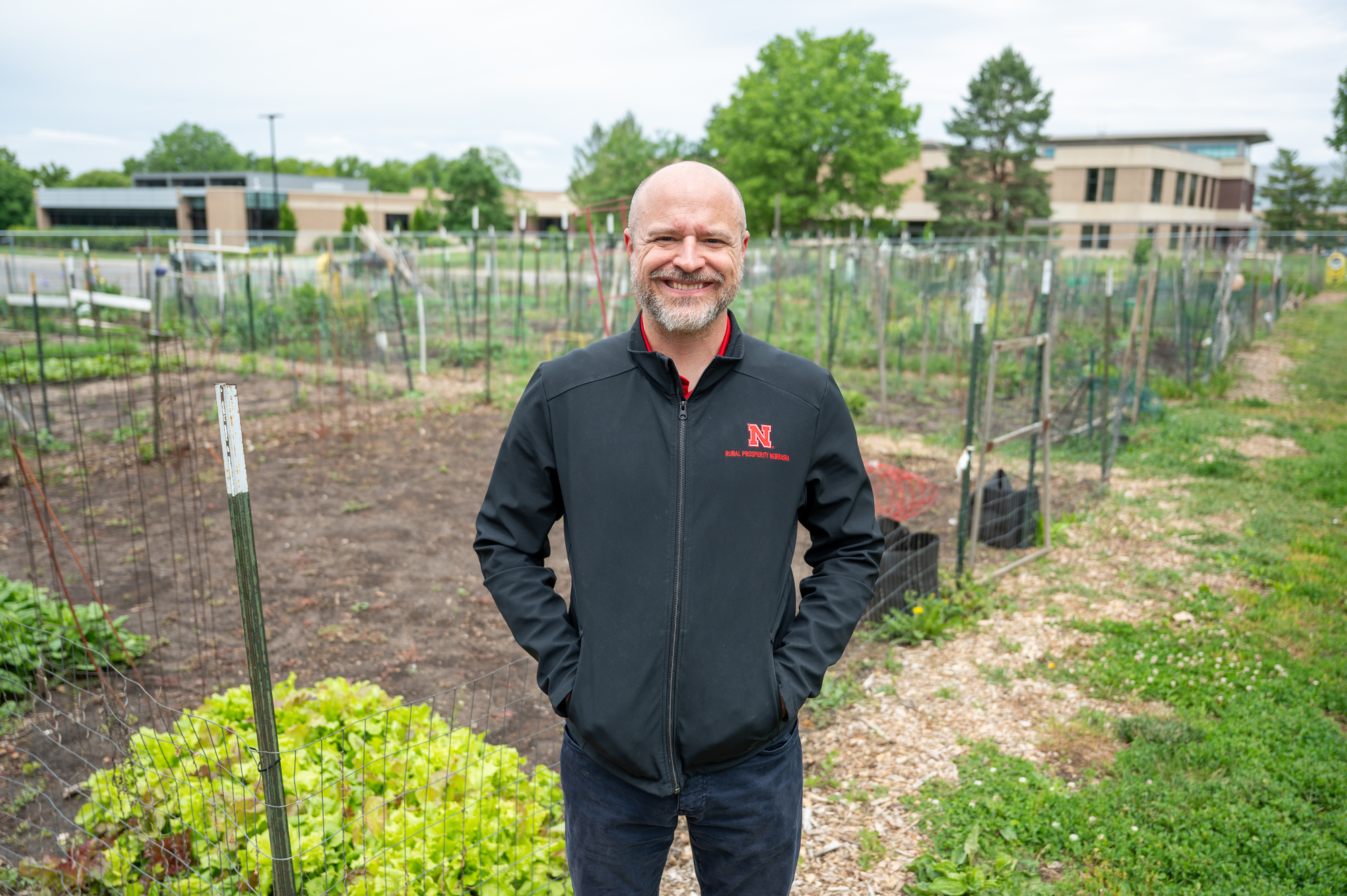
A Nebraska native, Ben Jewell has a vision for his home state: He wants to help revitalize rural communities through local food.
Ben has dedicated more than a decade to strengthening local and regional food systems in Nebraska. With a background in anthropology, he has a unique perspective that helps him understand how culture, race, gender, and class affect food access.
He first got interested in food access issues in college, and his growing interest evolved into educational endeavors resulting in multiple degrees. Today, it is the focal point in his career. As an associate extension educator with Rural Prosperity Nebraska at the University of Nebraska-Lincoln, Ben has made significant contributions to Nebraska's food security and agricultural communities.
“Food is a central part of our lives, and it has huge impacts on who we are, how we behave, and our overall well-being,” Ben said. “As an anthropologist, that’s where my interest is, and food is a great tool/medium to look at that.”
Because of his commitment to these issues, Ben has been chosen to receive the Center for Rural Affairs 2025 Partner Award. This award is presented to an individual or organization that has demonstrated outstanding support to the Center and exceptional dedication to either community or economic development.
“Receiving this award is a big deal for me,” Ben said. “I have been an admirer of the Center for a long time, and I have a lot of respect for what the Center does. To be considered one of their partners is really meaningful and I appreciate the recognition.”
As a key member of the Nebraska Regional Food Systems Initiative, Ben helped secure the largest-ever U.S. Department of Agriculture farm-to-school grant for Nebraska. He has worked to build bridges between local farmers and schools, organize summits, and create networks that provide ongoing support and resources to help schools source food locally.
“I spend a lot of time on understanding the needs of both sides of the equation,” he said. “Schools and farmers are both very busy and have a lot going on. They often don’t have time for some of the slower, relationship-building type of work, so that’s the role I try to play. I help facilitate those connections and help them understand where each side is coming from and help communicate back and forth and build those relationships.”
Ben also brought together food partners from across the state, including the Center, to create the Nebraska Rural Farmers Market Handbook. Based on interviews with 50 Nebraska market managers, the handbook is designed to help markets operate more consistently, to make it easier for farmers to sell at multiple locations, and to expand access to Supplemental Nutrition Assistance Program (SNAP)/Electronic Benefits Transfer (EBT) at local markets.
“These benefits are a great tool to increase accessibility and ensure it's affordable for all folks in our community,” Ben said. “We all benefit when we all have access to fresh, local produce and local foods.”
His commitment to supporting farmers and producers can be seen throughout his work with the Heartland Regional Food Business Center, where he helped organize educational webinars developed from interviews with more than 100 buyers from restaurants, grocery stores, and wholesale markets. These programs addressed practical challenges like insurance gaps and risk management small farmers face when trying to expand beyond farmers markets.
Additionally, Ben organizes farm and food business workshops, bringing together partners including the Nebraska Department of Agriculture and the Center to help food entrepreneurs with everything from marketing to distribution strategies.
“His approach is always collaborative and practical, focused on creating systems and resources that will continue benefiting Nebraska's farmers and communities long into the future,” said Jenna Sutterfield, project associate with the Center. “Through his dedication to connecting farmers with markets, building educational resources, and fostering partnerships, Ben has become an essential advocate for Nebraska's local food systems and the farmers who sustain them.”
Ben envisions a future where Nebraska schools and institutions could source 50% or more of their food locally, keeping millions of dollars in the state economy while providing fresher, healthier food to students and communities.
“I think we can build on the momentum of the interest and funding that's coming to the state through different ways right now to build up the food system that, honestly, not that long ago was a regular part of a rural community,” Ben said.
He said both processing and cold storage facilities have vanished from rural communities.
“We’re now knocking at the door of opportunity to bring some of that back, and I’d love to see what that could do for our state,” he said.