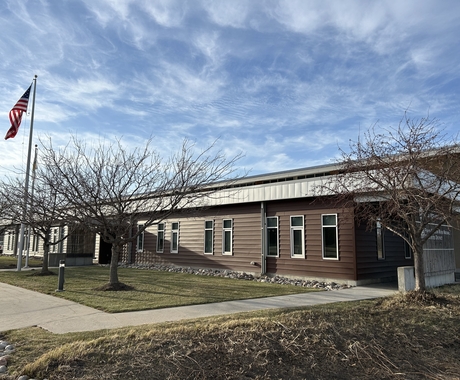

More than 60 passionate local elected officials, agency staff, and stakeholders convened to uplift the work facilitated by Watershed Management Authorities (WMAs) in Iowa on Nov. 12, 2025. Hosted at the Indian Creek Nature Center near Cedar Rapids, staff at the Center for Rural Affairs coordinated the reinstated meeting of Iowa WMAs for the second year.
WMAs are led by local leaders and emphasize a watershed approach to advance goals related to flood resiliency and water quality.
Since 2010, 29 WMAs have officially organized through intergovernmental agreements with the Iowa Secretary of State. Seventeen of the 29 were represented at the gathering, 20 more attendees than last year.
The event was organized to encourage collaboration and networking amongst attendees, and featured an agenda shaped by a committee of WMA coordinators and watershed leaders.
“I have been involved in the WMA world for a while now,” said Mary Beth Stevenson, watersheds and source water program manager with the city of Cedar Rapids, and planning committee member. “I really appreciated the wide variety of topics we were able to get on the agenda.”
Participants heard from experts on topics like communicating water monitoring results to the public, ecosystem services, and the recently released water quality report for the Des Moines and Raccoon River Watersheds.
“I especially enjoyed learning how different groups are communicating water monitoring results to the public and what resources are available to us at the watershed-scale,” said Mary Beth. “This is something I think we can all do a better job at, so it was a perfect opportunity to gather ideas to take back to our Middle Cedar WMA.”
Group breakouts encouraged interactive discussion and networking, offering participants an opportunity to have robust conversations about relevant topics. Attendees brainstormed ways to bolster engagement with local elected officials, such as offering invitations to field days, sharing success stories, and scheduling one-on-one meetings to build rapport.
Additionally, each of the WMAs shared how they were connecting to communities, such as tapping into farmers and producers, with the goal of encouraging adoption of conservation practices, and monitoring conservation practice implementation to prove their value.
“I’m so glad we allowed time for discussion,” said Cynthia Farmer, state policy manager for the Center. “As I bounced around from table to table, I witnessed brainstorming beyond what I imagined and felt grateful to hear the impact that would be taken beyond the room that day.”
Breakout notes were compiled following the event and shared with all attendees.
As attendees departed for the day, Center staff heard numerous positive comments about the value that participants found in attending.
“In the follow-up survey, all participants responded that they would attend again,” said Cynthia.
One anonymous survey reflection summed up the entire day well: “Great space; great food; great people and conversation.”
Center staff look forward to organizing the gathering again next year to strengthen collaboration through education and networking opportunities.