For one Iowa farmer, a federal energy program helped turn a long-held interest in solar energy into a practical, money-saving investment.
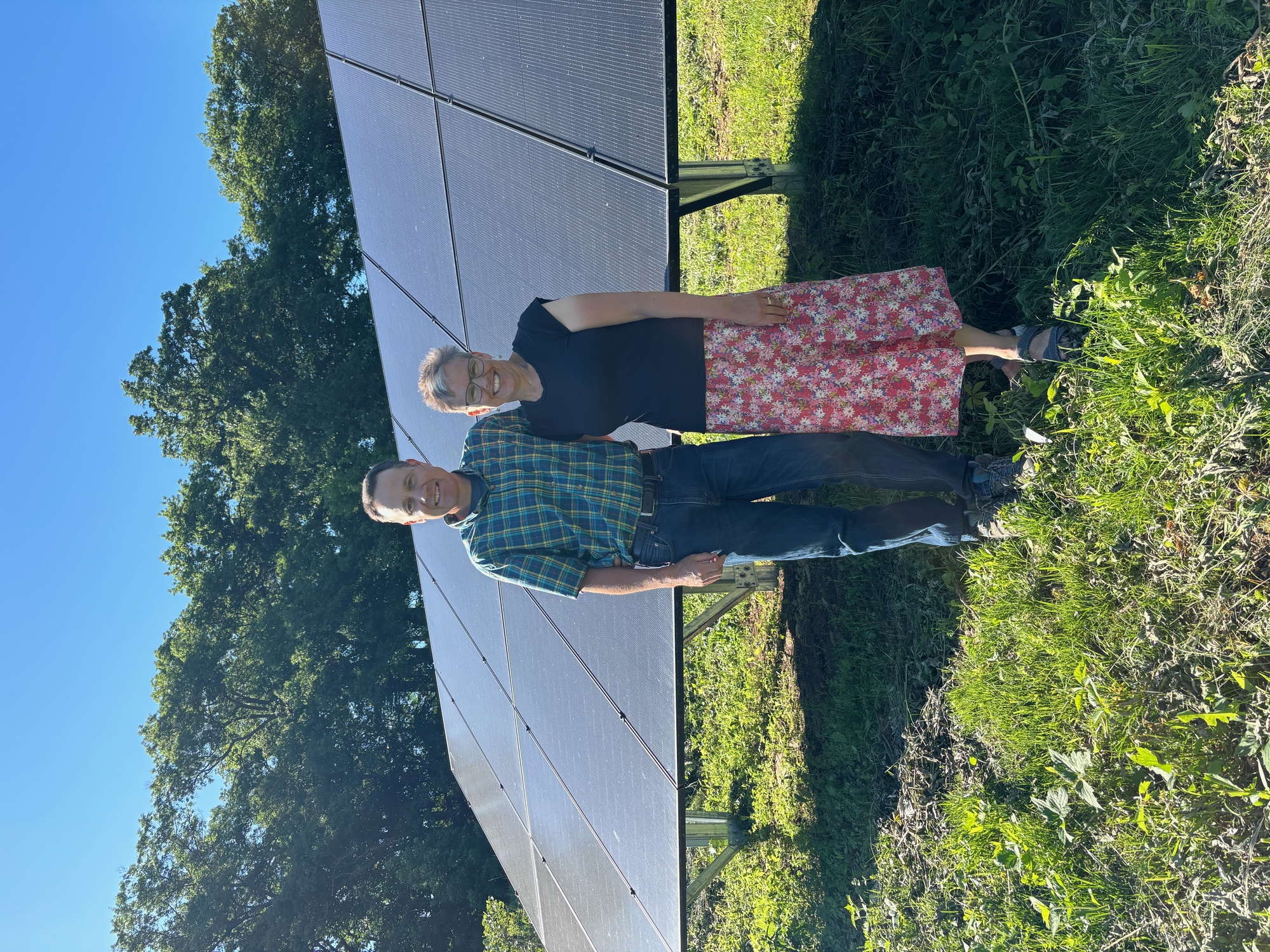
Erik Sessions, owner of Decorah-based Patchwork Green, used the Rural Energy for America Program (REAP) to install a ground-mounted solar array designed to offset the energy needs of his vegetable business. REAP, a U.S. Department of Agriculture program helps agricultural producers and rural small businesses invest in renewable energy systems and energy efficiency improvements.
On his 40 acre farm, where about 5 acres are used for vegetable production, Erik and his family have spent the past 26 years slowly building the infrastructure needed to support a local food business. What began as an old farmstead has grown to include a packing shed, walk-in cooler, root cellar, lights for starting plants, irrigation, and other systems that help move vegetables from field to customer.
Patchwork Green operates partially as a CSA (Community Supported Agriculture), where customers order a share of the farm’s harvest and receive regular deliveries of fresh, seasonal produce over the course of the growing season. In addition, the farm also works with a local food hub and restaurants, sells products through an online store, and makes deliveries. Erik hires seasonal part-time employees to keep vegetables moving during the growing season.
As the business grew, so did its energy needs.
“We work the well pretty hard pushing water up the hill to water crops,” Erik said. “Energy use is fairly steady, but higher than it used to be because of the infrastructure we have added.”
Years ago, Erik had solar panels installed on the garage. The array reflected his values and interest in renewable energy, but the orientation of the panels was not ideal, and the system did not produce as much as he hoped.
Still, the experience stayed with him. As energy costs rose and incentives became available through programs like REAP, Erik began considering a larger solar investment that could better meet the needs of the farm business.
“It is something we believe in,” he said. “I think it is a good thing to use the sun’s power to grow the vegetables, but also to keep them cool in the cooler.”
Through the Winneshiek Energy District in Iowa, Erik stayed informed about federal programs, state tax incentives, and opportunities to support on-farm energy projects, and in early 2025, he decided to move forward with REAP.
To apply, Erik had to demonstrate that the project would serve the farm business rather than personal use. Because the home and farm are tied together on the same property, Erik needed to separate household from business energy use. He worked with a consultant to complete an energy assessment of the entire property. The final report showed that more than half of the energy was tied to the farm business.
“That was the first hurdle, to get this figured out and get this assessment done,” Erik said. “Once we had this report, we could move forward.”
Erik worked with Steve Hopkins with the Clean Energy Districts of Iowa, who helped guide him through the REAP application process. Steve connected Erik with contractors, helped him understand deadlines and paperwork, and provided support when questions came up.
Erik said that support made a major difference.
“This would have been much more of a challenge if I hadn’t had help from Steve and the local energy district,” he said. “Some of those hurdles might have been more like a dead end to me if I had to deal with it myself while also busy with other farm things.”
With help, those hurdles became manageable steps. Erik submitted the REAP paperwork, received approval, and moved forward with his solar installation. The array went live in December 2025.
Starting the system in December gave Erik a clear view of how production changed as the days grew longer.
“It was fun to start in winter when it is darker, and then consistently see the energy bill going down every month as we get more sun,” he said. “It is meeting the need that was there. Perfectly functional.”
Even with the reimbursement grant from REAP, the project will take time to pay for itself, and Erik is clear that lower energy costs alone will not make or break the farm. But the savings matter, and so does the peace of mind.
For Erik, the project also fits into broader conservation and stewardship goals. Farming vegetables requires careful attention to land, water, and other resources. Adding solar felt like another way to make the operation more sustainable and energy independent.
His advice to other farmers or rural business owners considering REAP is to plan ahead and find local support if possible.
“It can be a long timeline from initially getting things rolling to actually getting the application in, and that is not project completion,” Erik said. “Many things have to happen after that. Don’t count on it happening quickly.”
He also encourages others to look for someone in their county or region who has experience with government paperwork or the REAP application.
Looking back, Erik said he would do this project again. In the future, he may consider adding more solar to offset household energy use, especially if cost-share or tax rebate opportunities are available.
For now, the farm’s solar array is helping power the work of growing, cooling, and packing local food.
“I value being more energy independent,” he said. “I think it is definitely a worthwhile government program.”
In March, USDA announced that REAP applications will be paused until new program regulations are in effect to align with the Administration’s Executive Order 14315. The timeframe for reopening the program is unclear, but likely not before 2027.
If you would like to advocate for programs that support producers and small businesses in reaching sustainable energy goals, consider contacting your member of Congress or email [email protected].