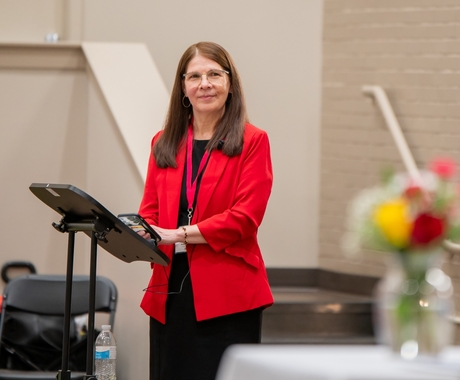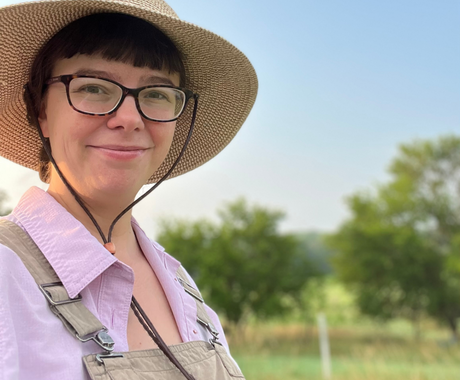


Ali and Scotty Yahnke have been farming together for the past decade, and although each season has been different from the last, they wouldn’t change a thing.
The couple began their agricultural journey renting land in the Loess Hills of Iowa, where they ran a market farm during the growing season and a caramel-making business in the off-season. At the time, they focused on sales from farmers markets and Community Supported Agriculture (CSA), but they have since stepped away from both of those marketing strategies.
In 2020, they moved to the Ponca Hills area north of Omaha, where they started The Perennial Homestead. This honor-system farm stand at the end of their driveway features rotating seasonal goods. Their online shopping platform is an extension of the farm stand and highlights goods sourced directly from local and regional farmers and artisans.
Today, the farm stand generates about one-third of the income that supports the family of four. The rest comes from their wholesale sales and online store. Ali and Scotty designed the stand to be easily adaptable, allowing them to generate income year-round.
‘When we moved to our current farm, we were looking to grow our family and wanted more flexibility,” said Ali. “With that in mind, we started our very first honor-system farm stand. It was mostly a hobby at the time, but it quickly grew popular in our community and has since become the cornerstone of our business in the summer months.”
Each season, they revisit their plan, choosing crops that make sense for their customer base, are durable on a farm stand, and allow them to make value-added products to market year-round.
“We love the honor system, and so far, have had very little theft, if any,” said Ali. “We have met so many neighbors and community members through our stand, and they often remark how proud they are to have a space where their neighbors trust them. By operating on the honor system, we've been able to have the flexibility to spend time with family and friends and travel during the summertime without forfeiting income.”
Last year, Ali began researching the Business Builder Grant Program through the U.S. Department of Agriculture (USDA). Part of the grant application encouraged applicants to seek technical assistance. Ali applied, and was paired with Kjersten Hyberger, local foods associate with the Center for Rural Affairs.
The Center helped Ali improve her business plan, thinking strategically and accessing valuable resources available in her community.
“Every time I talk with Kjersten, it feels like new opportunities present themselves,” Ali said. “The Center has so many community connections and resources that even when we have a meeting with a small agenda, I leave feeling inspired and motivated to continue working on improving our business.”
Most recently, Kjersten helped pair Ali with a Center business specialist who is going to help refine her business plan and prepare financial goals for the years to come.
“Kjersten helped me develop my application and has continued to be a supportive ally as we grow our business,” Ali said. “There are so many resources available, and it's so helpful to have someone help you find the ones that fit.”
Ali has been receiving business technical assistance through the Heartland Regional Food Business Center since summer 2024, and there are plans to include her in a Center-hosted farm/farm stand tour later this year.
Because they have limited space for growing, the couple has been strategic about what they grow and how they market. Much of their marketing is through their social media accounts, as well as their website with an online store and an email newsletter. Word of mouth and people seeing the farm stand from the road have also contributed to growing their customer base.
Creating value-added products with herbs has increased the worth of crops they can grow intensively on their homestead.
“I try to grow one new crop each season to use creatively.” Ali said. “For example, I love to make garlic braids and decorative wreaths, and our customers love to buy them. Each year, I grow a new flower variety to dry for use in these seasonal, decorative products. I find that experimenting in this way helps me stay interested and invested when other aspects of the job may feel mundane after 10-plus seasons of farming.”
The Yahnkes grow on rented land at two locations. Their main annual plot is at their neighbor's place about a mile away. The land at their homestead is much more shaded, so they have gradually established more perennial crops and herbs there. Collectively, the couple grows on less than 1 acre. Though their space is limited, they make the best use of it, including caring for the land to produce better crops.
“It's important to us to create little waste, and to us, that looks like composting our food scraps from our home and value-added production, incorporating cover crops, and capturing the abundance of horse manure from our neighborhood to improve the soil fertility,” said Ali. “We have also gradually established many perennial areas along the borders of our fields with the sole intention of creating a habitat for beneficial species. And, we reduce water use by using drip irrigation and mulching with spent straw and hay from nearby farms.”
In 2022, the farm stand stayed so busy that, for the first time, Ali and Scotty were unable to keep it stocked with products solely from their farm. Instead of scaling up their production, which was already at their comfort limit, the couple decided to source from other farmers.
“First and foremost we value community,” said Ali. “Community, to us, is not limited to people but includes the plants and animals that surround us. We do our best to show our gratitude through reciprocity; giving back to the people, plants, and animals and tending to the environment with care. In this way, supporting local farmers and small businesses is one way we can ‘give back.’ Caring for the soil and practicing mindfulness in our farming practices is another way we can give back and share our gratitude for the many gifts we receive from this life.”
They carry fresh produce from several local farmers, most of whom the couple already had relationships with. When considering what to stock from other vendors, they look for gaps in their products.
“Over the years, we have refined what we source from whom, and last season, we even had one grower contract grow several crops for us that we struggle to grow in abundance in our gardens due to environmental factors,” Ali said.
In addition to selling products at the farm stand, Ali and Scotty host community gatherings. Their first event was Fall Fest, held near the end of the farming season in 2022. Since then, they added a “flower potluck” Flower Fest in mid-summer, and last year they hosted their first community potluck meal. They also hosted participants of the Center’s AgVets cohort for a visit.
“The farm stand has become a gathering place for people from many backgrounds,” said Ali. “It feels important to us to use our space to cultivate that community. When we can sit across the table from a stranger who may have different views from us (political, spiritual, etc.) and have a conversation, we can begin to see the humanity in all people. In a time where we are more often than not isolated from our community or neighbors, creating these spaces feels incredibly important for the well-being of our community. It is also our way of giving back to our community and showing our gratitude.”
This season, the couple is hoping to host more informal gatherings centered around food.
“Our first potluck last season had a smaller turnout than our previous events, but the folks who were there brought so much more than food to the table,” Ali said. “There was good conversation, a tangible human connection, and a good meal to boot.”
And while the couple keeps their eyes open for a farm to buy so they can put down deeper roots, they remain focused on providing the best products and experiences possible for their customers.
“As renters, we never know what the next season will hold, but we are always looking for ways to grow and adapt to the environment we are in,” Ali said. “In the meantime, we're busy sowing the seeds for the growing season ahead.”
The Perennial Homestead farm stand is open from mid-April through December, weather permitting, and their online shop is open year-round.
Are you in need of one-on-one counseling to grow your food or farm business? We can help. Contact Kjersten at [email protected].
At a glance
The Perennial Homestead
Ali and Scotty Yahnke
12505 Ponca Road, Omaha, Nebraska 68112
712.587.5071
Farm stand season: mid-April through December, weather permitting
Facebook
Instagram
Website
How does an honor-system farm stand work?
Ali and Scotty’s farm stand is open daily from sunrise to sunset throughout the season (April through the winter holidays), weather permitting.
The stand is self-serve and they accept cash and Venmo payments. The couple has bags and boxes available for customers to carry their goods, and they invite visitors to bring their own reusable options.
Local pick-up is available for any online shop order; just follow the instructions on their website. Some products are exclusively available for pre-order for local pick-up, including farm-fresh eggs and certain seasonal produce.
Customers can expect to find a variety of seasonal goods from starter plants in the spring to herb salts, local honey and jam, fresh produce, and more. There is also a Little Free Library next to the farm stand.