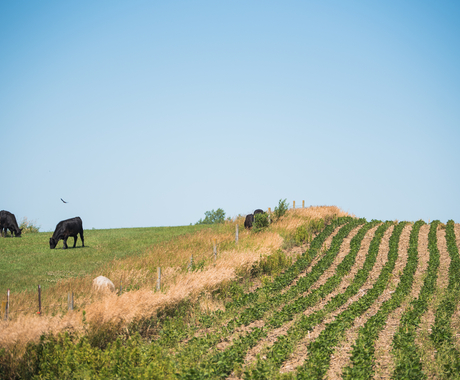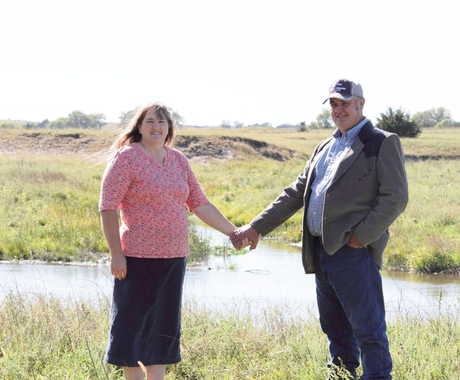

The Center for Rural Affairs believes that conservation is vital to the future of our rural communities and family farms. In addition to conserving valuable natural resources, such as water and soil, conservation practices implemented by producers offer risk management and economic benefits, particularly in the face of a changing climate.
Working lands programs
The Center advocates at the federal level for two of our country’s most important working lands programs—the Conservation Stewardship Program (CSP) and Environmental Quality Incentives Program (EQIP). These programs, administered by the U.S. Department of Agriculture’s Natural Resources Conservation Service (NRCS), provide financial and technical assistance for farmers and ranchers to address natural resource concerns on their operations while maintaining agricultural production.
To learn more about these programs, download our fact sheets. You can also contact your local NRCS office using this online tool.
Resources
A Closer Look At Prescribed Grazing
A Closer Look At Field Buffers
A Closer Look At Nutrient Management
A Closer Look At Cover Crops
A Closer Look At Conservation Tillage
Conservation Stewardship Program Practices for Range
Prácticas del programa de administración de la conservación para los pastizales
Conservation Stewardship Program Practices for Pasture
Prácticas del programa de administración de la conservación de pastos
Conservation Stewardship Program Practices for Cropland
Prácticas del programa de administración de la conservación para tierras de cultivo
CRP-Transition Incentives Program (TIP)
Passing land on to the next generation of farmers and ranchers can be critical to the success of an operation. As the average age of landowners and operators continues to rise, transition planning becomes increasingly important. One mechanism to assist with this transfer is the Conservation Reserve Program-Transition Incentives Program (CRP-TIP).
What is CRP-TIP? Administered by the U.S. Department of Agriculture’s Farm Service Agency, CRP-TIP assists landowners with expiring CRP contracts by incentivizing land transfer to an underserved or beginning farmer who will return the land to sustainable agricultural production. Land is enrolled in CRP with conservation benefits such as wildlife habitat, soil health, and water quality—in mind. CRP-TIP emphasizes the continuation of conservation through sustainable grazing practices and farming methods by the new operator. In the last two years of a CRP contract, the landowner will establish an approved conservation plan. The new operator will commit to conservation and land improvements according to the plan.
The landowner must agree to sell, have a contract to sell, or agree to long-term lease (at least five years) the land enrolled in an expiring CRP contract to the new operator. The incentive for participating in CRP-TIP is two additional years of CRP rental payments after the contract expires.
CRP-TIP Resources
- Fact sheet: Conservation Reserve Program - Transition Incentives Program recommendations
- Fact Sheet: Conservation Reserve Program - Transition Incentives Program in Nebraska
- Fact Sheet: Conservation Reserve Program - Transition Incentives Program in Iowa
- Webinar: CRP-Transition Incentives Program
- Blog: Transition Incentives Program provides an alternative for expiring CRP contracts
- Blog: Mike Witulski maintains farm’s legacy through CRP-TIP
- Blog: Dale Tuttle uses CRP-TIP to transition land to a beginning farmer