The recent termination of the Local Food Purchase Assistance (LFPA) and Local Food for Schools (LFS) Cooperative Agreement Programs by the U.S. Department of Agriculture (USDA) has significantly impacted local farmers, schools, and food banks. These programs were established to connect local producers with educational and charitable food institutions, enhancing access to fresh, locally sourced food.
The LFPA and the LFS programs have been part of the USDA’s effort to support regional food systems and build resilience in local economies. By providing funds to schools and nonprofits to make purchases from local farms, the programs created a win-win for producers and communities: healthy, fresh food for students and families, and reliable markets for small and mid-sized farms.
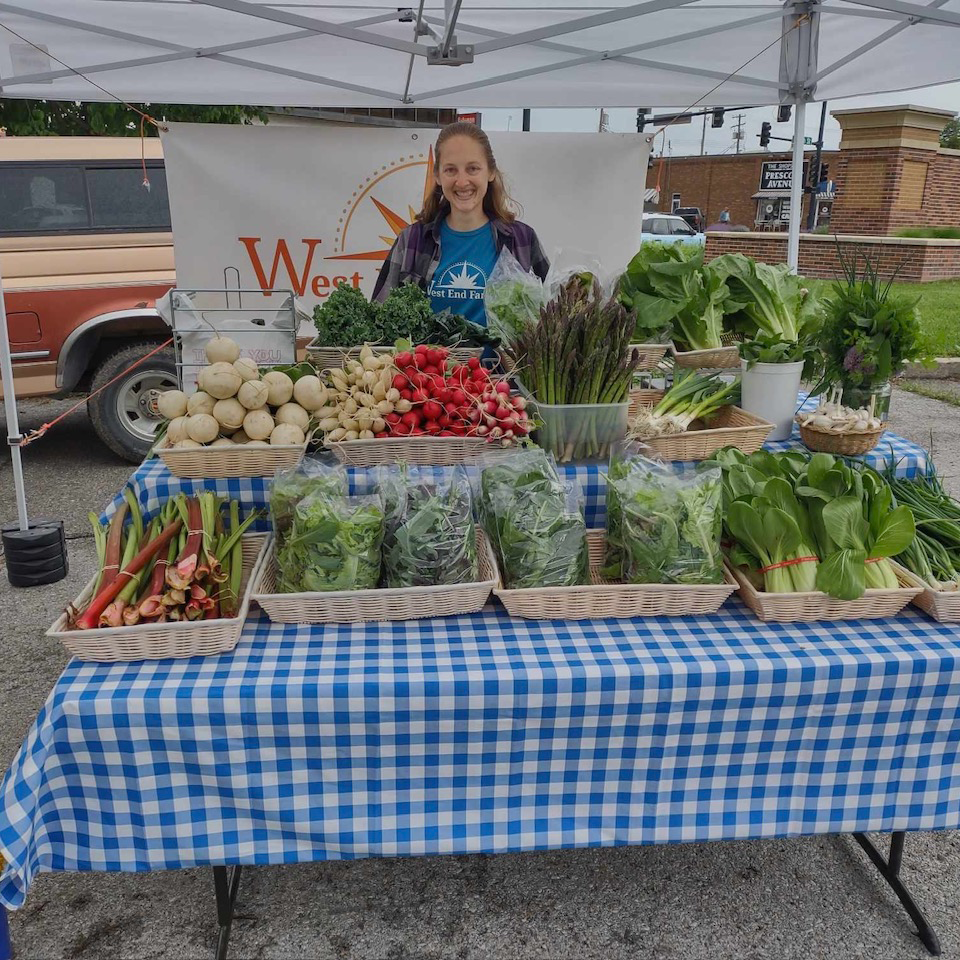
For Katie Jantzen, owner of West End Farm near Plymouth, Nebraska, the cancellation of the LFS program was surprising.
“I found out the program was canceled when someone sent me a copy of the Omaha World Herald that named me as one of the producers,” Katie said.
She had been selling vegetables to the school she once attended.
“It was meaningful,” she said. “I liked that the school’s nutrition director was interested in offering local produce to the students, and they had a good variety of produce available.”
Katie’s diversified farm grows more than 50 types of vegetables and fruits and sells mainly through Community Supported Agriculture (CSA) and local farmers markets. The LFS Program, though not a major source of income for her operation, represented an important connection to the community.
“The funding went directly to schools, allowing them to buy more from me, and other local producers,” said Katie. “It worked.”
The ramifications of the cuts, she noted, go far beyond her own farm.
“Other organizations have structured their entire model around selling to schools,” she said. “They’re going to be hit much harder.”
Katie also described being selected for a grant through the Heartland Regional Food Business Center to build a solar-powered refrigerated trailer for transporting and storing produce. Despite being told she’d received the grant, the funds have been frozen indefinitely.
“You’re told yes, you got the grant—then no, you can’t move forward,” she said. “Nobody knows what’s going on. And springtime is not an awesome time for farmers to be left in limbo.”
That feeling of uncertainty is echoed across the state. In North Omaha, City Sprouts scaled up production this year to meet new demand from the Food Bank of the Heartland—funded in part by LFPA dollars. While those sales will continue through the 2024 rollover, they’re bracing for a shortfall next growing season due to the termination of 2025 LFPA funds.
More troubling, City Sprouts is also affected by the pause of the Resilient Food System Infrastructure (RFSI) and Business Builder programs, critical grants totaling $250,000 that were intended to support infrastructure like a pack-wash station.
“These funds were supposed to help us grow,” said Aaron French, manager of urban farm initiatives for City Sprouts. “Without them, our entire scaling plan is in jeopardy.”
The sudden termination doesn’t just disrupt operations. It threatens broader goals of food security, economic development, and education.
“I would have thought funding a program that supports local farms and gets food into school would be nonpartisan,” Katie said. “It’s a win-win-win. Win for farmers looking for local markets. It’s a win for schools looking to support the local economy and their district. It’s a win for students who actually get exposed to local healthy food. There is often an educational component with that, where they get to understand who the farmers are and where that food comes from. To take away a win-win-win doesn’t seem like a win to me.”
She worries about the long-term consequences of these cuts: fewer local food options in schools, fewer markets for farmers, and lost opportunities for education and economic growth.
“When you cut this kind of funding, it has a ripple effect,” said Katie. “It hurts the schools, the food systems, the people in need—and the farms that provide it. Farming isn’t something you can just pivot overnight.”
As federal support stalls, Katie urges consumers to take action.
“This is the time to find your local farmers market,” she said. “Join a CSA. Buy directly from local producers. Because without these programs, it's up to the community to keep the system alive.”
She’s also calling on federal legislators to recognize the real-world consequences of their decisions.
“This isn’t just a line item,” Katie said. “These are real farms, real people, and real communities being affected.”