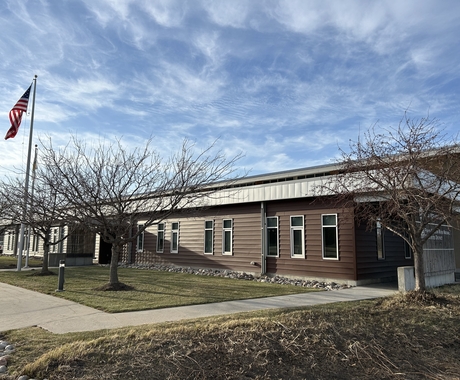
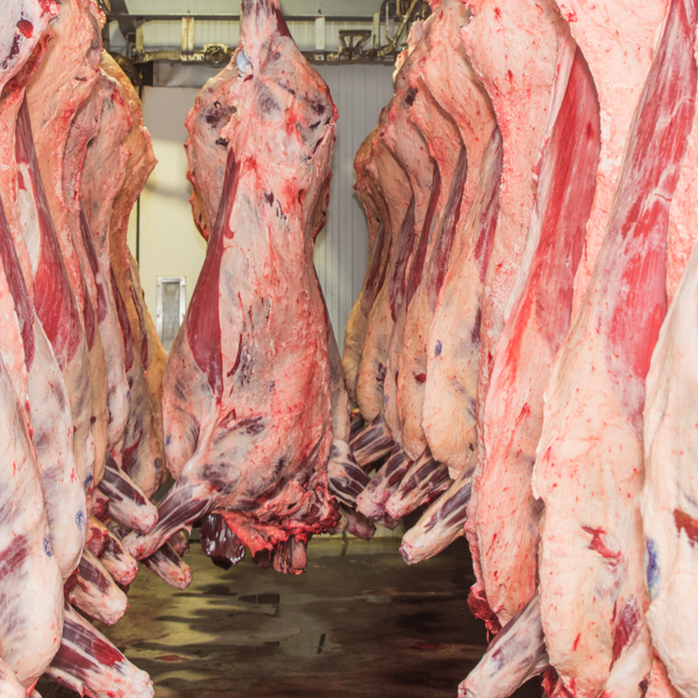
The Tyson Foods beef plant in Lexington is a long, squat building about a mile south of US Highway 30. While the meat processor is physically on the town’s far south side, it has been at the heart of Central Nebraska’s economy since opening on Nov. 8, 1990, under the name IBP.
That plant, which employs about 3,200 people, started closing down on Jan. 20, dealing a devastating blow to the community of 11,000. The resulting economic waves rocking the region and Nebraska cattle producers highlight the need for reasonable regulation of the livestock market and support for growth of competitors to ensure a truly competitive market that benefits producers, workers, and communities.
The turmoil now plaguing Central Nebraska is a symptom of decades of meatpacking industry consolidation. Four corporations control about 85% of beef packing in the United States, according to numerous economic studies, including those by the US Department of Agriculture Economic Research Service.
As a society, we should not make corporate profits the only metric for judging the performance of our industries. We must also consider the long-term health of our communities and the people who produce the food, including cattle feeders and laborers who debone the meat.
Bringing more competition to the meatpacking industry will require significant public and private investment. Overcoming barriers to market entry on a broad scale will require government intervention, including grants, access to affordable loan capital, and enforcement of anti-competitive laws already on the books, like the Packers and Stockyards Act, passed in 1921.
The Center for Rural Affairs has long fought for fair and competitive livestock markets, including supporting the addition of a Competition Title to the federal farm bill to tackle market consolidation and power imbalances.
The Center is also working to support small- and medium-sized meat processors in building alternative, more community-based systems by launching a $15 million loan fund to increase affordable capital access for these important community cornerstones.
More must be done.
Nebraska’s economy will suffer the loss of $3.28 billion annually due to direct and multiplier effects related to the Lexington plant closure, according to a Dec. 22 analysis by the University of Nebraska Department of Agricultural Economics. They estimate closure of the Lexington plant will cause the elimination of an additional 3,791 jobs in other sectors for a total labor income loss of $530.43 million, most of it in Dawson County and neighboring communities. They project annual tax revenue losses at $23.2 million in state personal income tax, $10.16 million in state sales tax, and $2.77 million in local sales tax to Dawson County.
It is up to the people who rely on this industry as a cornerstone of our shared economy to think beyond quarterly profits. We must stand up for the public good and demand our elected representatives prioritize the long-term health of communities and our state.
For more information on the Center’s Meat & Poultry Processing loans, see cfra.org/meatprocessingloans
See also: cfra.org/rural-resources