When asked why he started farming, Lyle Marotz’s answer was simple and straightforward: for the betterment of his family’s personal health.
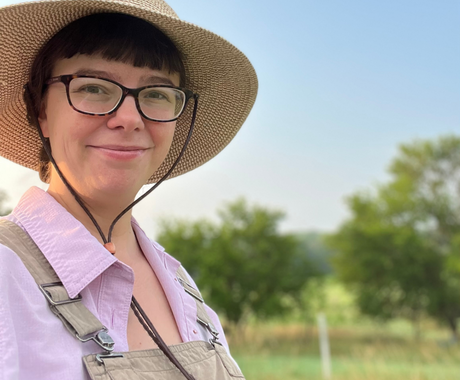
Though he and his partner, Kelsey, had no experience farming, they felt it was their responsibility to learn how to grow their own food. They started exploring agriculture during the summer of 2021 and now own and operate Source Farms, near Lyle’s family’s farm outside of Hoskins, Nebraska.
“Our children have become a bigger motivation, not only in providing nutritious organic food for them, but also as a way to connect and teach them,” Lyle said. “With all the information available and facts about the use of pesticides and herbicides, we knew we wanted to start our farm as organic as possible. We don’t want our three children exposed to such chemicals.”
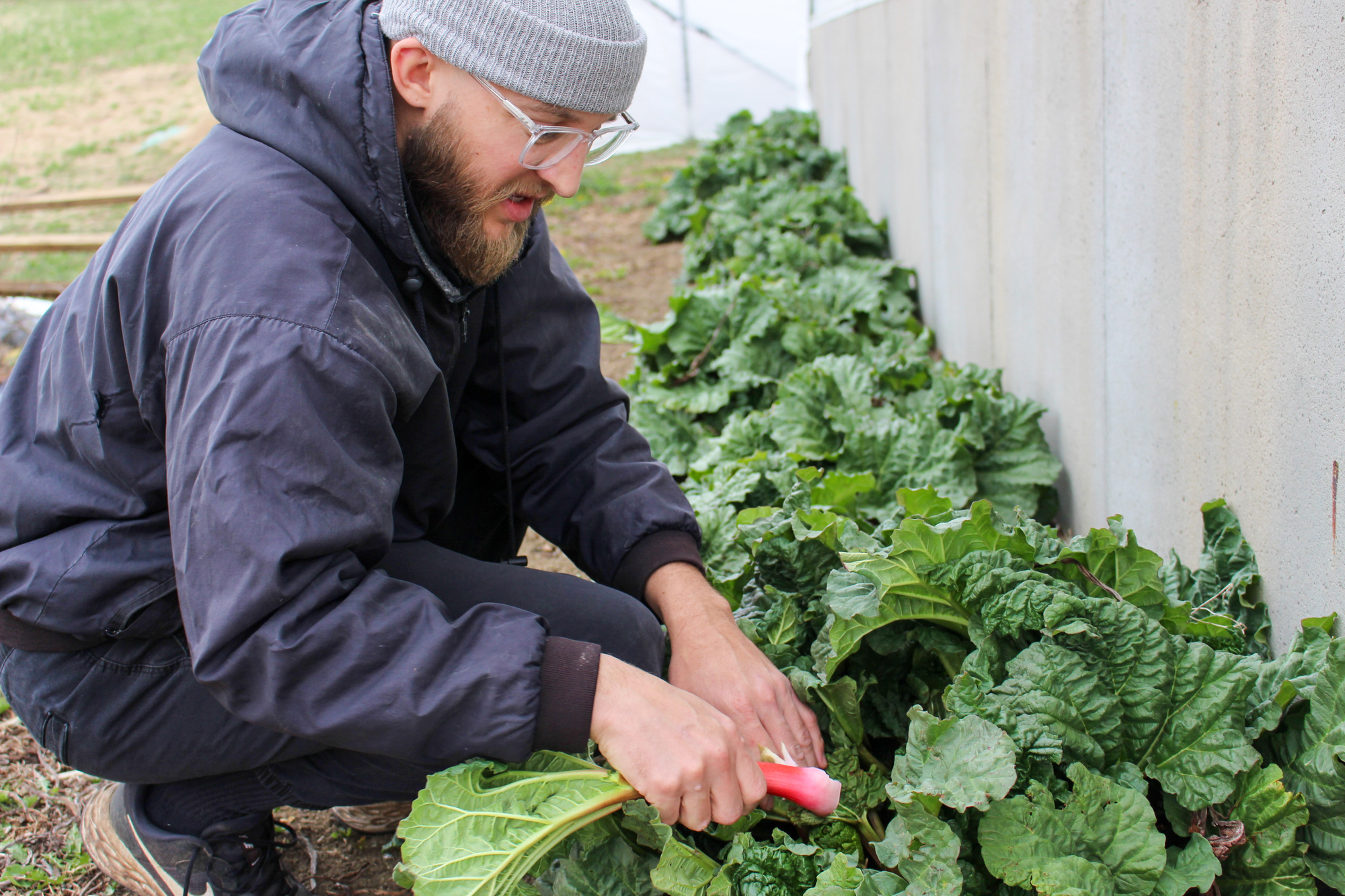
Lyle and Kelsey grow a little bit of everything at Source Farms. Radishes, beets, and potatoes grow well in their soil, and they enjoy growing okra, heirloom tomatoes, and hot pepper varieties. Last year, the farmers grew garlic for the first time and had great results. They hope they have the same outcome with this year’s crop.
Source Farms is home to other vegetables like summer and winter squash and pole beans, Many flowers and herbs grow around the property, as well. Tulsi and yarrow are well-established, and the farmers sell basil to local restaurants like Nofo Pizza & Cafe, in the nearby city of Norfolk.
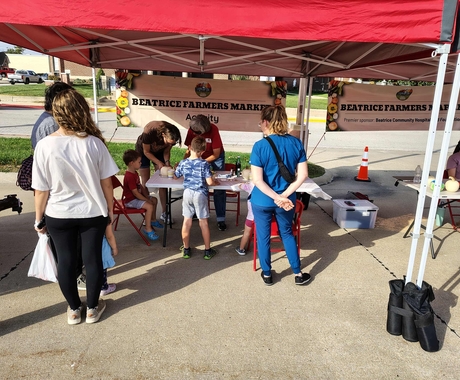
They also sell to No More Empty Pots in Omaha, though the bulk of their products are sold at the Norfolk Farmers Market.
One goal Lyle has for Source Farms is to provide healthy and unique options to their community. Lyle is learning different ways to approach that by taking part in the Center for Rural Affairs Beginning Farmer Conservation Fellowship Program.
To be eligible for the fellowship, beginning farmers must be actively farming in Nebraska for less than 10 years. The program emphasizes a variety of conservation topics essential to farming such as cover cropping, rotational grazing, pollinator habitat, soil health, water conservation, topography, and climate mitigation strategies.
The program started in 2022 with eight farmers, plus mentors. The current cohort, including Lyle, was chosen in January 2025 and the fellows will graduate in late 2026.
“Doing right by nature is something we strive to keep as a focus of our farm,” Lyle said. “We want to better the environment we steward. It can be hard to prioritize conservation, especially if you’re not getting a monetary return from it. As beginners, we want to avoid having to fix problems in the future from being ignorant to conservation. The fellowship offers the resources, and learning from experts in the field is invaluable.”
As part of the fellowship, farmers design and implement a project on their own farm or land they are farming. They present their findings at a farm tour to their mentors, project partners, and other beginning farmers.
Lyle’s project focuses on cover crops and irrigation practices in and around the five high tunnels on their farm. The high tunnels were all built within the last two years, and managing them has been a learning experience.
Half of Source Farms is across the road at Lyle’s family’s farm, including the high tunnels. The rest of the farm sits on half an acre, with a small tree line and pond in the distance. The farmers are slowly adding perennials and have converted some of their yard into growing spaces.
“One aspect of our farm that I needed help and education with is irrigation,” Lyle said. “We’re currently running hoses and sprinklers and I’m trying to lessen any water waste, as well as time waste.”
With a 100-plus head dairy operation on Lyle’s family's property, water is consumed heavily. Going forward, Lyle wants to be more efficient with their irrigation setups, as well as improve the health of the soil on their land.
“Soil health is always a priority, so filling our tunnels with cover crops for the first time will greatly help the soil,” he said. “I am also planting some pollinator strips and clover walkways around the tunnels to help with erosion and weed pressure.”
Since becoming a conservation fellow, Lyle has expanded his knowledge on managing cover crops and which native perennials would be most suitable at Source Farms. The farmer has also learned more about drip irrigation, as it is something that hasn’t been implemented on the farm yet. Part of the fellowship involves working with a mentor, which Lyle has found beneficial.
“The knowledge and experience in the farming field that a mentor provides helps tremendously,” he said. “Farming is a hands-on type of learning. Many things are second nature to a mentor who can give better insight compared to consulting YouTube.”
Though he’s in the early stages of implementing his project, Lyle’s goal is to sow at least one planting of cover crops per season in the high tunnels. He will continue to grow the pollinator strips each year, as the plants should self-seed. With the new irrigation setups, he hopes to implement what works best throughout other parts of the farm.
“We have clay soil, so the more organic matter we can introduce to it the better it will become for planting,” Lyle said. “We do as little tilling as possible to also help our soil health. Part of my project is focused on water conservation and using proper irrigation. Water conservation is very important in drought years, obviously, so we want to be prepared with the correct irrigation.”
Planning ahead, Lyle keeps sustainability in mind, as he doesn’t want to build incorrectly or move too fast.
“The world changes quickly and we’ve all had to adapt more than we would like these last five to six years,” he said. “We try to remember that all our customers are unique and take that into account with the products we sell. Including those who otherwise feel excluded most of the time can go a long way. If we’re ignoring groups of people, that’s a quick way to destroy community.”
Building and maintaining community is an important part of the Source Farms philosophy. Getting people to see things from new perspectives that include everyone is challenging, and it takes everyone working together to create community, Lyle said.
“Community goes beyond the bottom line, and creating something that people support and enjoy while also being practical and sustainable takes patience and creativity,” he said. “If you take culture and the sense of belonging out of a community, it becomes hollow and mundane. Small communities are slowly eroding everywhere. There are many ways of living that have proven unsustainable in the past decades and I think people are starting to recognize and reevaluate what a community really is and needs.”
Though there are not a lot of vegetable farmers in Lyle’s area, he still tries to promote conservation practices amongst his peers to help create that sense of community.
“Conservation can look like many different things, and if you farm in any capacity then there is room for conservation,” Lyle said.
The farmer also strives to further conversations surrounding better farming practices, including taking advantage of opportunities such as the conservation fellowship.
“I am very honored with the opportunity to be in the fellowship because it means furthering both the Center’s and Source Farms’ efforts,” Lyle said. “Farming on a small scale can come with many different challenges. Dealing and relying so heavily on Mother Nature is a factor that most businesses never have to worry about for their success. Being able to learn through programs like the fellowship allows for the time and resources it takes to become a better farmer, which only helps our community.”
For more information, visit cfra.org/beginning-farmer-conservation-fellowship-program.
This material is based upon work supported by the U.S. Department of Agriculture (USDA), under agreement number NR243A750003C010.
Any opinions, findings, conclusions, or recommendations expressed in this publication are those of the author(s) and do not necessarily reflect the views of USDA. In addition, any reference to specific brands or types of products or services does not constitute or imply an endorsement by USDA for those products or services.
USDA is an equal opportunity provider, employer, and lender.
Photo courtesy of Lyle Marotz.