Para la versión en español, haga clic aquí.
Even though close to 19% of the population of Fremont, Nebraska—over 5,000 people—is Latino, until recently, the area lacked day cares that provided services specific to those families.
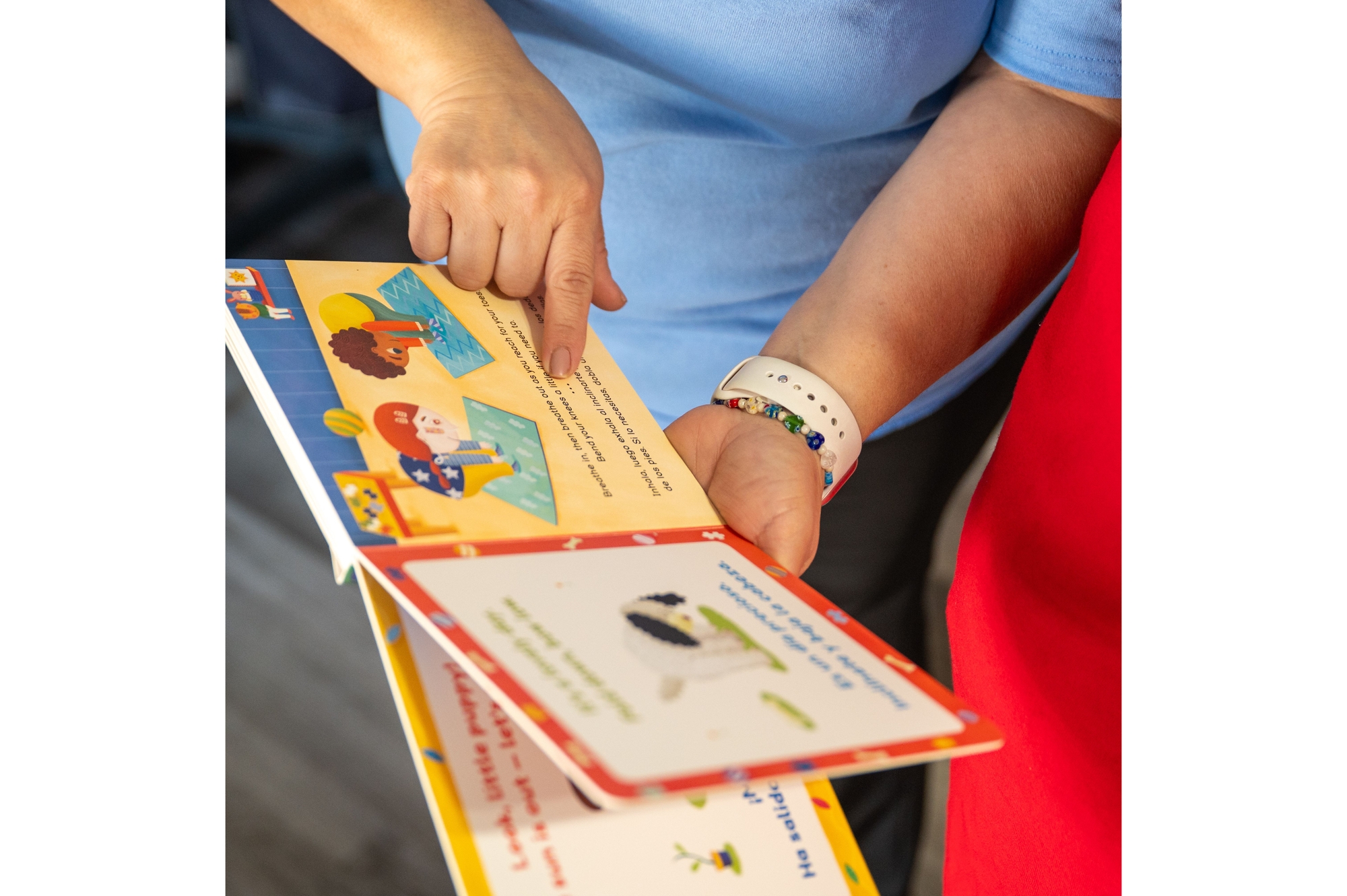
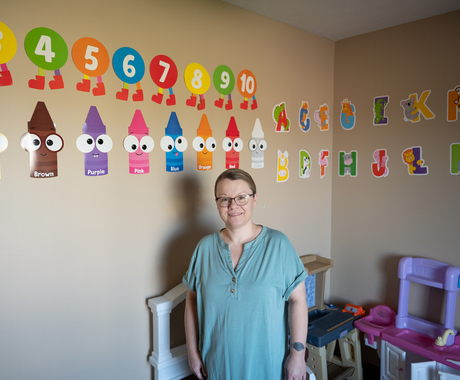
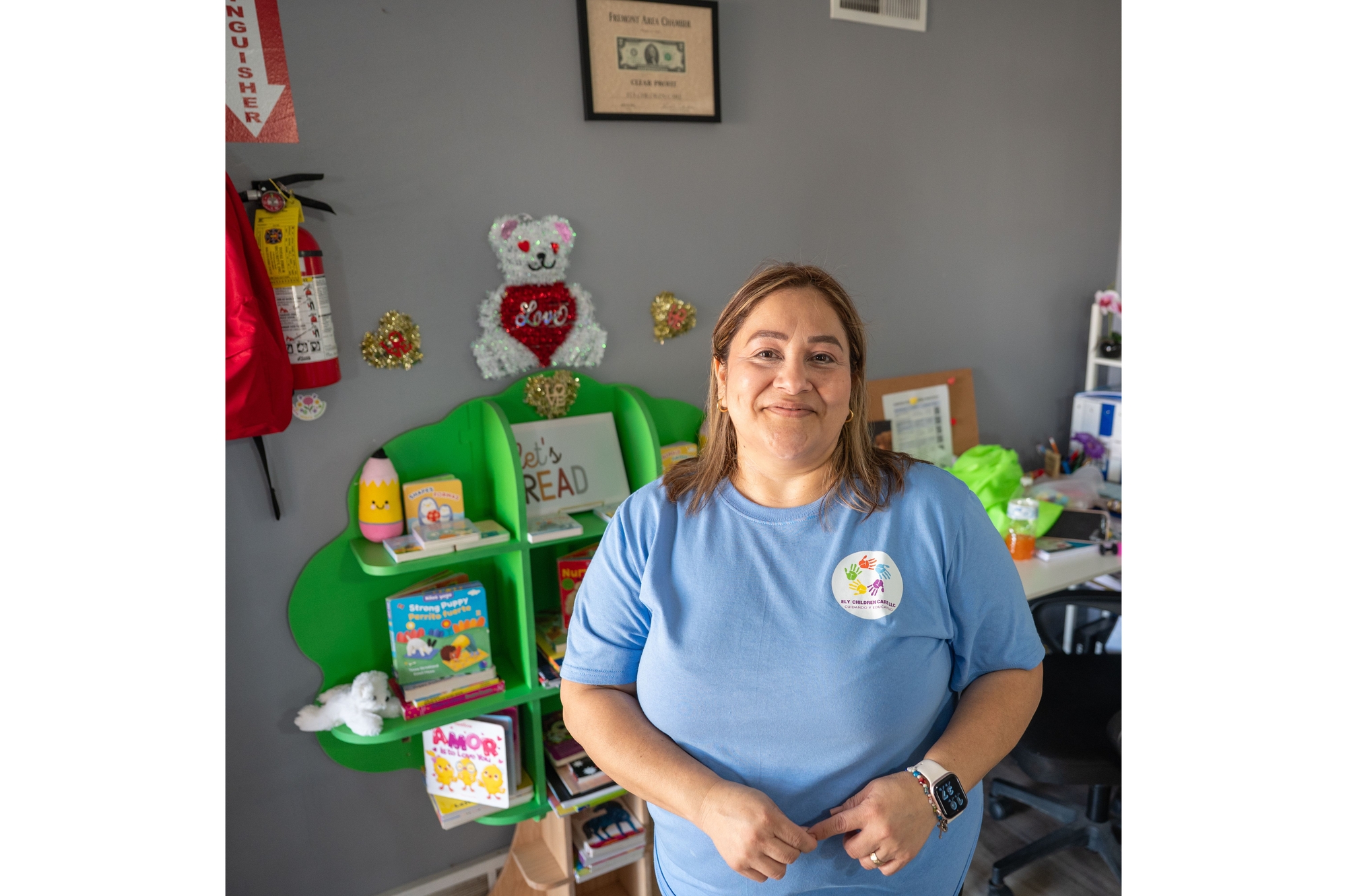
Elida Canjura decided it was time to change that, and opened Ely Children Care, the first bilingual child care center in the area.
“I'm the first Hispanic child provider here, and right now I'm serving three families,” said Elida. “Even though I only have a few kids, one of the things I'm focusing on is the quality of services and getting my name out there and also helping the families here.”
She understands the challenges Latino families face all too well. Elida came to the U.S. from El Salvador in 2014 to be closer to her mom. Later, she navigated the process for obtaining the permits and licensing required to open her business.
“I lived through not being able to have child care as a mom and facing all the barriers that come with being an immigrant in the U.S., like the language and the cultural differences,” she said. “My background is in education, and I was a teacher in my country. That was a big part of what pushed me and helped me to see the need for child care in Fremont.”
Elida has over 10 years of teaching experience at the junior high and high school level in El Salvador and also spent time working with young children. She opened her child care business in November 2024 and now has her five-year operational license.
“The first year is really treated as a probationary period just to see how you're doing and how you're growing,” Elida said. “I started just with one child, and even if it is only one child, you have to go through all the professional development courses and licensing requirements that DHHS has for child care services.”
Recently, Elida participated in a Childcare Accelerator Award Program presented by the Center for Rural Affairs Women’s Business Center (WBC), Stearns Bank, and the Association of Women's Business Centers. The Center’s WBC was among seven across the country selected to serve as accelerator hubs and to receive grant funding.
The program was designed to assist licensed child care providers in scaling operations, expanding services, and improving sustainability in their communities. Ten Nebraska child care providers were chosen to engage in hands-on training sessions and gain personalized technical assistance and guidance in financial services.
After completing the program, participating child care businesses each received a $10,000 Childcare Accelerator Award Program Grant by Stearns Bank. The funding helped Elida remodel and make updates and upgrades to her child care facility.
“For me, it was a great opportunity, and I got to work with wonderful people,” she said. “This program was the first step in the ladder to making my dream come true!”
Along with her daughter, Elida cares for children seven days a week, from 5 a.m. to 5 p.m. She schedules her hours as such to meet the needs of working families, as many of her clients are employed in the manufacturing and meat packing sectors. She hopes to eventually broaden her availability even more to 24 hours a day, all week long.
“I would like to expand our services to be flexible for parents who work those different schedules because we can see there is a need and we can feel the need of our people,” Elida said.
Helping the growing Latino community in her area is one of Elida’s top priorities. She wants to show the people of Fremont that most immigrants are coming to the city because they want to help build a brighter future for everyone.
“For me, providing child care services is vital,” she said. “My philosophy is to serve others, and I want to help facilitate people being able to go to work. I'm not going to call a mom and tell her to leave work to bring me a baby bottle or an extra diaper; I am going to help provide those items and problem solve so that parents can stay at work.”
The business owner has a strong desire to make a lasting impression and positive impact on her community, and to teach young people to do the same.
“My belief is that it's the next generations who are going to replace us in the future so we need to prepare them,” Elida said. Eventually, Elida hopes to expand her business to include educational opportunities for school-aged children.
“I always tell my daughter, since God has allowed me to get to the place of opening a day care now, I would like to also have a kindergarten or a pre-K school with Hispanic and Latino roots, with our principles and our values so that we can make a difference,” she said.
All her big plans and dreams feel more possible now, Elida said. And she is thankful for the Childcare Accelerator Program getting her started on this journey.
“I am very grateful for the Center because, for me, the program was the light, the beacon, that I needed so I could take off,” said Elida. “We will grow and take advantage of the tools that places like the Center provide. Many of us in the Hispanic community will face many barriers, but it is not impossible!”
The Childcare Accelerator Program was made possible by Stearns Bank in partnership with the Association of Women's Business Centers. The Nebraska program is held in partnership with Sixpence Early Learning Fund and Nebraska Educational Service Units. The Childcare Accelerator Award Program ran from Aug. 23 to Sept. 13, 2025.
For more information, visit cfra.org/small-business-training.
Carlos Barcenas contributed to this story.
Photos below by Kylie Kai. Click each photo to enlarge.