My mother-in-law, Ramona, came to the U.S. as a very young woman with one young child, another on the way, and no assets.
A Mexican immigrant from rural Meoqui, Chihuahua, she struggled and sacrificed to build her cleaning business, L&M Cleaning, LLC, based in Hastings, Nebraska.
From the ground up, she formed trust and relationships within the Hastings community. For more than 25 years, she has successfully operated her independent business while also remaining a longtime member of the Hastings Chamber of Commerce.
To some, small businesses are simply tools for economic development, dollar signs along main streets and signals of a town’s vitality. Policymakers often talk about small businesses in terms of investment opportunities, returns, and tax incentives, using terminology that the average citizen may not be familiar with unless they have studied economics.
For me, however, small businesses are more than words, loans, or state incentives. During the 2026 Nebraska Unicameral session, Sen. Stan Clouse introduced LB 1205, legislation supporting microenterprises, the smallest businesses in Nebraska. Microenterprises are defined as those employing 10 or fewer staff.
LB 1205 was introduced to ensure Nebraska’s Microenterprise Assistance Program, a 30-year-old state-funded initiative housed under the umbrella of the Business Innovation Act (BIA), receives stable appropriated funding of up to $3 million annually. LB 1205 was introduced as a response to recent BIA funding freezes, which left a gap in state awards.
When asked to assist with advocacy efforts, I knew this bill would bring critical state aid to entrepreneurs like my mother-in-law, who need support when they are just starting out. While connecting with small business owners and partner organizations in support of the bill I met three outstanding advocates in Nebraska, each with their own story of how a small loan paired with business coaching made a difference for them. These trademarks of the Microenterprise Assistance Program have led not only to financial success, but to the fulfillment of these entrepreneurs’ personal goals.
All three testifiers spoke on behalf of the Microenterprise Assistance Program in public hearings before state senators. On April 14, LB 1205 was successfully signed into law. Nebraska relies on its citizens as the “second house,” making direct advocacy like testimony, submitting written comments, and calling state senators an important part of the lawmaking process. In this case, state senators made a meaningful investment in microenterprises, in no small part because citizens showed up on behalf of small businesses. The passage of LB 1205 will result in stable annual funding for the program, giving entrepreneurs opportunities for years to come.
Although it may seem intimidating, the legislative process allows everyday citizens to stand up for their beliefs, tell their stories with purpose, and influence the laws that shape their communities. In today’s media landscape, controversial stories often receive the most attention, making it easy to overlook bills like LB 1205 that pass through the Unicameral with broad support.
We are often less divided than we may seem. Lawmakers may use complex language to describe economic development, but it is simple, authentic stories that inspire them to act.
Whether it is an immigrant-owned cleaning business, a construction company, a food truck, or a child care center, small businesses are the heartbeat of Nebraska. By sharing our stories at critical moments in the legislative process, advocates have the power to create meaningful change in their communities.
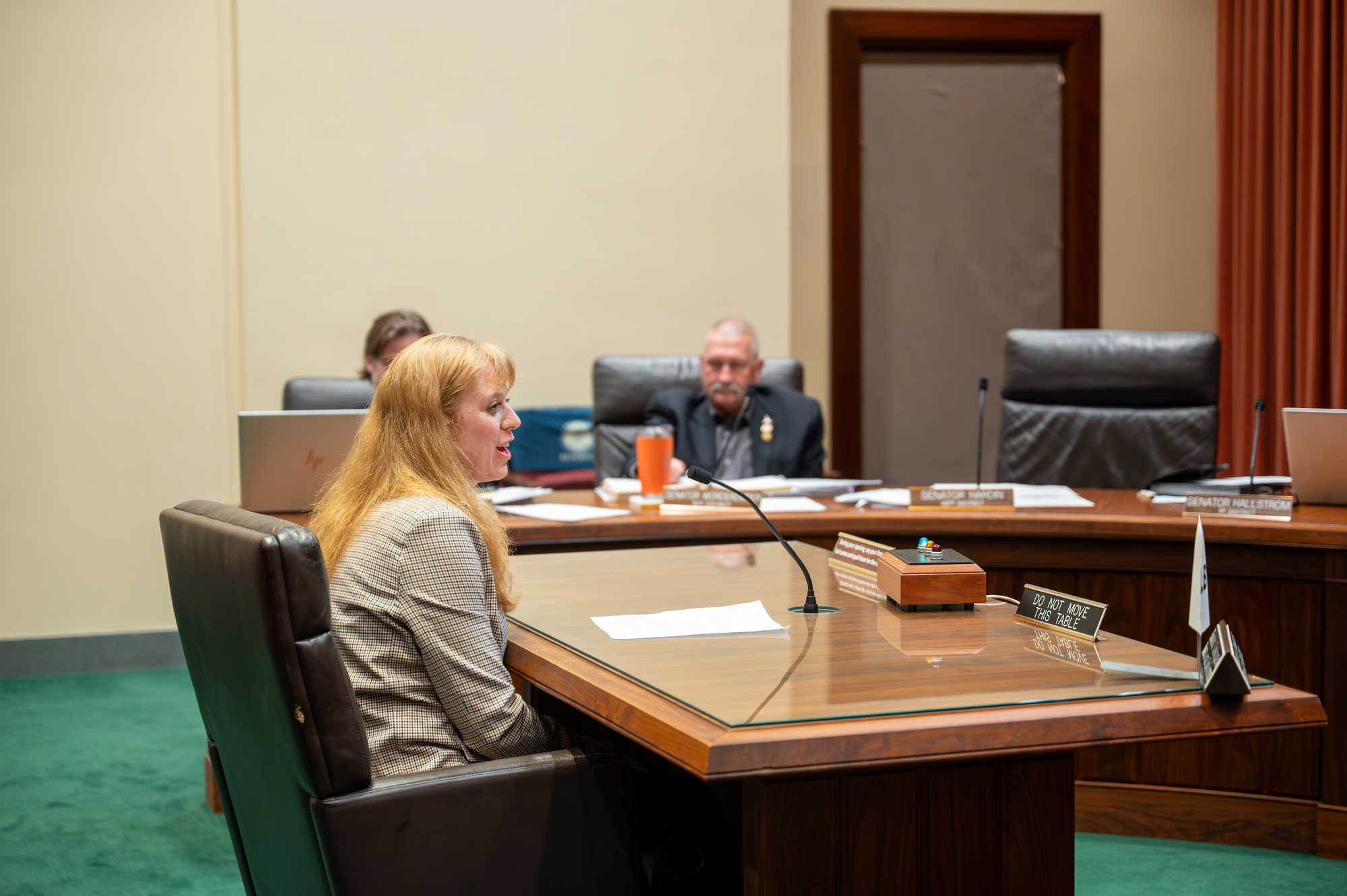
Feature photo: Audra Espinoza testifies in favor of LB 1205 (require the Department of Economic Development to award grants under the Business Innovation Act) to the Banking, Commerce and Insurance Committee. | Photo by Kylie Kai