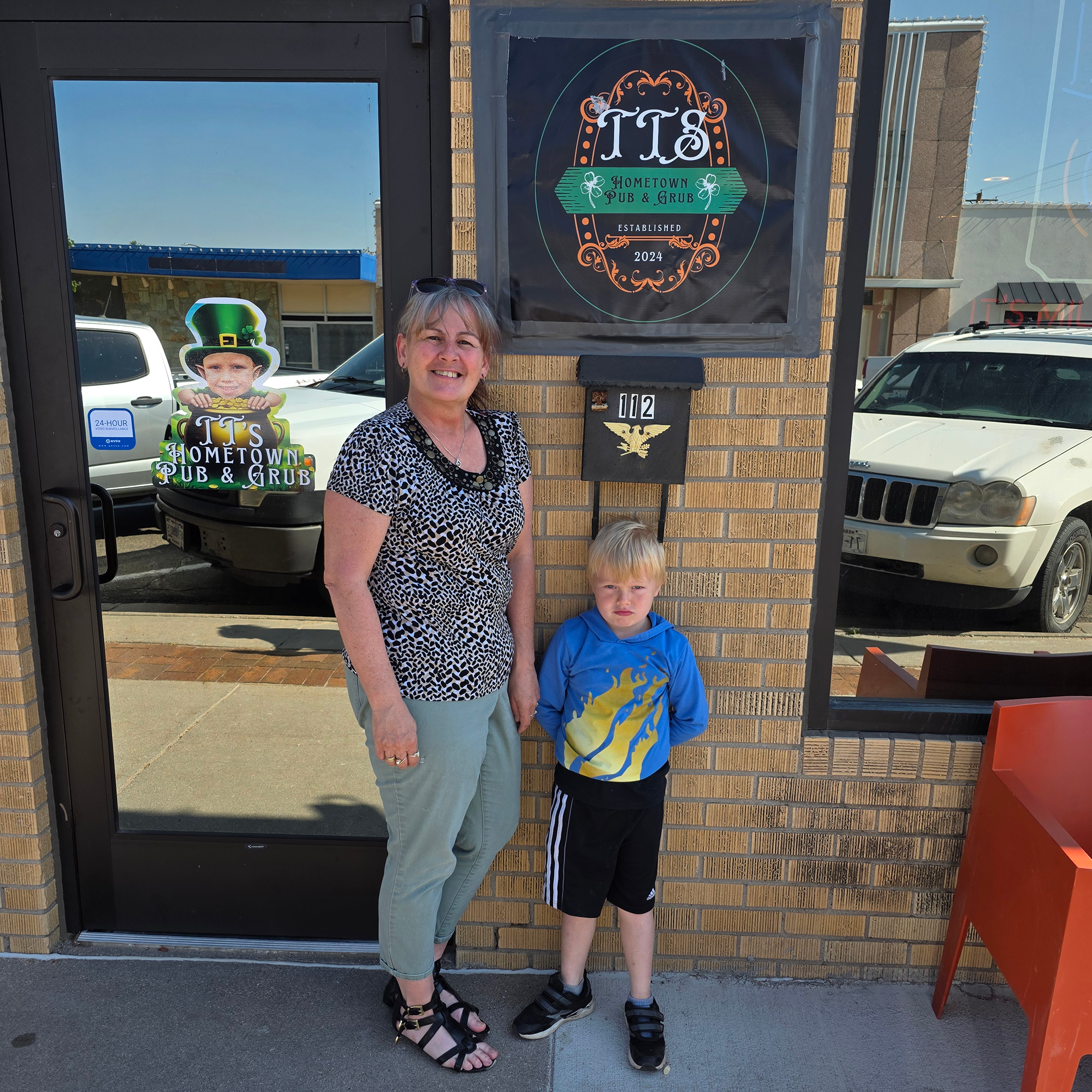
A year after launching plans for TT’s Hometown Pub and Grub, Christina Taylor faced mounting bills—not for lack of vision or effort, but because of a delay in the distribution of federal grant funds that were supposed to help make the project a reality.
Christina, a lifelong resident of Kimball, Nebraska (population 2,192), had hoped to open the new establishment on March 17. Alongside co-owners Terry Taylor and Tyson Culek, she worked tirelessly to prepare the space. With support from a local economic development loan, she was able to fund crucial energy efficiency upgrades to the building, including energy-efficient lighting, insulation for the walls, an upgraded water heater, and a new HVAC system.
For months, however, she’s been waiting on a promised reimbursement from the Rural Energy for America Program (REAP) to pay outstanding bills.
REAP, administered by the U.S. Department of Agriculture, is designed to help rural small businesses and agricultural producers implement energy efficiency improvements and renewable energy systems. For communities like Kimball, where infrastructure is aging and investment is scarce, the program represents a rare opportunity to revitalize spaces and lower operating costs in the long term.
The benefits of REAP are clear to many business owners like Christina: it lowers energy bills, reduces environmental impact, and makes rural businesses more sustainable and competitive. In many cases, REAP funding helps small towns like Kimball modernize aging infrastructure without draining already tight budgets.
“We wanted to open our doors and serve our neighbors,” she said. “People kept asking, ‘When are you opening?’, and I just didn’t know what to say anymore. We were stuck.”
As federal agencies face mounting administrative backlogs and shifting budget priorities, small communities are often the first to feel the ripple effects. In places like Kimball, even a modest delay in funding disbursement can stall entire projects. With few backup resources, those delays can turn into serious setbacks.
For Christina, the uncertainty is not just a financial burden—it’s personal.
“I was born and raised here. I’ve never thought about leaving, and I’m not going to start now,” she said. “But we need these programs to work the way they were intended. Otherwise, people like me and towns like Kimball get left behind.”
Fortunately, the pub was able to open its doors on May 23 thanks to an alternative loan that helped bridge the gap left by the delayed REAP funding. It was a hard-won milestone for a project rooted in community spirit, determination, and the belief that rural towns deserve a future worth investing in.
As rural America continues to benefit from federal investment for sustainable growth, promised awards must be paired with timely action to truly make an impact.