
By Kelsey Willardson, former staff member. Click here to see a handout case study featuring Logan Super Foods.
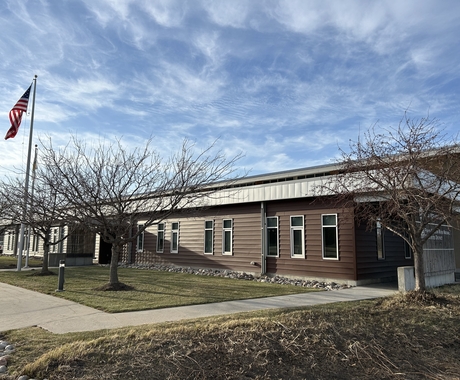
Around 1,300 residents call Logan, Iowa, home. One mainstay that helps keep the small, rural town vibrant is its local grocery store. Dion Pit has owned and operated Logan Super Foods for more than 30 years, ensuring the store serves its customers and the community.
Logan Super Foods is a local hub where community members gather and socialize. Its deli counter also offers hot lunches and serves around 60 customers a day.
“The people are what excite me the most about this work,” Dion said. “Having lived here for so long, I know my customers well, and they make the day-to-day enjoyable.”
Dion provides a wide variety of products to serve his customers. The store sells all sorts of foods and specialty items, including an assortment of meats, holiday treats, local baked goods, floral arrangements, and live plants in the spring.
The community values local sourcing. Dion works with small business owners and area farmers to offer local meat, flour, barbeque sauces, seasoning mixes, and honey year-round, as well as sweet corn in the summer.
The distance between Logan and the nearest larger cities makes its grocery store all the more important. Logan Super Foods is the main grocery source for the town’s residents. Without it, a drive of at least 10 miles would be required to reach the next nearest full-service grocery store.
Communities with limited access to a grocery store often suffer negative health impacts. The elderly, disabled, and those with finite resources are more likely to be affected, as they may face challenges finding reliable or affordable transportation to reach stores in other towns.
According to the U.S. Census Bureau, more than 20% of Logan’s population are seniors. The grocery store in town improves their access to a wide selection of healthy foods.
Logan Super Foods takes great care in serving its customers. When someone is sick or otherwise unable to get their groceries, they can call the store and get their groceries prepared for pickup or delivered.
But keeping a grocery store well-maintained comes with many associated costs. Dion keeps a running list of repairs and updates, as he knows that improvements will ensure the store runs smoothly and lasts into the future.
“I typically select one big project each year—a new parking lot was the focus for 2025,” Dion said. “Our next project will be replacing some of the older freezers.”
The success of a grocery store also depends on employees to keep its doors open and shelves stocked. Rural grocers like Logan Super Foods face the constant challenge of maintaining staff.
“Even securing part-time workers has been difficult in recent years,” Dion said. “But, we continue to prioritize our team here as much as possible to protect the longevity of our store.”
Many rural grocery stores face peril when the owner decides to retire. While Dion doesn’t anticipate retiring anytime soon, he has two co-owners prepared to take over when that day comes. However, Dion says he will likely never fully retire and expects people will continue to see him around the store for the foreseeable future.
Logan Super Foods has been an essential part of its community for decades; thanks to careful planning and dedication, it is positioned to stay for decades into the future.