Last winter as ranchers were keeping water tanks thawed for livestock and farmers were organizing for the upcoming planting season, a different type of planning was underway. A group of conservation-minded producers and staff at the Center for Rural Affairs were planning a series of field days to showcase agricultural practices that some may consider outside of the box.
“Ingenuity can often be met with skepticism, and the best way to prove to people that you’re not nuts is to invite folks to your farm, show them what you’re doing, and be honest about your successes and challenges,” said Jordan Uldrich, a Fillmore County farmer.
Jordan is a mentor with the Conservation Mentorship Network (the “network”), a group of farmers and ranchers from across Nebraska, spanning geographies and climates from Brownville to Chadron and Elsie to Crofton. Network mentors employ regionally appropriate conservation practices to protect water, reduce erosion, improve soil, animal, and human health, and reduce input costs. The network is designed to kick-start conversations and facilitate connections between producers, elevating the voices of farmers and ranchers and encouraging peer-to-peer learning.
The Center launched network activities last winter with a series of online panel discussions focused on no-till and cover crops. The webinars featured mentors Mark McConnell (Paxton), Paul Poppe (Scribner), Clay Govier (Broken Bow), Tracy Zink (Indianola), Will Corman (Superior), Vance McCoy (Elsie), and Jordan Uldrich (Milligan), who shared their experience with these conservation practices.
Following the webinar series, Center staff, in partnership with The Nature Conservancy and Nebraska Department of Water, Energy, and Environment, began working with network mentors to coordinate a series of on-farm field days. More than 100 individuals attended these events, demonstrating a desire among producers to meet and learn from one another.
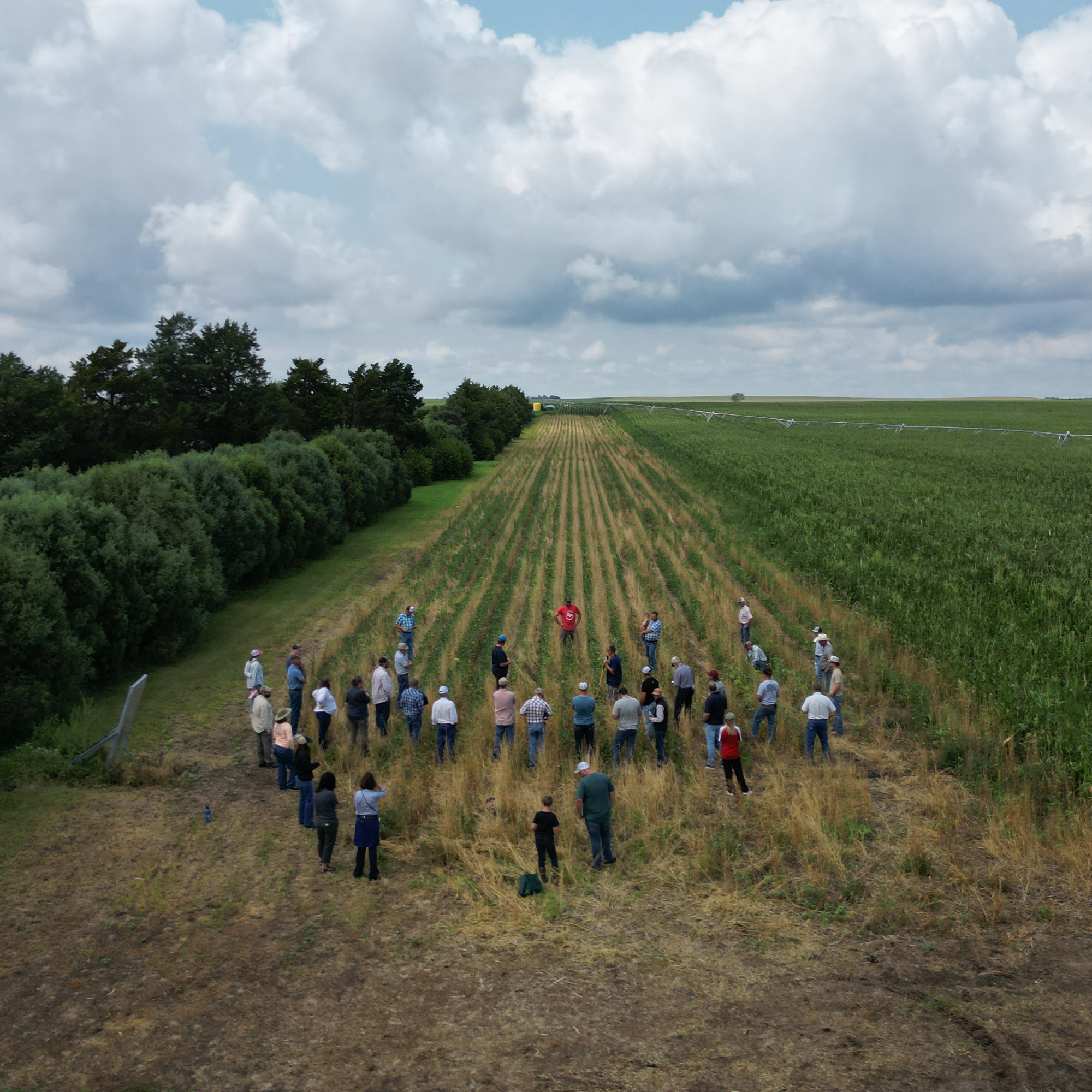
On July 31, Vance McCoy hosted the first field day at his farm near Elsie in Perkins County. Vance farms both dryland and irrigated crop ground in a challenging, limited rainfall climate with shallow soil. During the field day, he shared his experience using compost to increase fertility, as well as intercropping and relay cropping test plots. Lunch was served at The Lighthouse near Madrid, where an excellent meal was shared over conversations and networking among producers.
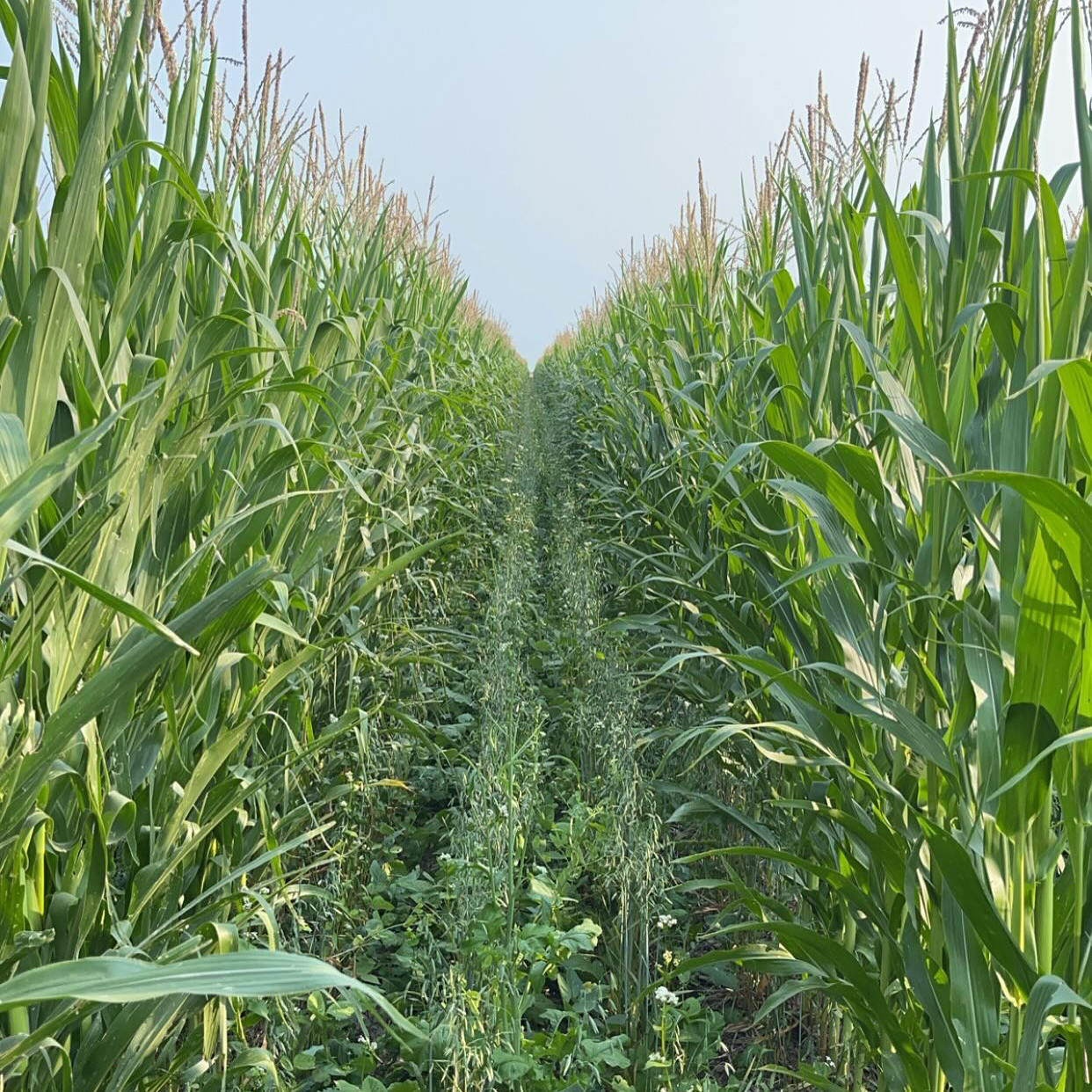
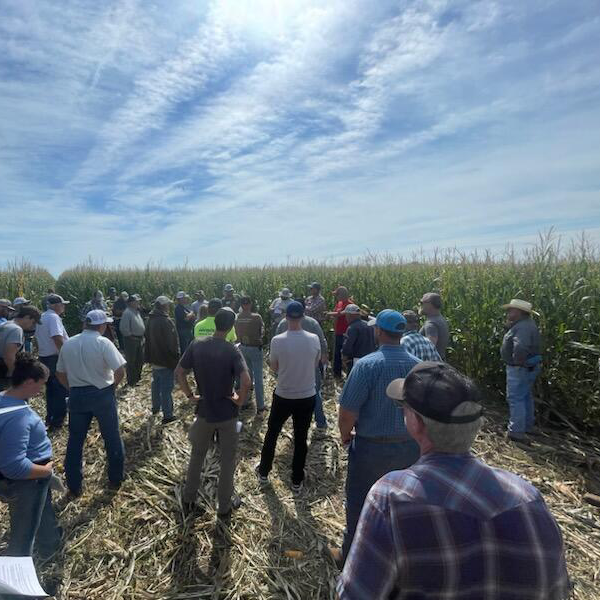
On Aug. 25, Jordan welcomed visitors to his farm near Geneva in Fillmore County. During the tour, he showcased a corn field with 60-inch rows where he planted a diverse cover crop intended for grazing cattle after the corn is harvested. He also discussed alternative methods of weed management to cut down on chemical input costs. As part of the field day, staff from the U.S. Department of Agriculture’s Natural Resource Conservation Service gave a presentation on their rainfall simulator to demonstrate the impact of run-off on soil managed with different conservation practices. Lunch was provided by Charlie’s Pub in Milligan, where more ideas were exchanged and connections were made by producers.
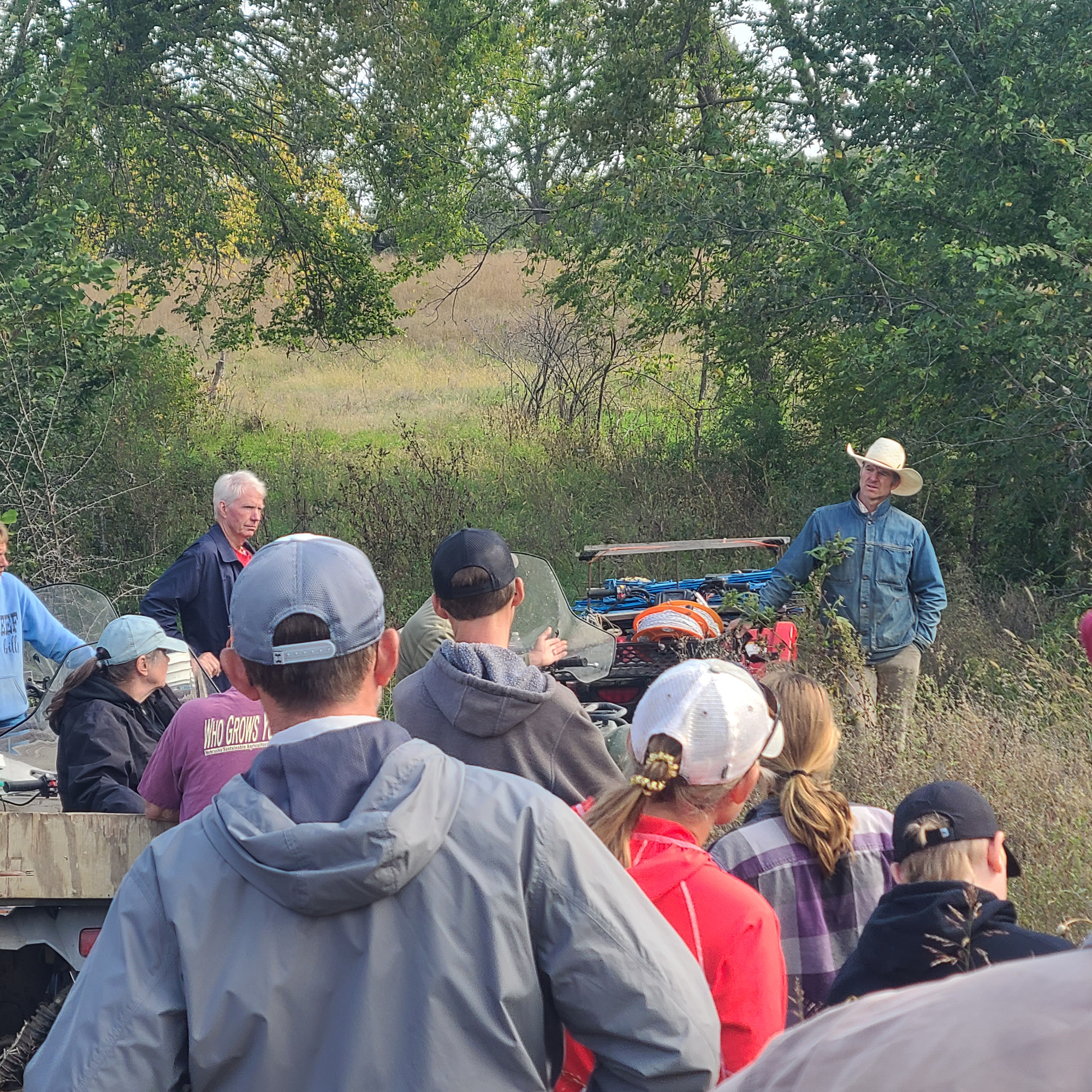
The last network field day of 2025 was Oct. 11 near Steinauer with Alex McKiernan of Robinette Farms. Alex guided a tour of his pastures where he is establishing a goat herd that alternates rotational grazing patterns with his cattle. Through this method, the goats are creating forage value from plants that other grazing livestock will pass over, while also helping to control woody encroachment on grasslands. Alex also touched on subjects ranging from grazing infrastructure to marketing strategies. Lunch was catered on site by Open Harvest Organic Grocery Store in Lincoln.
For more information or to get involved with the network, contact Andrew Tonnies at [email protected].