
Name two things that shouldn’t work together, but actually make a great pair. Think French fries and a milkshake, wearing seemingly opposing prints together like stripes with polka dots, or kittens playing with ducklings and becoming best friends.
While there’s a lot of potential here for interesting combinations, if you said agritourism and IT support, you’d be right on the money in this instance.
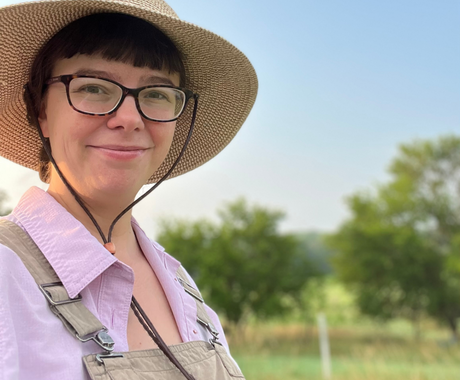
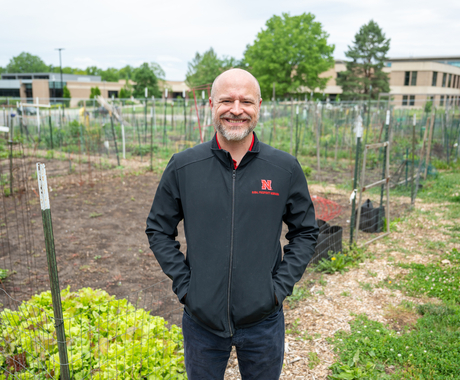
Josh Frank and his wife, Corinne Kolm-Frank, purchased their farm in 2018 from retiring farmers who wanted to keep the land in diversified sustainable production. Their operation, located near Beatrice, Nebraska, has become a melting pot of ideas and passions, joining the couple’s skills and dreams. Together, they created Giving Tree Hub. At the center of that amalgamation are their businesses, Giving Tree Farm and Giving Tree Tech Services.
The latter consists of local in-home technical support and repairs for computers, printers, cell phones, tablets, and internet-linked devices like TVs and smart speakers, as well as installing long-range Wi-Fi internet and camera doorbells.
While Josh runs the tech side of things, both he and Corinne work together on the farm. Josh remembers many happy summers on his grandparents’ farm and is glad to have the chance to return to those roots.
The farmers raise organically grown fruit, custom-grazed beef, and free-range eggs. They sell their goods in several ways: at the Beatrice Farmers Market, through a subscription service for a small customer group, local pick-up, and direct sales to a private school.
“Corinne has worked her adult life in organic food, mostly as an inspector,” Josh said. “She has long been passionate about agritourism and education. Her background and her family farming roots have strongly shaped our belief that farms should nourish both people and place.”
Sharing the fruits of their labor with others has been rewarding for Josh, though he has plenty of reasons to stay motivated.
“I believe that many modern health challenges are connected to processed food and a lack of connection to nature,” he said. “I wanted to grow real food, spend my time outdoors, and help others do the same.”
Josh’s commitment to improving their land’s soil health, habitat, and long-term productivity led him to the Center for Rural Affairs Beginning Farmer Conservation Fellowship Program. He knew it aligned with his goals because his farming partner also participated in the Fellowship.
To be eligible for the fellowship, beginning farmers must be actively farming in Nebraska for less than 10 years. The program emphasizes a variety of conservation topics essential to farming such as cover cropping, rotational grazing, pollinator habitat, soil health, water conservation, topography, and climate mitigation strategies.
The program started in 2022 with eight farmers, plus their mentors. The current cohort, including Josh, was chosen in January 2025 and will continue through August 2026.
On their 80-acre operation, Josh and Corinne have implemented rotational grazing, restored pasture quality, built resilient pollinator and wildlife habitat, and expanded their orchard to increase biodiversity and soil health.
As part of the conservation fellowship, farmers design and implement a project on their own farm or land they are farming. They present their findings at a farm tour to their mentors, project partners, and other beginning farmers.
Josh titled his project “Pasture Quality and Ecological Resilience through Rotational Grazing and Fire Management.”
“Our land has incredible potential that can only be unlocked through intentional management,” Josh said. “We are in the early planning phase, mapping paddocks and designing fencing and water systems to set up a more successful grazing rotation. This work will continue well beyond the fellowship as a core part of our long-term farm plan.”
The fellow has learned the tricks of the trade from a mentor who has years of hands-on experience in the areas of pasture restoration and management, species succession, rotational grazing, fire management, animal health, and preventive care.
“The support and education—especially through mentorship—make a huge difference for beginning farmers who want to grow in the right direction,” Josh said.
The small diversified farm emphasizes conservation and creativity, and promotes both through agritourism. The farmers specialize in seasonal u-pick services for fruit trees, berries, garden produce, and wildflowers. They also offer opportunities for the public to enjoy outdoor activities like birdwatching during the spring migration, canoeing and kayaking rentals to use in their 20-acre lake, and taking in the sight of hundreds of monarch butterflies roosting in their trees during a pit stop on their fall migration every September.
Josh and Corinne have over 1.5 miles of walking trails that pass ponds, creeks, woodlands, prairies, fields, and their lake. Seasonal special events are held at the farm, including farm tours, apple festivals, and other activities and workshops for their community.
“Visitors often notice the peaceful mix of open pasture, wildlife habitat, and orchard systems,” Josh said. “Agriculture creates food, but it also creates community, beauty, and opportunities for learning. Each year, we host a farm camp for young kids, helping them connect with land, animals, and where their food comes from. These experiences are creative, hands-on, and rooted in stewardship.”
Moving forward, Josh and Corinne plan to continue improving pasture quality and expanding organic fruit production and pest management so their orchard can flourish and become a key enterprise for their farm. They also hope to add more offerings to the public like an overnight cottage rental and tent and RV camping.
“Being part of the conservation fellowship gives me support and confidence, and affirms that our vision for conservation and community is worth pursuing,” said Josh. “We want people to feel connected—to their food, to the land, and to each other. That’s the heart of Giving Tree Farm and everything we’re building.”
For more information, visit cfra.org/beginning-farmer-conservation-fellowship-program.
This material is based upon work supported by the U.S. Department of Agriculture (USDA), under agreement number NR243A750003C010.
Any opinions, findings, conclusions, or recommendations expressed in this publication are those of the author(s) and do not necessarily reflect the views of USDA. In addition, any reference to specific brands or types of products or services does not constitute or imply an endorsement by USDA for those products or services.
USDA is an equal opportunity provider, employer, and lender.