Para la versión en español, haga clic aquí.
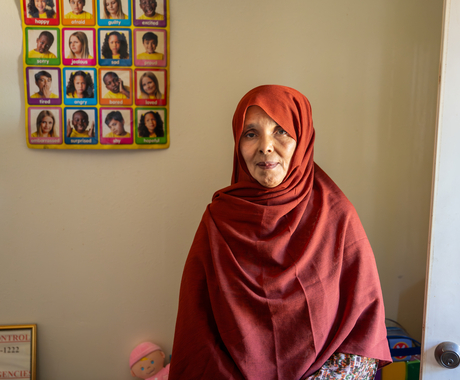
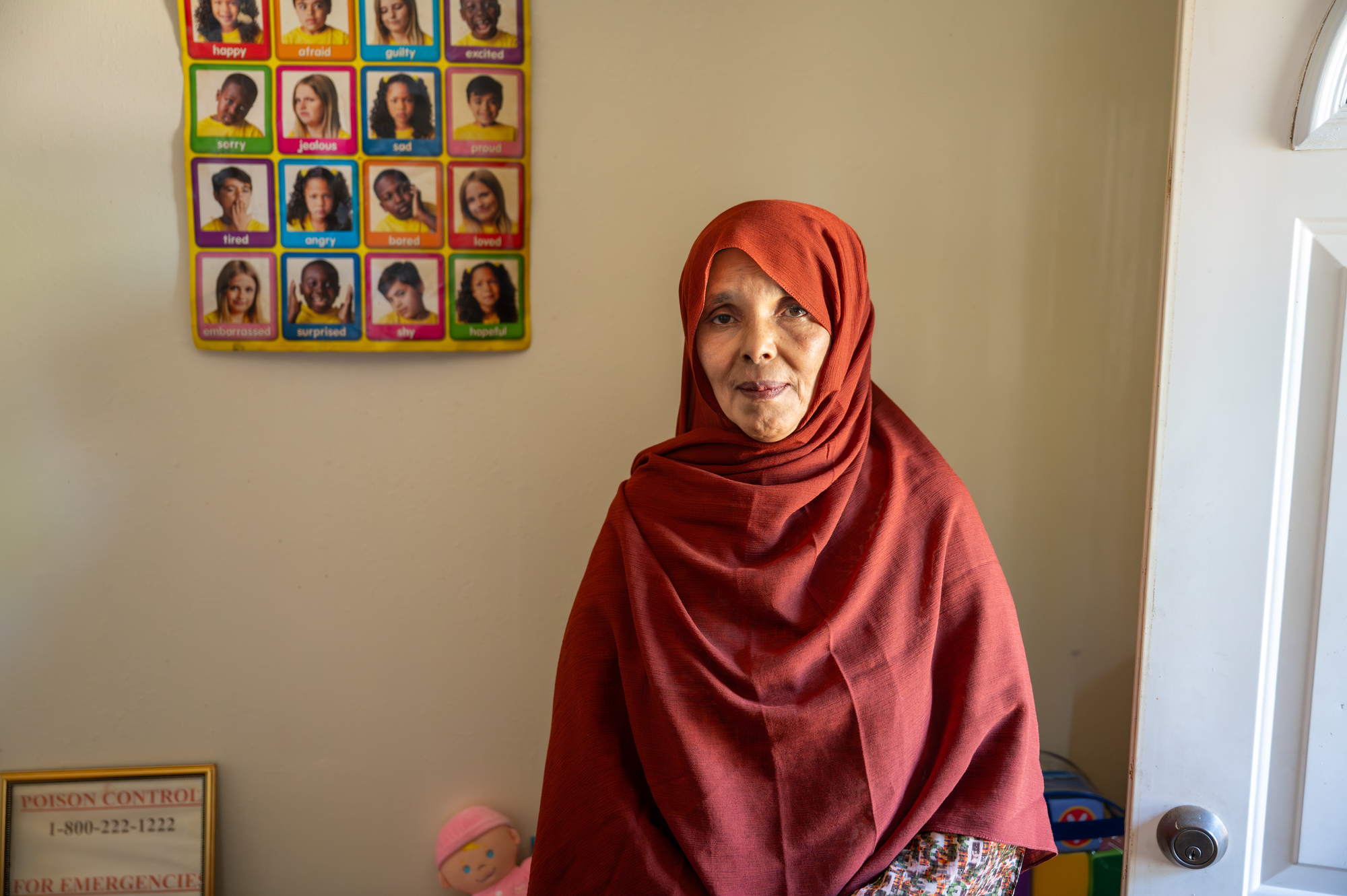
Huda Hirsi has long dreamed of living in a safe place and working to support her loved ones.
With sponsorship from her sister, Huda and her family were able to come to the U.S. from Somalia in 2007. The refugees began their life in the U.S. in Maine. Huda struggled to find a job because of the language barrier, but it didn’t stop her from getting involved in the community.
“Coming to the United States to work was part of my dream to keep my family safe,” said Huda. “My brothers, sisters, mother, and father all came. I started volunteering at a church giving people food without knowing English, but I was not afraid of that. The religion was not my religion, but that didn’t stop me.”
Her presence in the community helped Huda get to know her neighbors and obtain support letters that allowed her family to move to Grand Island, Nebraska a year later. There, Huda was able to get a job at a meat processing plant, and though she was paid well, she decided it wasn’t right for her. After five years, she left to pursue something she was more passionate about: child care.
“I was happy when I could help people, and the help I could provide was babysitting,” Huda said. “I started babysitting in 2014 without a license, and went to school to study English. That’s where I found out about getting a license for child care.”
Through determination and dedication, Huda was able to obtain her license in September 2020 and opened her in-home child care service, Home One Daycare. Currently, Huda serves six children from three families, with the help of one employee.
Huda’s hard work hasn’t stopped. Recently, she participated in a Childcare Accelerator Award Program presented by the Center for Rural Affairs Women’s Business Center (WBC), Stearns Bank, and the Association of Women's Business Centers. The Center’s WBC was among seven across the country selected to serve as accelerator hubs and to receive grant funding.
Designed to assist licensed child care providers in scaling operations, expanding services, and improving sustainability in their communities, the program included 10 Nebraska child care providers. They engaged in hands-on training sessions and gained personalized technical assistance and guidance in financial services.
Before participating in the program, Huda felt great anxiety about visits by state inspectors and the difficulties they had understanding each other. Now, she has more faith in herself and her abilities to run her business.
“I learned a lot and it helped me to understand finances and how to get my certificates,” she said. “I gained more confidence in being ready for audits and people coming to my home. I am very happy with all that I learned.”
Because of the program, Huda has been able to save money to invest and spend on her day care. The program also offered participants a stipend to use on their business, which left Huda enthusiastic about her next steps.
“[I have] confidence, and I am ready for everything!” she said “The stipend is a great help; I buy food and sometimes things that help out the families who can’t afford them. Now, after learning on my computer how to plan, I can have a little bit [of money] to help in my business.”
From learning a new language to navigating child care in a different country, Huda continues working hard to support herself and the families of the children she cares for.
“We don’t really see child care in my country like they do in the U.S.,” she said. “Sometimes, it's family or another person that comes and watches kids at home. We don’t have that many work opportunities for women in our country like here in America, so child care is not as necessary.”
Knowing they have someone they can trust makes it easier for parents to feel secure in going to work and leaving their children in good hands.
“My friends and family can’t work if I can’t help them with their kids,” Huda said. “That is what I like the most—that I get to help them so they can go to work, because that is why we come here. That is why I worked so hard and did everything I could do to get my license in Nebraska. It was very hard, but I love helping people.”
From 5:30 to 12:30 a.m., Huda dedicates herself to caring for others. She works long hours to provide flexibility for the parents’ jobs. Eventually, Huda hopes all her sacrifices will help her buy a home to expand her child care business.
And to anyone in her shoes, new to the country and looking to start their own business, Huda encourages them to give it their all.
“Do it!,” she said. “You can do it! GO! It is hard, but I can do it and you can do it. Women can do any business in America.”
The Childcare Accelerator Program was made possible by Stearns Bank in partnership with the Association of Women's Business Centers. The Nebraska program is held in partnership with Sixpence Early Learning Fund and Nebraska Educational Service Units. The Childcare Accelerator Award Program ran from Aug. 23 to Sept. 13, 2025.
For more information, visit cfra.org/small-business-training.
This piece was written in collaboration with Jessica Campos, Women’s Business Center director.