Laura Priest, policy associate, 402.380.6606 or [email protected]; and Rhea Landholm, media and marketing manager, 402.603.0074 or [email protected]
Lyons, Nebraska - As electricity demand grows, solar energy projects are being deployed at a rapid rate. New research from the Center for Rural Affairs highlights how land use tax policy can incentivize keeping land used for solar development in agricultural use at the same time.
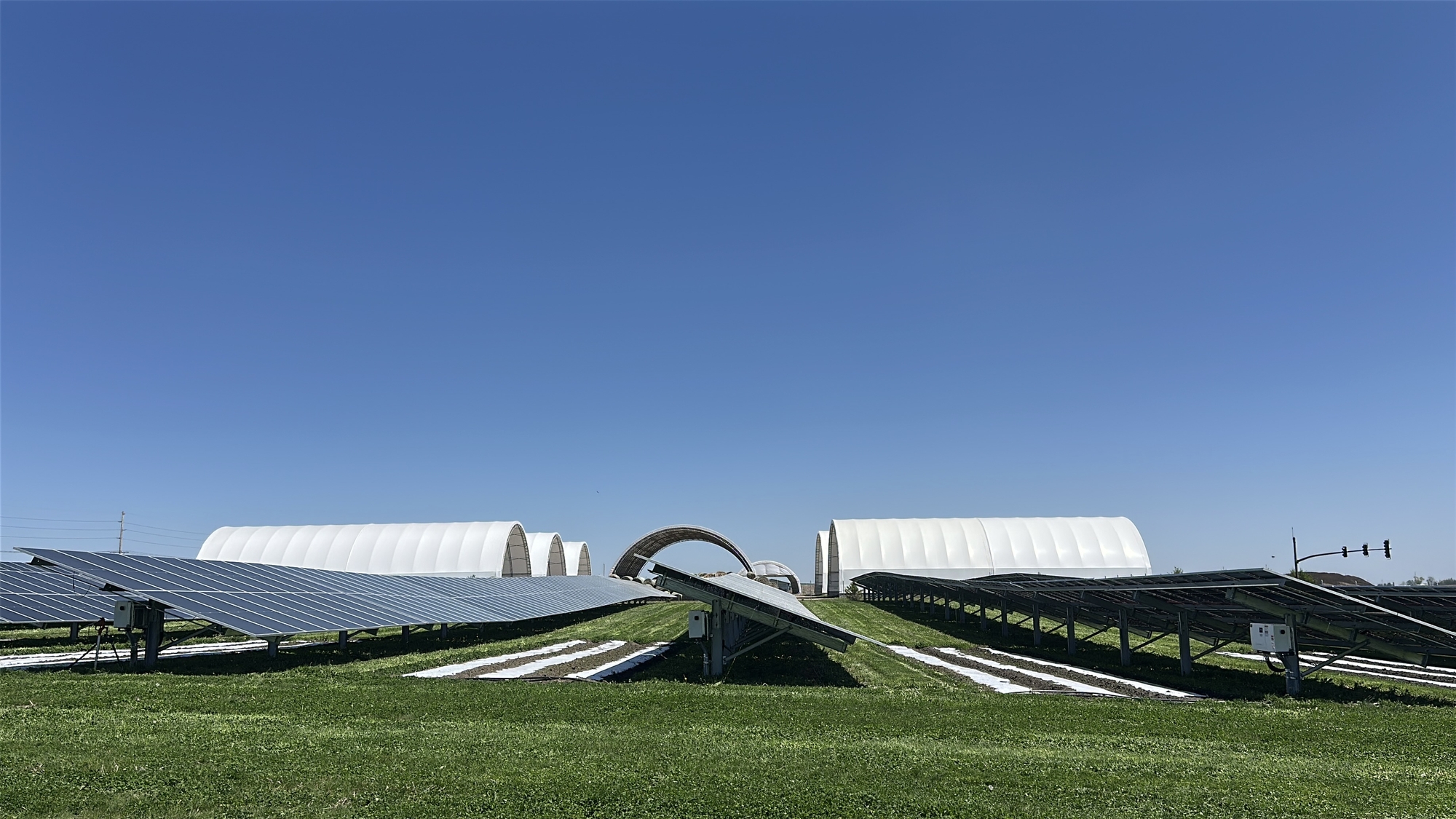
Released today, the fact sheet “Land Use Tax Policy Considerations for Agrisolar” examines how tax policy can support the coexistence of renewable energy and agriculture by incentivizing dual-use or agrivoltaic practices.
“As solar development accelerates, some states have adopted policies allowing land used for solar to retain its lower agricultural tax classification, as long as the land under the panels is maintained in agricultural use, such as grazing or crops,” said Laura Priest, policy associate with the Center for Rural Affairs. “This approach can allow farmers to take advantage of additional income from clean energy development while keeping land in ag use.”
The fact sheet notes that current use taxation practices often reduce property tax burdens for farmland owners. When land is removed from these programs for solar development, penalties or higher assessments may apply. However, states can design tax policies that allow land to remain classified as agricultural when dual-use practices are in place, supporting both energy production and farming.
For example, in 2025 the state of Nevada adopted bipartisan legislation that defined what it considered to be agrivoltaic practices, and specified that land used in this manner retains similar tax benefits to traditional farmland.
“Thoughtful tax policy can encourage agrisolar approaches that strengthen farm viability, support energy needs, and keep land in agricultural use,” Priest said.
To read and download the fact sheet, visit cfra.org/publications.