
Para la versión en español, por favor oprima aqui.
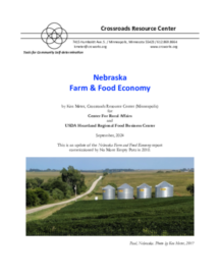
Nebraskans spend more than $5 billion per year buying food that is sourced from out of the state. The "Nebraska Farm & Food Economy Report" indicates this loss of economic potential is driving a growing interest in locally-produced food.
The report provides a snapshot of the agricultural economy in Nebraska, including statistics about farm sizes, commodity production and sales, and how residents spend their money on food.
The Farm & Food Economy Report provides an educational resource that presents statistical information about the agriculture economy. Findings published in it can provide a starting point in conversations about strengthening our local food systems.
Despite being the fourth largest farm state in the country, only a small amount feeds Nebraskans. Investment in developing and strengthening local food systems has multifaceted benefits but has not received as much attention in the state compared to others.
Key findings include:
- Federal subsidy programs in the farm bill support food and farm efforts, but not neccessarily local food
- An average annual combined total of farm subsidies equaled $1.1 billion between 1989 and 2022
- An average annual combined total of SNAP receipts equaled $201 million per year between 1989 and 2022
- Subsidies received by farms mostly support production of crops that do not directly feed Nebraskans while food insecurity is rising in the state
- The number of farms and farmed land in Nebraska has steadily declined
- Between 2017 and 2022, Nebraska lost nearly 2,000 farms and 1 million acres of farmland
- Net Cash Income for Nebraska farmers has a history of volatility
- Annual farm income has fallen below zero 9 times since 1969, most recently in 2017
- Rising production expenses have kept pace with rising cash receipts, stifling robust farm income gains
- USDA estimates that national farm net incomes has fallen 37% since 2020
- The average age of farmers is steadily rising and 26% are new and beginning farmers.
- Sales of organic products reached $152.6 million in 2022, an increase of 125% from 2017 sales
- Nebraska lost 44,479 farms from 2017 to 2022
- These trends underscore the need for comprehensive supports for new and beginning farmers, as Nebraska’s best opportunity to reverse the decline in agricultural operations
- There are indications of growing consumer demand for locally produced food
- $16.6 million in sales were direct from farmers to households
- When adjusted for inflation, beef sales have grown despite the number of animals sold remaining steady, which could be a signal of growing demand for qualify beef
- A small number of farms sell directly to households or directly to retailers, but these sales have also grown between 2017 and 2022
- 84% increase in sales directly to consumers
- 45% increase in farms selling directly to retailers, institutions, and food hubs
- 36% increase in sales of farms selling value added products
- A significant amount of food purchased for consumption—$6.4 billion—is sourced from outside of the state
- If each Nebraska resident purchased $5 of food each week directly from farms within the state, this would generate $512 million of new farm income
- Only .06% of farm cash receipts and .2% of the state’s consumer market comes from locally grown food
The report is by Ken Meter, Crossroads Resource Center (Minneapolis) for Center For Rural Affairs and USDA Heartland Regional Food Business Center.
The report compiles data from the U.S. Census of Agriculture, USDA Economic Research Service, Bureau for Economic Analysis, and other publicly available data. It is an update of the Nebraska Farm and Food Economy report commissioned by No More Empty Pots in 2010.