Por Johnathan Hladik, exdirector de políticas
En el Centro de Asuntos Rurales, hemos investigado exhaustivamente durante años los beneficios económicos del desarrollo de energías renovables para las comunidades rurales. Los datos sobre ingresos fiscales, arrendamientos y creación de empleo ilustran en parte el impacto del desarrollo eólico y solar en el Medio Oeste. Sin embargo, solo muestran una parte de la historia.
As the public’s appetite for renewable energy continues to grow, farmers and landowners passionate about preserving farmland and natural habitat are facing tough choices. Last fall, at our Community Conversation in Boone, Iowa, we had a thorough discussion on the top questions landowners consider before signing a lease for new wind turbines and solar installations.
Farmers want assurances that new construction will not compact soils and destroy tile lines. If someone signs a once-in-a-generation lease, what are their descendants going to be dealing with after they are gone? How can farmers avoid having concrete pads poured into their best farm fields?
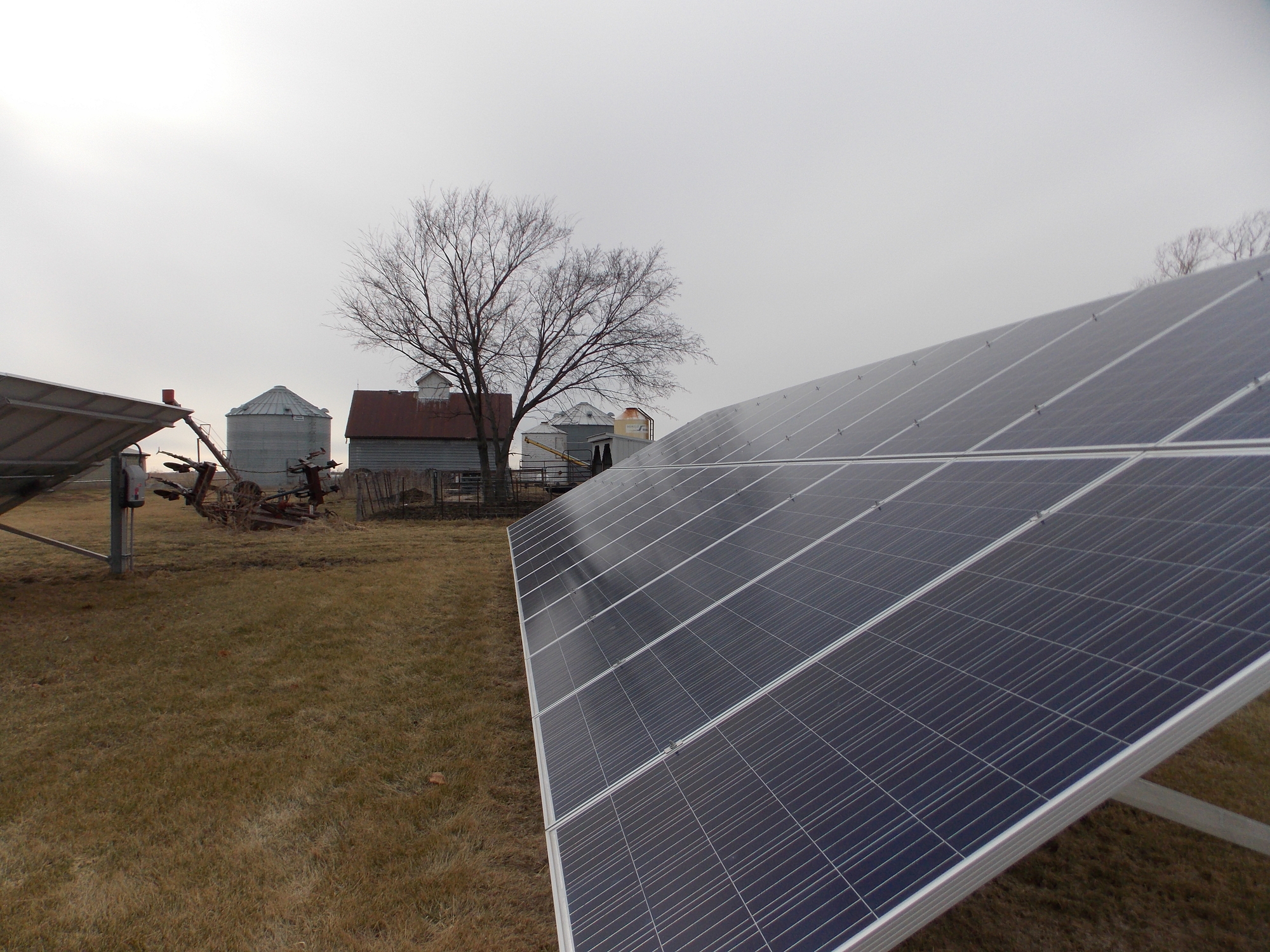
These individual questions bring a need for larger answers from communities. Balancing competing land uses for farm ground, critical native wildlife habitat, and renewables will be key to a future with sustainable clean energy growth. More communities are finding a path forward by finding dual uses for arable land that combines farming with native habitat, grazing, or both. Through state legislation, Illinois, Maryland, Minnesota, and New York have created habitat certification programs for solar installations. With similar legislation proposed in the Legislature, Iowa could join this group by developing best practices for pollinator-friendly solar projects.
In Minnesota, such legislation was coupled with another bill encouraging investment in community solar projects. This program has resulted in more than 681 megawatts (MW) of new solar generation since its inception in August 2015. Recent estimates show that roughly half of the 4,000 acres of solar in Minnesota have pollinator habitat incorporated with them. These habitats not only benefit bees and butterflies, but song and game birds as well.
Investments in the creation of such habitat can be critical for maintaining and growing bird populations. Wind developers take seriously the threat posed by their installations and spend millions filing conservation plans, intake permits, and document losses. We recently released two new fact sheets that analyze this process—one for wind and solar y one for transmission infrastructure.
No system is perfect, and changes will not happen without sacrifice. As tough as that can be at times, climate change poses a real threat to our natural world greater than drawbacks from these installations. And, these investments in clean energy drive home the importance of energy efficiency. As we change the way our energy is produced, modifying how much and the ways in which we use it are imperative for the sustainable growth of renewables. A fact sheet on energy efficiency can be found here.
As we continue to advocate for economically vibrant rural communities, helping to build more natural resilience will continue to be a priority.