Por Cody Smith, ex miembro del personal
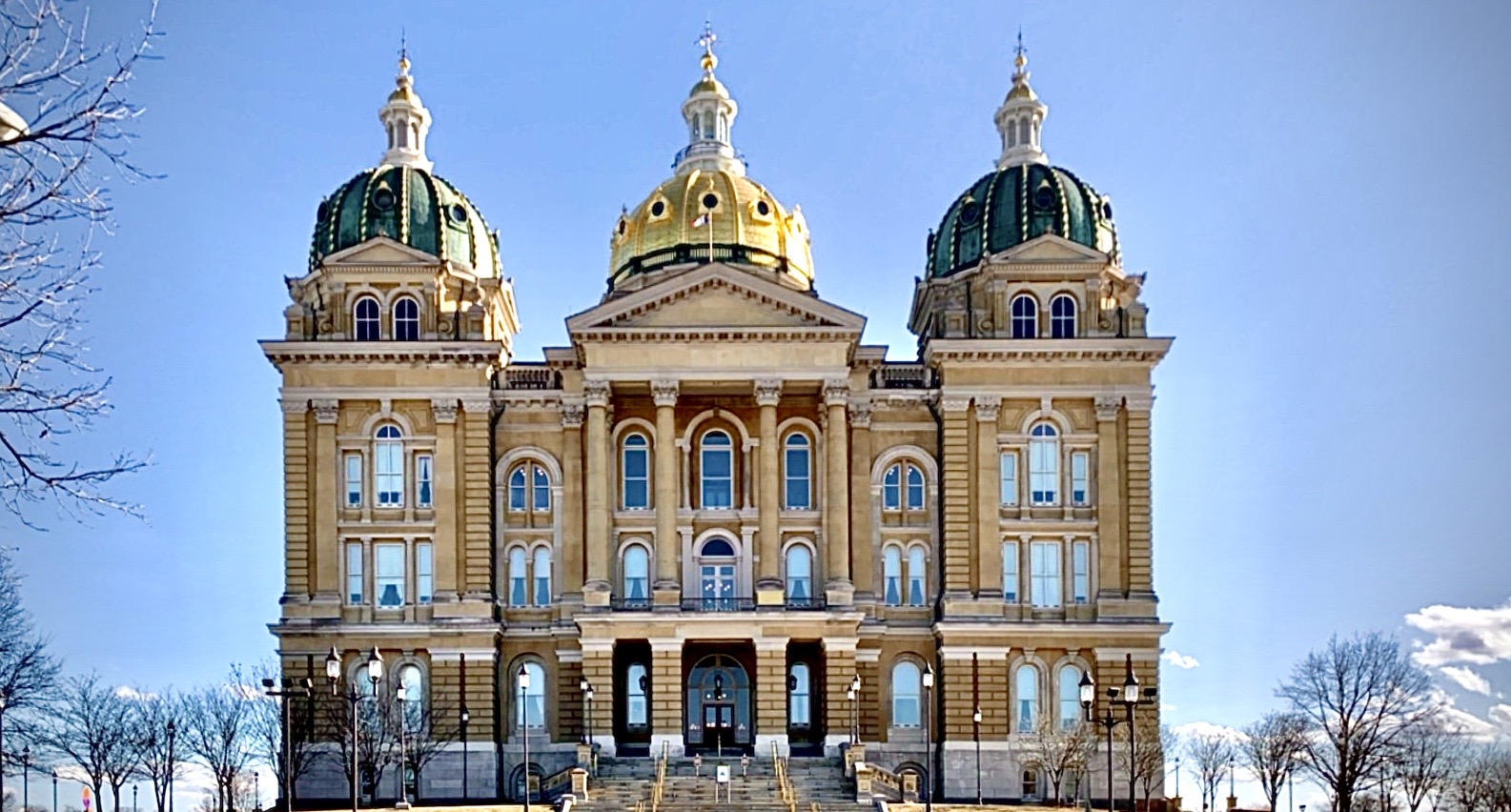
The Iowa General Assembly has entered week three of the 2020 legislative session, this is the second year of the two-year assembly. Last Friday, Jan. 24, the deadline for individual representatives and senators to submit requests for bill and joint resolution drafts to the Legislative Services Agency passed. This means most bills this session have already been submitted.
In our last update, we gave an overview of our priorities and expectations for the session. Fortunately, we’ve been able to achieve movement on a few top priorities. You will find updates on our key issues detailed below.
As bills are introduced in the next few weeks, we will keep you informed on our lead initiatives and other key legislation we are following.
Calidad del agua
Financiación para el Legado de Agua y Tierra de Iowa (IWILL)
During her Condition of the State Address, Iowa Gov. Kim Reynolds announced her plan for a one-cent sales tax increase as part of her Invest in Iowa proposal to the Legislature. This one-cent increase includes the necessary 3/8ths of one cent increase to fund the Natural Resources & Outdoor Recreation Trust, or IWILL.
Operating on the assumption that IWILL would generate $171.3 million dollars per year, Gov. Reynolds also suggested changes to the original IWILL formula that was passed by voters in 2010 and exists in Chapter 461 of the Iowa Code. We have completed an in-depth analysis of Gov. Kim Reynold’s IWILL proposal to the Legislature. The piece includes proposed changes to existing state agency funding, which includes replacing more than $51 million in existing state agency funding with IWILL dollars. The proposal also replaces more than $19 million in programs currently funded by the Rebuild Iowa Infrastructure Fund (RIIF). Notably, by our calculations, this IWILL proposal would generate more than $100 million dollars in new funding for natural resources and outdoor recreation programs in Iowa. As an equation, it looks like this:
$171,300,000 (annual IWILL funding)
- $51,353,738 (proposed agency funding replacements)
- $19,800,000 (proposed RIIF funding replacements)
$100,146,262 (new money from IWILL)
We continue to believe investments in Watershed management authorities (WMAs), which are cooperative partnerships between cities, counties, and soil and water conservation districts, are key to long-term water quality improvement. Though serious questions remain on how this three-eighths of one cent sales tax increase would be coupled with other tax reforms, we are actively working with Governor’s office and the Legislature to make investments in WMAs and sustainable watershed-level staffing.
Archivo del Senado (SF) 2047 (Para): An Act relating to the property tax exemption for property designated to be a native prairie or wetland and including effective date and retroactive applicability provisions.Current Code section 427.1(23) provides a property tax exemption for land designated as native prairie or land designated as a protected wetland by the Department of Natural Resources if the property is not used for economic gain. This bill specifies that the receipt of payments under the federal wetlands reserve program or the federal agricultural conservation easement program shall not be considered a use for economic gain.
Proyecto de Ley de Estudio del Senado (SSB) 3057 (Para): An Act concerning federal financial assistance funding for hazard mitigation.
This bill would allow the state to help provide funds to supplement federal hazard mitigation dollars Up to 10 percent would be eligible if granted under the federal Robert T. Stafford Disaster Relief and Emergency Assistance Act or the federal National Flood Insurance Reform Act of 1994. Under this bill, the state cannot exceed 50 percent of the total project cost. The local community must have state-approved comprehensive emergency plan.
Archivo de la casa (HF) 2111 (Undecided): An Act providing for the powers of commissioners of soil and water conservation districts.
The bill amends provisions authorizing commissioners to exercise a number of powers, subject to certain limitations, including to conduct surveys, investigations, research activities, and demonstration projects. The bill provides that commissioners must also act to conserve or enhance soil health and water resources, and reduce the effects of flooding. This bill also makes changes into required partnerships Soil and Water Conservation Districts must make with Iowa State University.
Energia limpia
HF 476 (For): Ley relativa a los créditos fiscales para sistemas de energía solar, que incluye disposiciones sobre su aplicabilidad.
Este proyecto de ley aumenta el valor máximo acumulado de los créditos fiscales para sistemas de energía solar que los solicitantes pueden reclamar anualmente, de 5 millones a 10 millones de dólares. Seguiremos colaborando con nuestros socios para impulsar este proyecto de ley y ampliar aún más el crédito, al tiempo que promovemos una cláusula que desvincule este crédito fiscal estatal para la producción solar del crédito fiscal federal, cuya eliminación gradual comenzó en 2020.
HF 669 (Against): Ley relativa a las tarifas de los servicios eléctricos y las opciones de apoyo a la infraestructura para los clientes de generación privada.
This bill would add a large annual fee to consumer-generators who own their own solar panels, disincentivizing net metering. Net metering allows farmers to “store” the excess energy they produce on the grid, which helps reduce electricity costs during peak demand hours for their neighbors and provides a cost-cutting strategy for farmers.
Proyecto de ley de estudio de la casa (HSB) 540 (For): An Act relating to the construction, ownership, and maintenance of electric transmission lines.
This bill helps advance the development of transmission lines and grid infrastructure by granting “right of first refusal” to developers who lead the planning process of energy infrastructure projects. Transmission infrastructure development is crucial for expanding renewable energy development.
Desarrollo economico
HF 2023 (For): An Act exempting from the computation of the individual and corporate state income taxes broadband grants received by communications service providers, and including effective date and retroactive applicability provisions.
Este proyecto de ley permite a un proveedor de servicios de comunicaciones que reciba una subvención federal, estatal o local para banda ancha excluir el monto total de dicha subvención del cálculo de su impuesto estatal sobre la renta individual o corporativa, siempre que la subvención se utilice para instalar infraestructura de banda ancha en áreas específicas donde ningún proveedor ofrece un servicio de internet que cumpla con los umbrales de velocidad de banda ancha. La Comisión Federal de Comunicaciones define la velocidad de banda ancha como 25 megabits por segundo (Mbps) para descarga y 3 Mbps para subida.
SF 2048 (For): Ley relativa al programa de subvenciones para la conexión de granjas, escuelas y comunidades de banda ancha en Iowa, que establece asignaciones presupuestarias e incluye disposiciones sobre la fecha de entrada en vigor.
Under current state law, the Office of the Chief Information Officer, which administers the Connecting Iowa Farms, Schools, and Communities Broadband Grant Program, is prohibited from awarding a grant if it exceeds more than 15 percent of the communications service provider’s total project cost. This bill would raise that cap to 25 percent, thus allowing for more state investment in broadband infrastructure.
SF 601 (Undecided): Ley que establece un fondo para la administración y el cumplimiento de la normativa sobre plaguicidas y que asigna fondos para tal fin.
This legislation would create a Pesticide Administration and Enforcement Fund under Section 206.5A of the Pesticide Act of Iowa which would be for the sole purpose of administering certification courses and enforcing the rules of the act. This fund would collect the $75 fee for a three year commercial pesticide applicator certification and the $15 fee for a three year private/personal pesticide applicators license.
Próximos eventos
Jan. 29 - Iowa Solar Energy Trade Association Day at the Capitol
Feb. 21 - First Funnel deadline. This is the final day for Senate legislation to exit Senate committees and House legislation to exit House committees.
Enlaces importantes
Encuentra la información de contacto de tus legisladores.
Consulte el calendario legislativo de Iowa.
Apoye y conozca el Centro para Asuntos Rurales.
Contenido relacionado
Prioridades legislativas de Iowa para 2020
Ficha informativa: La salud del suelo en Iowa
Biblioteca de recursos de cuencas hidrográficas de Iowa
Hoja informativa: Autoridades de gestión de cuencas hidrográficas en Iowa
Hoja informativa: Introducción a la planificación de cuencas hidrográficas
Fact Sheet: Leveraging Local Funds for Watershed Improvement