Por Cody Smith, ex miembro del personal
Llevando la Iowa rural a Des Moines
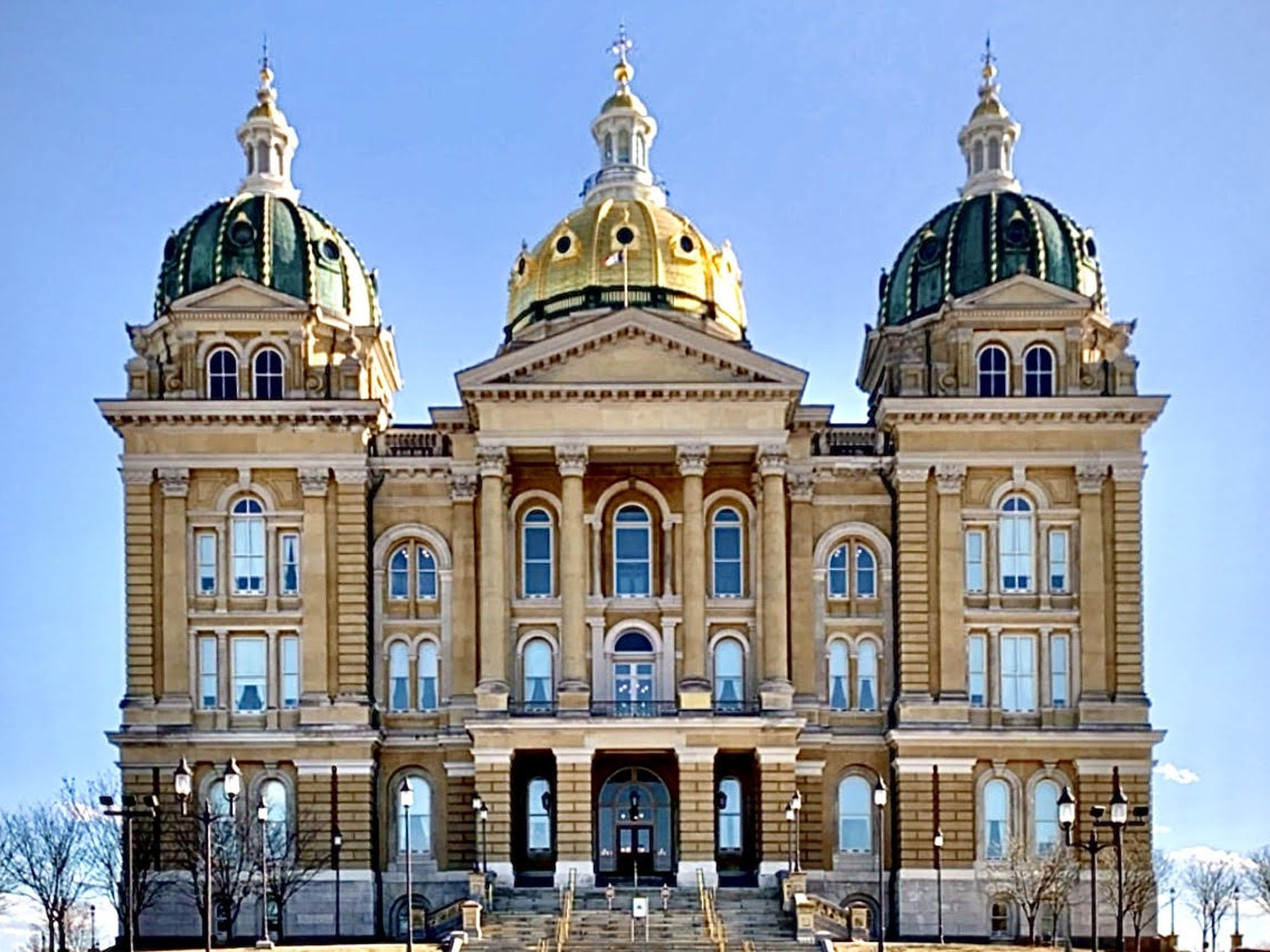
The Iowa Legislature just wrapped up week six of its 2021 session, and some key deadlines are approaching quickly. The first funnel, the deadline for a bill to get out of a committee, is March 5. As we approach this key date, the Center will keep you informed about which of our shared priorities have, and have not, advanced.
Please reach out if you want to add your voice to our efforts.
Gracias por su compromiso con la zona rural de Iowa.
Energías renovables
Bills relating to renewable energy remain some of the most available opportunities for you to make a difference in the Legislature this session. We’re tracking a couple of bills that would have major implications for rural Iowans across the board.
Archivo de la casa (HF) 221-Para: An act relating to the solar energy system tax credit available against the individual and corporate income tax, the franchise tax, the moneys and credits tax, and including effective date and retroactive applicability provisions. Introduced by Rep. Jarad Klein, this bill would help farmers, small businesses, and homeowners across rural Iowa generate a long-lasting return on investment when they purchase solar energy. The bill would:
- Duplicar el límite impuesto por el estado al Crédito Fiscal Solar de Iowa de $5 millones a $10 millones a partir de 2021 para promover el crecimiento a largo plazo de la industria solar de nuestro estado.
- Asignar $7 millones adicionales en 2021 para pagar los atrasos de años de agricultores, pequeñas empresas y propietarios de viviendas que ya han comprado sistemas de energía solar y han estado esperando recibir su crédito.
- Bolster Iowa’s clean energy leadership by decoupling the Iowa Solar Tax Credit from the federal Investment Tax Credit (ITC) and set the state credit at 15% of total project costs. Currently, the credit is written to be 50% of the federal ITC, leaving Iowa’s clean energy future at the mercy of an unpredictable federal government.
- Establezca el 30 de diciembre de 2030 como fecha de vencimiento para el Crédito Fiscal Solar de Iowa.
UPDATE: A few weeks ago, this bill passed out of its House Subcommittee with unanimous support. The bill remains in the House Ways & Means Committee, and we need your voice to make sure it moves forward. Click here to send a customizable email to your state legislators, contact them directly, or write a letter to the editor to your local newspaper in support of this bill. We have also registered in support of similar bills HF 323 y SF 215.
Aprenda más:
La legislación podría iluminar el futuro de la energía limpia en Iowa
Consulte este recurso de nuestros socios del Consejo Ambiental de Iowa
Lea nuestros comentarios oficiales aquí
Proyecto de Ley de Estudio del Senado (SSB) 1088 / HF 460-Contra: An act relating to vegetation management by certain electric suppliers. As written, these bills give municipal utilities, rural electric cooperatives, and investor-owned utilities widespread authority to remove any vegetation within an electric distribution line corridor. We believe there should be changes to protect private property rights and conduct a clear assessment of the risks that may or may not be posed by existing vegetation. In addition, we are advocating for a clear remedial process for affected property owners.
UPDATE: On Feb. 8, the House Commerce Committee approved a slightly amended version of HF 460—formerly House Study Bill (HSB) 149—and it is now on the House Floor. SSB 1088 remains in the Senate Commerce Committee. The Center provided suggested amendments to lawmakers in both chambers that would do three things:
- Rein in the unchallenged authority of electric suppliers by shrinking their wide corridor of authority outside of city limits from 30 feet to 10 feet so it aligns with the same requirements within city limits.
- Establish a clear adjudication process at the Iowa Utilities Board (IUB) for affected property owners so they can dispute scheduled vegetation management actions if they choose;
- Require electric suppliers to file a vegetation management plan on a bi-annual basis with the IUB that outlines clear remedial options for affected property owners, outline clear processes for notifying property owners of scheduled vegetation management actions, and outline potential remedial options for affected property owners.
Aprenda más:
Lea nuestros comentarios oficiales aquí
SSB 1152-Indeciso: An act relating to wind energy conversion facilities and making penalties applicable. This bill aims to set financial requirements for the decommissioning of wind turbines while also setting standards for land restoration after completion.
Update: On Feb. 9, this bill advanced out of subcommittee; it now rests in the full Senate Agriculture Committee.
Calidad del agua
We remain committed to securing state support for watershed management authorities, watershed coordinators, and other locally directed watershed improvement efforts. Last update, I shared our efforts to enact the Watershed Advancements That Enhance Resources (WATER) Pilot Program. As a reminder, this program would authorize the Iowa Department of Natural Resources to award three, three-year grants of $300,000 to eligible watershed management authorities to cover the expenses of staffing a full-time watershed coordinator. We continue to believe that Iowa’s water quality, flood mitigation, and outdoor recreation efforts are most successful when we empower our communities to chart their own paths forward.
HF 523-Para: This bill, sponsored by Rep. Bobby Kaufmann, changes state code to define county flood mitigation activities as an "essential county purpose," which would allow county boards of supervisors to contract debt and approve bonds, as allowed, for other essential county purposes.
UPDATE: This bill (formerly HSB 56) advanced out of the House State Government Committee on Feb. 11. Subsequently, we changed our position on this bill from “Undecided” to “For” because we believe that counties should be able to exercise every available tool at their disposal to protect rural communities from the devastating impacts of flooding.
Archivo del Senado (SF) 1-Indeciso: Sponsored by Sen. Brad Zaun, this legislation modifies state code that defines which animal feeding operations are, and are not, identified as single operations in law. The intent is to comply with air and water regulations on animal feeding operations, as enforced by the Iowa Department of Natural Resources.
SF 52-Indeciso: An act prohibiting the sale or use of pesticides containing a compound belonging to the neonicotinoid class of chemicals, making penalties applicable, and including effective date provisions.
Desarrollo económico rural
A flurry of legislation has been introduced related to agriculture, beginning farmers, small businesses, and a variety of other topics regarding rural economic development. While we are tracking each of the following bills, we see the most promise in those investing in rural broadband, altering the beginning farmer tax credit, and promoting investments in small businesses.
SF 390 / HSB 133-Para: Una ley relacionada con el servicio de banda ancha, que incluye asuntos bajo la competencia de la Oficina del Director de Información, el Fondo de Subvenciones de Banda Ancha Empower Rural Iowa, e incluye disposiciones sobre fecha de entrada en vigor y aplicabilidad.
This is Gov. Kim Reynolds’ broadband bill, which she announced in her Condition of the State Address in January. In all, the bill would allocate $150 million for broadband expansion this fiscal year and up to a total of $450 million by 2025. We are excited for this groundbreaking investment in rural broadband. In addition to our support, we are encouraging lawmakers to adopt a clear definition of what “rural” means in the bill. We have suggested using the “Nonmetro” county classification as defined by the U.S. Department of Agriculture.
UPDATE: On Feb. 17, the Senate Commerce Committee advanced SF 390 (formerly SSB 1089) to the Senate Floor with a vote of 17-0. The house version of this bill, HSB 133, remains in the full House Commerce Committee.
HSB 1-Para: This bill, sponsored by Rep. Lee Hein, relates to tax credits awarded by the economic development authority for specific capital contributions made to certified rural business growth funds for investment in qualified businesses. The bill would allow private investors to raise capital for funds dedicated to aiding rural small businesses. Contributions to those funds are then eligible for a tax credit. The amount of tax credit is contingent upon the number of jobs created by those businesses the fund is used to support.
SF 360 / HF 484-Indeciso: Una ley relacionada con el programa de crédito fiscal para agricultores principiantes, que modifica los requisitos de participación y de acuerdo de arrendamiento y los montos del crédito fiscal e incluye disposiciones sobre la fecha de entrada en vigencia.
UPDATE: HF 484 (formerly HSB 167) was passed by the House Ways and Means Subcommittee on Feb. 17. SF 360 (formerly SSB 1144) came through the Senate Agriculture Committee and now rests in the Senate Ways and Means Committee.
HF 242-Para: An act relating to agricultural lease agreements entered into by eligible taxpayers and qualified beginning farmers participating in the beginning farmer tax credit program, allowing an eligible taxpayer’s unused tax credit to be transferred to the qualified beginning farmer, and including effective date provisions.
HF 112-Indeciso: An act relating to certain tax credits and assistance awarded by the economic development authority, and including effective date provisions.
UPDATE: A subcommittee meeting for this bill was held on Jan. 28; the bill has not yet advanced.
SF 68-Indeciso: Sponsored by Sen. Chris Cournoyer, this bill amends state traffic laws to require drivers of motor vehicles to pass bicyclists in the same legal manner as when they pass another motor vehicle. This bill appears to prioritize cyclist safety and promote outdoor recreation in rural Iowa.
SF 267-Indeciso: An act relating to determinations of actual value of certain agricultural property based on productivity and net earning capacity. This bill makes adjustments to how the actual value of agricultural property is determined.
Recursos de promoción
We encourage you to be involved in the legislative process by communicating with your representatives about issues that are important to you. Here are some tips for engaging with your legislators and a quick tutorial on how to navigate the state’s legislative website.
Cómo ser un defensor rural
Engaging with the Iowa Legislature
Encuentra a tus legisladores