Por Johnathan Hladik, exdirector de políticas
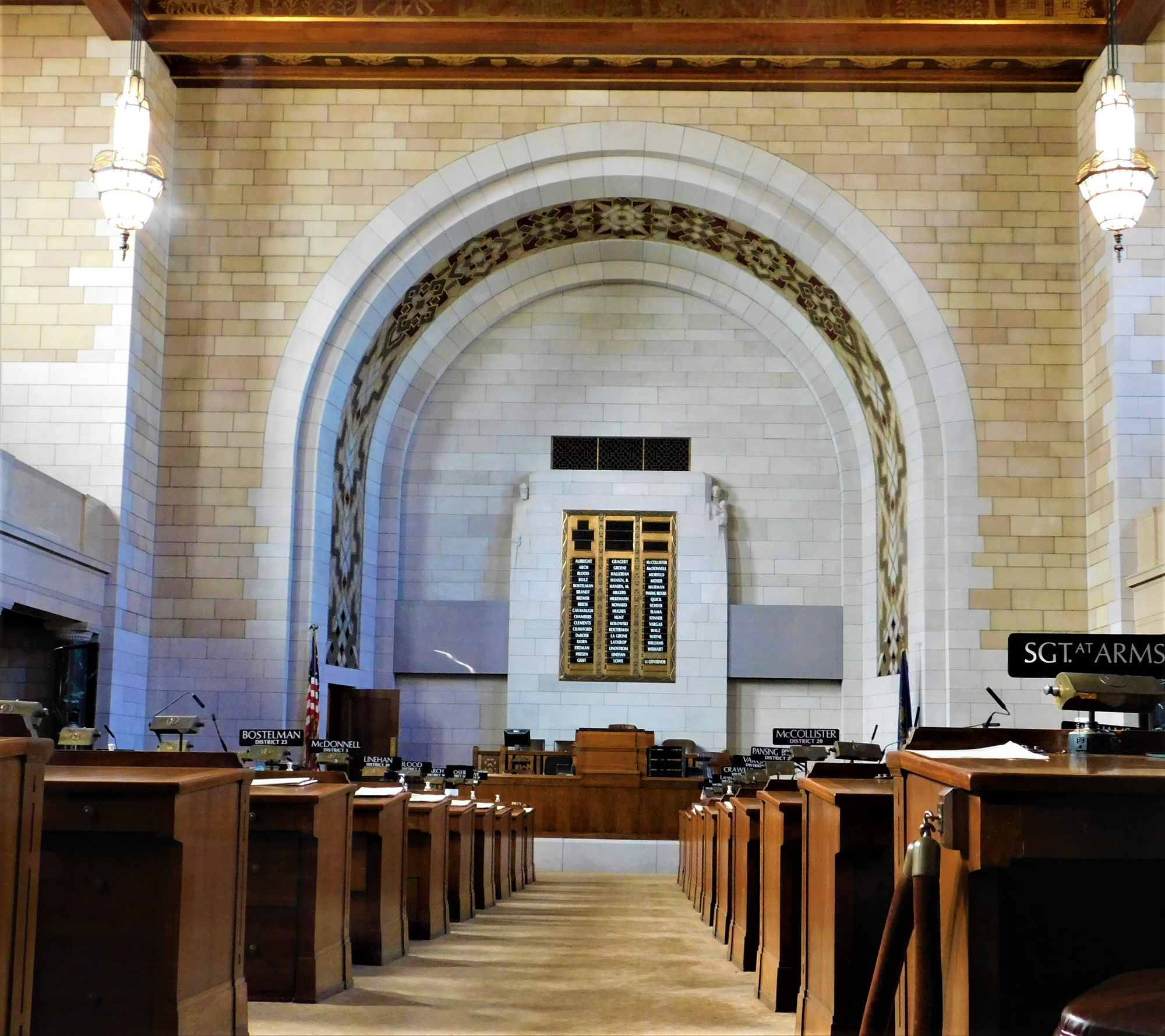
Bienvenidos de nuevo al Informe Legislativo Unicameral del Centro de Asuntos Rurales. Regresamos para ofrecerles información legislativa desde una perspectiva rural. La sesión de 2017 es una sesión "larga", con una duración legalmente establecida de 90 días. La Legislatura abrió sus sesiones el 4 de enero de 2017 y, tentativamente, está previsto que concluya el 2 de junio de 2017.
The deadline for bill introduction was Jan. 18. Each bill introduced will be heard in one of 14 standing committees. Committee hearings begin in mid-January and last through early March.
Below is a selection of priority bills we are following.
Presupuesto e Impuestos
LB 44 (Watermeier) - Adopt the Remote Sellers Sales Tax Collection Act. Online retailers headquartered elsewhere are not required to collect sales taxes in Nebraska. Though Nebraskans are technically required to report sales tax owed via online purchases on their tax documents, few avail themselves of this opportunity. LB 44 would require online retailers to collect and/or report this tax. A similar bill, LB 564 (McCollister) has also been introduced.
Referred to Revenue Committee. Hearing Jan. 27, 2017. Support.
LB 327 (Scheer) - Appropriate funds for the expenses of state government for the Biennium ending June 30, 2019. This is the budget bill, which will include all appropriated spending for FY 2018 and 2019. Recent revenue shortfalls are expected to persist, making it likely that agencies, programs, and services will suffer significant cuts. This is the vehicle in which those decisions will be made.
Referred to Appropriations Committee. Neutral.
Protección del Consumidor
LB 67 (Brasch) - Adopt the Fair Repair Act. Many manufacturers withhold diagnostic and repair information, technical updates, and software corrections from the general public. This is especially prevalent in newer farm machinery. As a result, it impossible for individuals and independent repair providers to maintain equipment without the help of the original manufacturer. LB 67 requires the original manufacturer make available for purchase by the owner or an independent repair provider any information or equipment required for repair upon fair and reasonable terms.
Referred to Judiciary Committee. Support.
Desarrollo Económico
LB 79 (Blood) - Adopt the Small Business Retirement Marketplace Act. Many rural Nebraskans are employed by small businesses. It is uncommon for small businesses to offer a retirement plan to its employees. This bill seeks to fill that void by directing the State Treasurer to create a small business retirement marketplace. The marketplace encourages savings for retirement by offering IRA and employer contribution plans to Nebraskans that choose to enroll.
Referred to the Nebraska Retirement Systems Committee. Hearing Jan. 27, 2017. Support.
Energía y Medio Ambiente
LB 87 (Blood) - Redefine a qualified facility and authorize distribution utilities to waive certain requirements related to net metering. Net metering allows electricity customers to generate electricity and receive credit against their electric bill or sell that electricity back to the utility at a lower rate. This only applies to ‘qualified facilities.’ These are facilities that use methane, wind, solar, biomass, hydro, or geothermal as a resource. Currently the size of the qualified facility is capped at twenty five kilowatts. This bill would increase that cap to 100 kilowatts, expanding the number of systems that qualify for net metering.
Referred to Natural Resources Committee. Support.
LB 625 (Larson) - Change the Property Assessed Clean Energy Act. In 2016 lawmakers passed LB 1012, a bill that enabled municipalities to create clean energy assessment districts. Under that bill, each district would be eligible to provide property owners with financing for home energy improvements. LB 625 expands that program to apply to agricultural property and machinery. The update also makes clear that counties are eligible to create a district in rural areas.
Referred to Urban Affairs Committee. Hearing Feb. 14, 2017. Support.
Agricultura y la Alimentación
LB 55 (Schumacher) - Change a duty of landowners relating to the frequency of mowing roadside weeds. Current law requires that landowners mow drainage ditches and other lands abutting public roads twice: before June 5 and before July 10. This bill would require a third bout of maintenance, before Aug. 15. This decision is best left to the discretion of the landowner and neighboring community. A similar bill, LB 584 (Friesen), would remove prescribed dates altogether.
Referred to transportation and Telecommunications Committee. Hearing Jan. 30, 2017. Oppose.
LB 260 (Hansen) - Provide for a state food insecurity incentive grant program and state intent regarding appropriations. The Nebraska Department of Agriculture administers a promotion and development program to enhance profitability and encourage economic development in agriculture. This bill would amend that law to require that the Department also award state grants under the federal food insecurity nutrition incentive established in the 2008 Farm Bill. Funds would be used to offset startup and operational costs for any grant received. The bill would also appropriate $150,000 for implementation.
Referred to Agriculture Committee. Hearing Feb. 7, 2017. Neutral.
Atención Médica
LB 92 (Kolterman) - Require health carriers to provide coverage for telehealth services. “Telehealth” refers to a means of delivering virtual medical, health, and education services and support using telecommunications technologies. The emergence of telehealth has helped thousands of rural individuals receive treatment that would have otherwise necessitated extensive time and travel. This bill prevents health insurers from refusing coverage for services provided through telehealth technologies.
Referred to Banking, Commerce, and Insurance Committee. Support.
La vivienda
LB 256 (Briese) - Adopt the Vacant Property Registration Act. Unoccupied and dilapidated properties are common in communities of all sizes. At the same time, many communities - rural especially - struggle to maintain an ample stock of affordable housing options. This bill would enable municipalities to adopt a vacant property ordinance that allows for registration of properties and assessment of fees. Registration would also enable the municipality to inspect properties and work with owners to develop an occupancy plan.
Referred to Urban Affairs Committee. Hearing Jan. 31, 2017. Neutral.
Si tiene interés en alguno de estos proyectos de ley y desea compartir su apoyo, inquietudes, puntos de vista u oposición brindando testimonio en persona, por carta o visitando a su senador, no dude en ponerse en contacto con nosotros en [email protected] o 402.687.2100.