Por Johnathan Hladik, exdirector de políticas
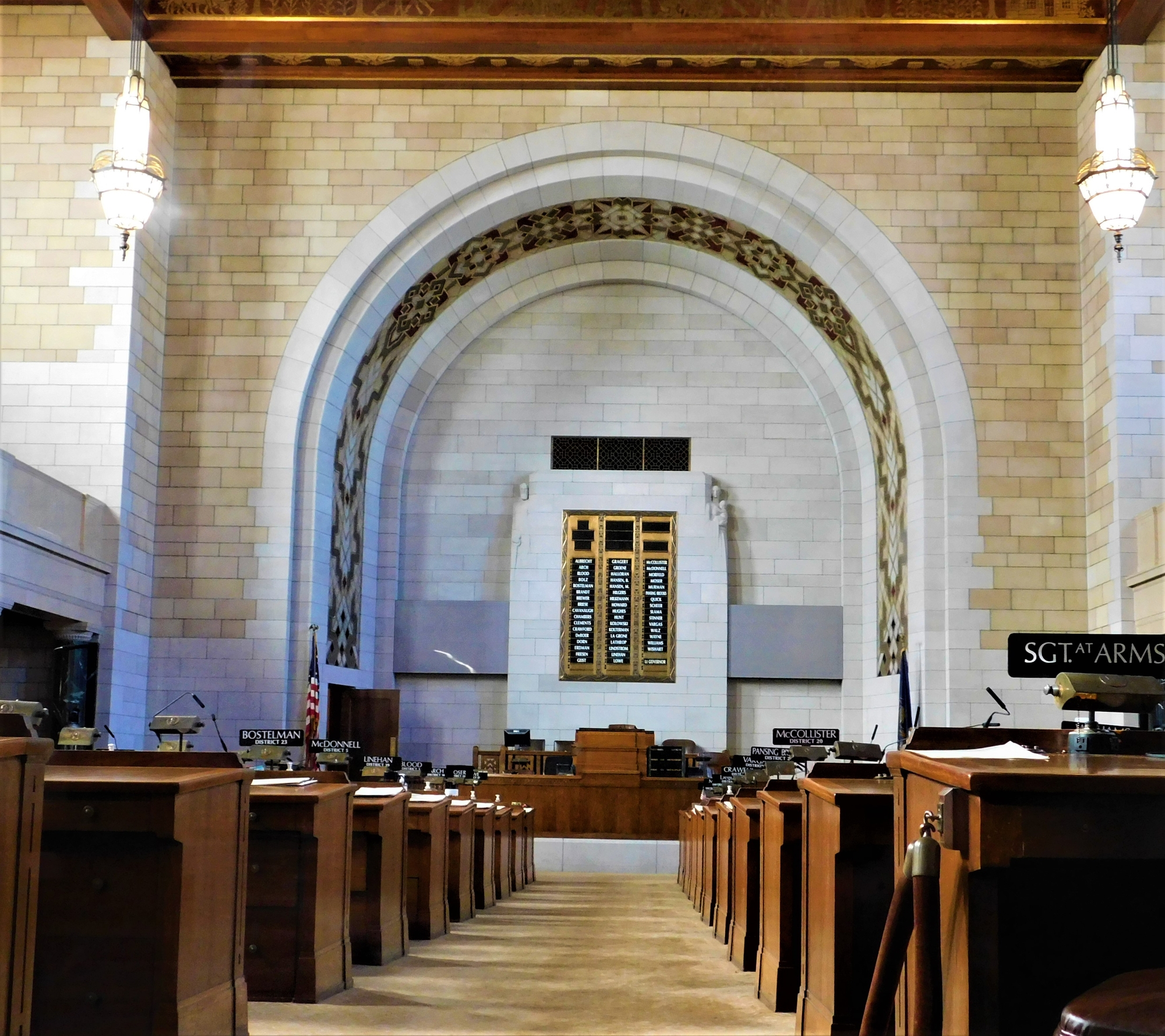
Welcome back to the Center for Rural Affairs Unicameral Update. Today is day 24. As a reminder, the 2017 session is a “long” session – legally mandated to be 90 days in length. The legislature opened on Jan. 4, 2017, and is tentatively scheduled to adjourn on June 2, 2017.
El plazo para la presentación de proyectos de ley finalizó el 18 de enero. Cada proyecto de ley presentado será examinado en uno de los 14 comités permanentes. Las audiencias de los comités comienzan a mediados de enero y se extienden hasta principios de marzo.
Below is a selection of priority bills we are following. We emphasize those immediately subject to legislative action. New developments are italicized.
Presupuesto e Impuestos
LB 44 (Watermeier) - Aprobar la Ley de Recaudación del Impuesto sobre las Ventas para Vendedores Remotos. Los minoristas en línea con sede en otros estados no están obligados a recaudar impuestos sobre las ventas en Nebraska. Si bien los residentes de Nebraska están obligados a declarar el impuesto sobre las ventas adeudado por compras en línea en sus declaraciones de impuestos, pocos aprovechan esta oportunidad. El proyecto de ley LB 44 exigiría a los minoristas en línea recaudar y/o declarar este impuesto. También se ha presentado un proyecto de ley similar, el LB 564 (McCollister).
Remitido al Comité de Ingresos. Apoyar. Hearing held Jan. 27, 2017. Center for Rural Affairs offered testimony in support.
LB 337 (Smith, at the request of the Governor) - Change income tax rates and provide for deferrals of the rate changes. Under this proposal the individual tax rate for the highest income bracket will decrease from 6.84 percent to 5.99 percent between 2020 and 2027. This will apply only to individuals earning $29,000 or above, married couples filing jointly earning $58,000 or above, married couples filing separately earning $29,000 or above, heads of household earning $43,000 or above, and estates or trusts earning $15,150 or above. Tax rates do not change for those in the lower three brackets. The brackets themselves stay the same. These changes take effect only when expected rate of growth in net general fund receipts exceed 3.5 percent. Deferred reductions take effect only when expected rate of growth in net general fund receipts exceed 4.2 percent.
Remitido al Comité de Ingresos. Oppose. Hearing scheduled for Feb. 8, 2017.
LB 338 (Brasch, at the request of the Governor) - Adopt the Agricultural Valuation Fairness Act. This bill would reform the method by which property is valuated by shifting from a market-based assessment to one based on income potential. Income potential would be determined by land capability, 10-year average yields, and county-based commodity prices. The proposal also requires that valuation be set at a range between 60 percent and 75 percent of actual value and caps total statewide valuation growth at 3.5 percent over the prior year. These provisions would take effect in 2019.
Remitido al Comité de Ingresos. Oppose. Hearing scheduled for Feb. 8, 2017.
Protección del Consumidor
LB 67 (Brasch) - Adopción de la Ley de Reparación Justa. Muchos fabricantes retienen información de diagnóstico y reparación, actualizaciones técnicas y correcciones de software del público en general. Esto es especialmente frecuente en la maquinaria agrícola más reciente. Como resultado, resulta imposible para particulares y talleres de reparación independientes realizar el mantenimiento de los equipos sin la ayuda del fabricante original. La Ley LB 67 exige que el fabricante original ponga a disposición del propietario o de un taller de reparación independiente la información o el equipo necesarios para la reparación, en condiciones justas y razonables.
Referred to Judiciary Committee. Apoyar. Hearing scheduled for March 9, 2017.
Desarrollo Económico
LB 79 (Sangre) - Aprobar la Ley del Mercado de Planes de Jubilación para Pequeñas Empresas. Muchos habitantes de las zonas rurales de Nebraska trabajan para pequeñas empresas. Es poco común que estas ofrezcan planes de jubilación a sus empleados. Este proyecto de ley busca subsanar esta deficiencia al instruir al Tesorero del Estado para que cree un mercado de planes de jubilación para pequeñas empresas. Este mercado fomenta el ahorro para la jubilación ofreciendo planes IRA y planes de contribución del empleador a los residentes de Nebraska que decidan inscribirse.
Referred to the Nebraska Retirement Systems Committee. Apoyar. Hearing held Jan. 27, 2017. Center for Rural Affairs offered testimony in support.
LB 387 (Lindstrom) - Change and eliminate provisions relating to various tax credit programs and economic development activities. The Nebraska Advantage Microenterprise Tax Credit provides tax credits to applicants for creating or expanding microbusinesses that contribute to the revitalization of economically distressed areas through the creation of new or improved income, self-employment, or other new jobs in the area. Distressed area is one that has (a) an unemployment rate which exceeds the statewide average, (b) a per capita income below the statewide average, or (c) had a population decrease between the two most recent federal decennial censuses. This proposal would remove the ‘distressed area’ requirement.
Remitido al Comité de Ingresos. Oppose. Hearing scheduled for Feb. 9, 2017.
LB 523 (Walz) - Change provisions relating to financial assistance from the Nebraska Internet Enhancement Fund (NIEF). The NIEF was created to provide financial assistance to install and deliver broadband internet in underserved areas. Highest priority is given to applicants based on high-cost factors, including population scarcity and location remoteness. The NIEF fund has been utilized only 13 times since its inception in 2001, and not since 2012. LB 523 removes regulations that prevent communities from taking advantage of this program.
Referred to Transportation and Telecommunications Committee. Apoyar. Hearing scheduled for Feb. 13, 2017.
Energía y Medio Ambiente
LB 87 (Sangre) - Redefine a qualified facility and authorize distribution utilities to waive certain requirements related to net metering. Net metering allows electricity customers to generate electricity and receive credit against their electric bill or sell that electricity back to the utility at a lower rate. This only applies to "qualified facilities." These are facilities that use methane, wind, solar, biomass, hydro or geothermal as a resource. Currently the size of the qualified facility is capped at 25 kilowatts. This bill would increase that cap to 100 kilowatts, expanding the number of systems that qualify for net metering.
Remitido al Comité de Recursos Naturales. Apoyar. Hearing scheduled for Feb. 22, 2017.
LB 392 (Larson) - Adopt the Wind Friendly Counties Act. Under this proposal, the Director of Agriculture would be required to establish a process to recognize and assist counties in creating, maintaining, or expanding wind energy opportunities. Such a county can apply to become designated as “wind friendly.”
Remitido al Comité de Recursos Naturales. Apoyar. Hearing scheduled for Feb. 9, 2017.
LB 488 (Groene) - Adopt the Water Conservation Grant Act. This bill establishes a grant program to facilitate reduction in water use pursuant to multi-state compacts. Grants will be made in the amount of $50 per acre taken out of irrigation. Any eligible agricultural landowner may apply. Priority is given to those closest to a river subject to a multi-state compact.
Remitido al Comité de Recursos Naturales. Apoyar. Hearing scheduled for Feb. 15, 2017.
LB 625 (Larson) - Modificar la Ley de Evaluación de Propiedades para la Energía Limpia. En 2016, los legisladores aprobaron la LB 1012, una ley que facultaba a los municipios para crear distritos de evaluación de energía limpia. Según esta ley, cada distrito podía ofrecer financiación a los propietarios para mejoras energéticas en sus viviendas. La LB 625 amplía este programa para incluir propiedades y maquinaria agrícolas. La actualización también aclara que los condados pueden crear un distrito en zonas rurales.
Referred to Urban Affairs Committee. Hearing Feb. 14, 2017. Apoyar.
LB 626 (Larson) - Adopt the Shared Community Solar Act. This bill would enable local distribution utilities to establish a community solar pilot within their territory. Each investor is entitled to an amount of credit based on their portion of production or investment. Third-party financing is permitted. A second bill, LB 429 (Wishart) allows for a similar program through virtual net metering.
Remitido al Comité de Recursos Naturales. Apoyar. Hearing scheduled for Feb. 9, 2017.
Agricultura y la Alimentación
LB 55 (Schumacher) - Change a duty of landowners relating to the frequency of mowing roadside weeds. Current law requires that landowners mow drainage ditches and other lands abutting public roads twice: before June 5 and before July 10. This bill would require a third bout of maintenance, before Aug. 15. This decision is best left to the discretion of the landowner and neighboring community. A similar bill, LB 584 (Friesen), would remove prescribed dates altogether.
Referred to transportation and Telecommunications Committee. Oppose. Hearing held Jan. 3, 2017.
LB 260 (Hansen) - Establecer un programa estatal de subvenciones para incentivar la inseguridad alimentaria y definir la intención del estado respecto a las asignaciones presupuestarias. El Departamento de Agricultura de Nebraska administra un programa de promoción y desarrollo para mejorar la rentabilidad y fomentar el desarrollo económico en la agricultura. Este proyecto de ley enmendaría dicha ley para exigir que el Departamento también otorgue subvenciones estatales en el marco del programa federal de incentivos nutricionales para la inseguridad alimentaria, establecido en la Ley Agrícola de 2008. Los fondos se utilizarían para compensar los costos iniciales y operativos de cualquier subvención recibida. El proyecto de ley también asignaría $150,000 para su implementación.
Referred to Agriculture Committee. Hearing Feb. 7, 2017. Neutral.
LB 359 (Kolterman) - Authorize damages for property taxes and special assessments paid on property lost through adverse possession. Under current law a property owner is responsible for any taxes paid on property lost to adverse possession. This forces a trespassee to pay taxes on property that only the trespasser is using. The proposed bill instead requires that a record owner who in good faith pays all taxes due on his or her property will be compensated for those payments if that parcel is lost to a claim of adverse possession.
Referred to Judiciary Committee. Apoyar. Hearing scheduled for Feb. 15, 2017.
Atención Médica
LB 92 (Kolterman) - Require health carriers to provide coverage for telehealth services. Telehealth refers to a means of delivering virtual medical, health, and education services and support using telecommunications technologies. The emergence of telehealth has helped thousands of rural individuals receive treatment that would have otherwise necessitated extensive time and travel. This bill prevents health insurers from refusing coverage for services provided through telehealth technologies.
Referred to Banking, Commerce and Insurance Committee. Apoyar. Hearing scheduled for Feb. 13, 2017.
La vivienda
LB 256 (Briese) - Aprobar la Ley de Registro de Propiedades Vacías. Las propiedades desocupadas y en mal estado son comunes en comunidades de todos los tamaños. Al mismo tiempo, muchas comunidades, especialmente las rurales, tienen dificultades para mantener un número suficiente de opciones de vivienda asequible. Este proyecto de ley permitiría a los municipios adoptar una ordenanza sobre propiedades vacías que autorice su registro y el cobro de tasas. El registro también permitiría al municipio inspeccionar las propiedades y colaborar con los propietarios para desarrollar un plan de ocupación.
Referred to Urban Affairs Committee. Neutral. Hearing held Jan. 31, 2017.
LB 518 (Williams) - Adopt the Rural Workforce Housing Investment Act and transfer funds from the Affordable Housing Trust Fund. Under this proposal the Department of Economic Development is required to establish a workforce housing investment grant program. Nonprofit entities would be eligible to apply for up to $2.5 million over a two-year period. Grants are to be awarded to projects that serve a demonstrated need as evidenced by a recent housing study, are located in a community or region with low unemployment and a difficulty attracting workers, are located in a community or region with a demonstrated commitment to growing housing stock, can be ready for occupancy within a 24-month period, and the owner has a demonstrated ability to grow and manage a housing investment fund.
Remitido al Comité de Negocios y Trabajo. Apoyar. Hearing scheduled for Feb. 13, 2017.
Si tiene interés en alguno de estos proyectos de ley y desea compartir su apoyo, inquietudes, puntos de vista u oposición brindando testimonio en persona, por carta o visitando a su senador, no dude en ponerse en contacto con nosotros en [email protected] o 402.687.2100.