¡Bienvenidos a la Revista Pierre!
Today is Day 19 of South Dakota’s 37-day legislative session.
The last day for unlimited bill introduction was Thursday, Feb. 2, but it is possible we will see some additional legislation added after this date.
Below you’ll find some of the bills we are monitoring.
We welcome your input. Feel free to be in touch about these or any other bills you feel are important to rural communities. Please contact Heidi Kolbeck-Urlacher, [email protected]para más información.
Desarrollo económico de la comunidad
Proyecto de Ley del Senado (SB) 34—Support: Brought at the request of the Governor’s Office of Economic Development, the bill would make an appropriation to expand rural access to broadband services and to declare an emergency.
La ley SB 34 destina 100 millones de dólares al desarrollo de infraestructura de banda ancha en el estado, dando prioridad a los proyectos que aprovechen la inversión y la infraestructura existentes, presten servicio a zonas sin internet de alta velocidad y atiendan al mayor número de clientes. Muchos habitantes de las zonas rurales de Dakota del Sur carecen de acceso a internet adecuado, lo que convierte a este programa en una inversión importante para las comunidades rurales.
SB 34 was heard in the Senate Commerce and Energy Committee on Jan. 26. The Center submitted a supportive comment. During testimony it was noted that 135,000 South Dakotans lack adequate broadband access and that the investment made through this bill could potentially shore up the gaps in broadband access across the state. There was no opponent testimony and the bill passed unanimously. It has been referred to the Joint Committee on Appropriations. As of today, a hearing has not been scheduled.
Proyecto de ley de la casa (HB) 1077—Support: This bill was brought at the request of the governor’s office and would provide for licensure by endorsement for certain licensed professionals and occupations. In March, Gov. Kristi Noem issued Orden ejecutiva 2020-07, que permitió una mayor flexibilidad para los profesionales de la salud como parte de la respuesta a la COVID-19. El proyecto de ley HB 1077 es una extensión de esa orden y hace permanente el reconocimiento de las licencias de otros estados para ciertos profesionales médicos.
HB 1077 was heard in the House State Affairs committee on Jan. 27 and passed unopposed. It passed the House floor with a vote of 67-3 and will be heard in the Senate Commerce and Energy Committee on Feb. 9 at 10 a.m.
Comida y Agricultura
HB 1121—Support: This bill introduced by Rep. Marli Wiese establishes criteria governing the sale of homemade food items. HB 1121 makes changes to the state’s “home processed foods law,” which currently allows for the sale of shelf-stable baked and canned goods without a license. HB 1121 expands the list of homemade food items that can be sold directly to consumers to include both temperature-controlled and shelf-stable goods. Additionally, non-temperature controlled homemade food items could be sold at retail and grocery stores. The bill removes the third-party process verification requirement from homemade canned goods. Producers are exempt from licensing requirements as long as their annual gross revenue from selling homemade food items does not exceed $150,000.
HB 1121 has been referred to the House Local Government Committee. As of today, a hearing has not been scheduled.
HB 1040—Support: Brought at the request of the Department of Agriculture, the bill would make an appropriation to fund certain small meat processor grants and to declare an emergency. COVID-19 has caused disruptions in the meat processing industry, creating a backlog at many local meat processors. This bill allocates $5 million to create a grant program that would allow meat processors to expand their processing capabilities through infrastructure improvements. This Meat Processing Grants Program One-Pager provides an overview of the program.
HB 1040 was heard in the House Agriculture and Natural Resources Committee on Jan. 28. The Center submitted a supportive comment. There was significant proponent testimony on the bill and no one testified in opposition. It passed 13-0 and was sent to the House Committee on Appropriations. As of today, a hearing has not been scheduled.
HB 1042—Support: This bill was brought at the request of the Department of Natural Resources and would revise certain provisions regarding riparian buffer strips. HB 1042 decreases the assessed agricultural income value of land classified as a riparian buffer strip from 60% to 50%, and changes the application requirement from annual to once every 10 years.
HB 1042 was heard in the House Agriculture and Natural Resources Committee on Feb. 2 and passed unanimously. It was debated on the House floor on Feb. 2 and passed unopposed. It was noted in testimony that the intent of this bill is to increase sign-ups in the buffer strip program. Only 1,000 acres are enrolled, but 13,000 acres are available to be enrolled. As of today, a Senate committee hearing has not been scheduled.
Energia y medio ambiente
HB 1053—Neutral: This bill introduced by Rep. Mark Willadsen establishes an annual fee for certain electric motor vehicles. HB 1053 creates an annual fee of $100 for electric motor vehicles to offset the lost funds that are normally generated through the gas tax, collected in the state’s highway maintenance fund, and used for construction and maintenance of roads and bridges. The state gas tax is 28 cents/gallon, which means the $100 annual fee for electric vehicles is equivalent to the tax paid on 357 gallons of gas.
HB 1053 was heard in the House Transportation Committee on Jan. 28. The bill was amended to decrease the annual fee from $100 to $50 and passed unopposed. It was then debated on the House floor on Feb. 2 and passed 51-18. It has been referred next to the Senate Transportation Committee. As of today, a hearing date has not been scheduled.
Recursos de promoción
Aquí hay algunos recursos que lo ayudarán a empoderarse para abogar por los problemas que le preocupan:
Cómo ser un defensor rural
Compromiso con la Legislatura de Dakota del Sur
Se permite testificar a distancia en la sesión legislativa de 2021.
Upcoming Legislative forums
Foro Legislativo del Distrito 7, Feb. 13, hosted by Brookings Area Chamber of Commerce
Barriles de Cracker Legislativos de los Distritos 1, 2 y 3, Feb. 13, hosted by Aberdeen Area Chamber of Commerce
District 4 & 7 Legislative Forum, Feb. 20, hosted by Brookings Area Chamber of Commerce
Distritos 10, 12 y 14 Café Legislativo20 de febrero, organizado por la Cámara de Comercio de Greater Sioux Falls.
Distrito 18: Barril de galletas legislativas, Feb. 27, hosted by Yankton Area Chamber of Commerce
Districts 32, 33, 34, and 35 Cracker Barrels, Feb. 27, hosted by Elevate Rapid City
Distritos 11, 15 y 25 Café Legislativo27 de febrero, organizado por la Cámara de Comercio de Greater Sioux Falls.
Fun Fact
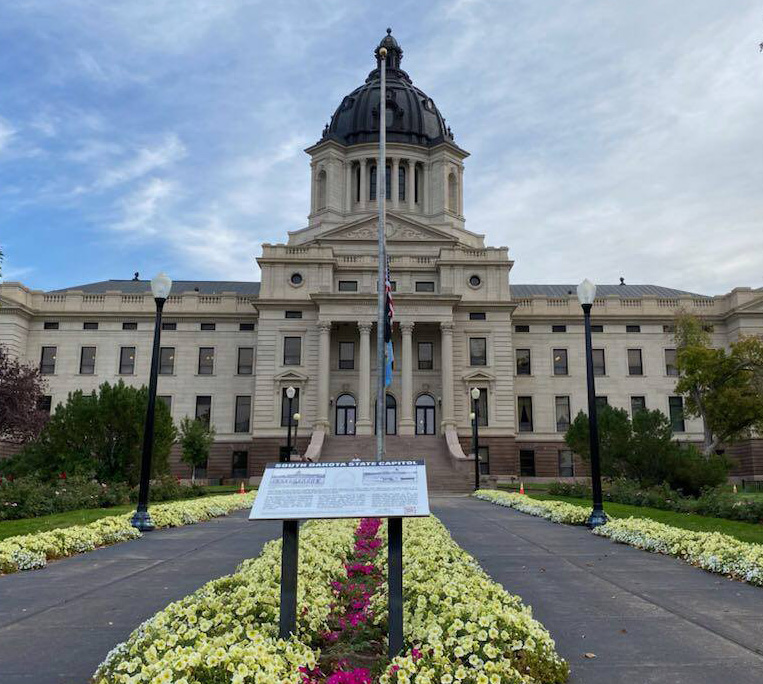
Pierre is one of only four state capital cities not located on an Interstate highway. The others are Juneau, Alaska, Dover, Delaware, and Jefferson City, Missouri.