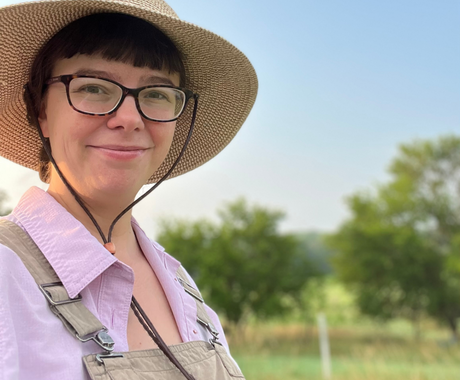

By Zack Pistora, Center for Rural Affairs farm policy consultant
Desde junio, he tenido el honor de colaborar con el Centro de Asuntos Rurales para informar e interactuar con miembros del Congreso y agricultores de Kansas sobre la ley agrícola de 2018. La mayor parte de mi trabajo ha consistido en llamadas telefónicas y visitas dentro y alrededor de Kansas. Sin embargo, recientemente tuve la oportunidad de viajar al epicentro del debate político sobre la ley agrícola, Washington D.C., para reunirme con la delegación de Kansas en el Capitolio.
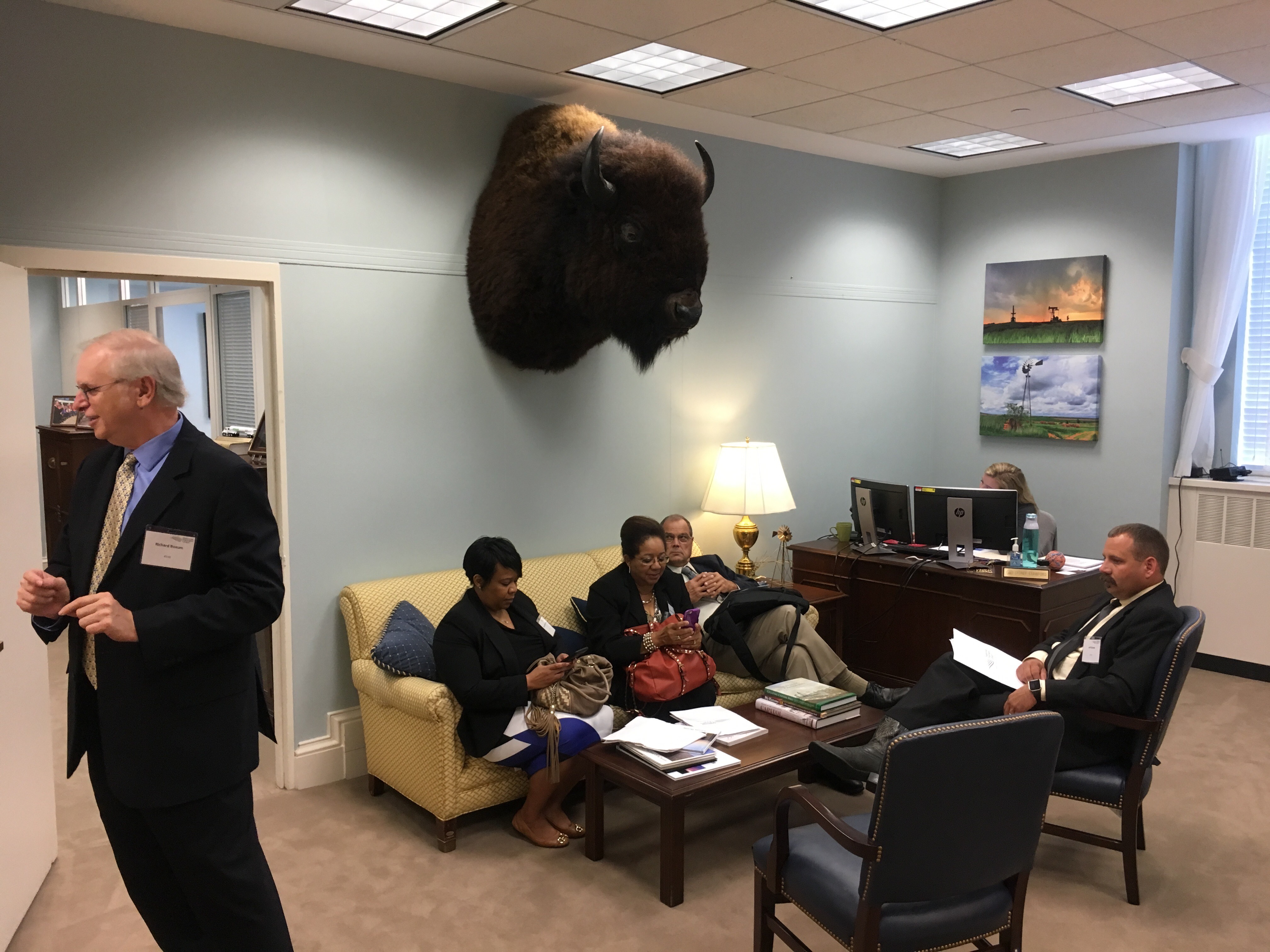
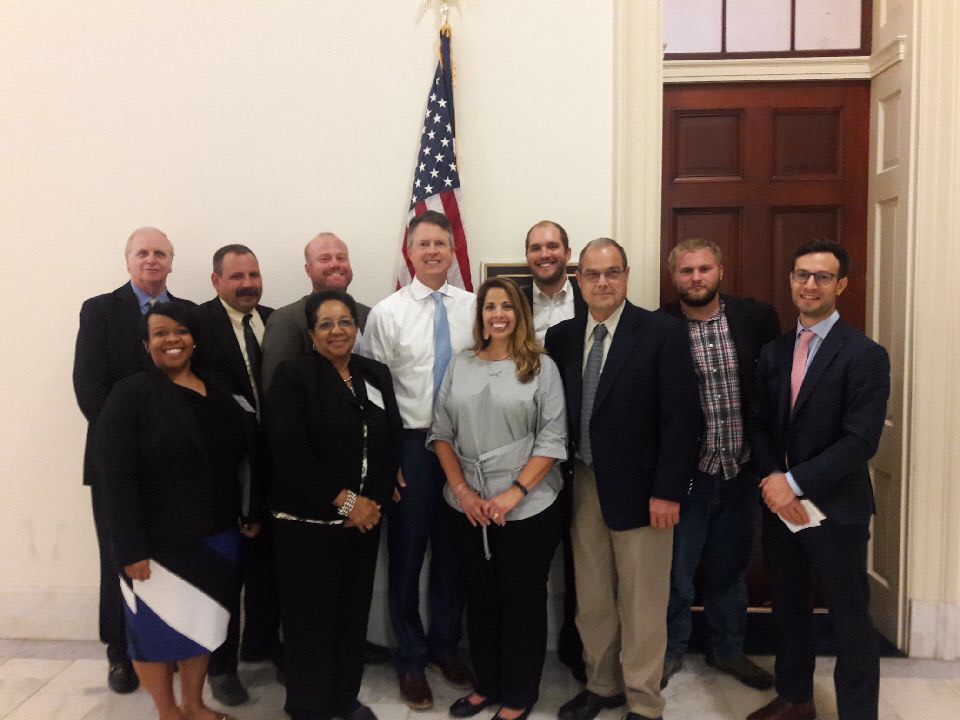
I tagged along with seven other Kansans, joining roughly 350 farmers from around the country who came to D.C. as part of the National Farmers Union Fly-In. Together, we offered our support for a bipartisan farm bill that would help our independent, family farmers and support important conservation programs.
As my team of Kansas farmers made our way into our state congressional offices, I brought forth the top farm bill priorities at the Center for Rural Affairs, which included support for voluntary conservation programs, like the Conservation Stewardship Program (CSP), programs that help both sustainable and local food systems and beginning and disadvantaged farmers, and reforming farm payments so that real farmers get assistance they need, not the rich corporate farmers or non-farmer Wall Street investors.
I was fortunate to meet three of the six members of our Kansas congressional delegation, and enjoyed meeting many of the lead staff on agriculture policy. I met with Rep. Roger Marshall of the first district of Kansas. Dr. Marshall, who serves on the House Agriculture Committee, and now on the farm bill conference committee, talked with our group for 30 minutes. As myself and the Kansas team expressed our views on the farm bill, Rep. Marshall agreed with us on the significance of voluntary conservation programs like CSP, which is utilized by almost 500 Kansas farmers encompassing over one million acres. Dr. Marshall also heard our plea to uphold many of the local foods programs that have been helping our farmers gain technical assistance and funding mechanisms to distribute their products.
Being in Washington, D.C., really helped me connect with the policy staffers who work behind the scenes for our Kansas delegation on the farm bill. It was good to hear members of Congress recognize how important the farm bill is, and all vowed to finish the farm bill as quickly as possible to help guarantee certainty and stability to our farmers and rural America economy. However, farmers know that actions speak louder than words, and until the farm bill is passed and critical programs are fully funded and implemented, myself and farmers everywhere won’t back down on pressing Congress to pass an effective and satisfactory farm bill.