Por Jordan Feyerherm, ex miembro del personal
El programa de Acción Diferida para los Llegados en la Infancia (DACA) ha brindado cierta estabilidad a jóvenes trabajadores y a sus familias. Esta política protege de la deportación a las personas nacidas en el extranjero que llegaron a este país siendo niños y les permite solicitar autorización de trabajo.
After DACA was passed, recipients’ hourly wages increased by 42 percent. 6 percent started their own business (compared to a national average of 3.1 percent), 21 percent purchased their first car, and 12 percent purchased their first home. They are a critical part of our country’s social and economic fabric.
Schuyler, Neb., population 6,196, has long struggled to attract new residents. Now, the town is more than 70 percent Latino. For this small town and others like it in the U.S., immigrants are keeping shops open and breathing fresh life into main streets.
Ahora, su futuro es incierto.
Nearly 750,000 young people fear losing everything they have worked for. The majority came to this country at the age of 10 or younger. Today, the average DACA recipient is 22 years old, employed, in pursuit of higher education, and makes $17 an hour.
To enact a law that would impair these individuals’ capacity to learn, earn and live would be counterproductive and harmful to the country as a whole.
Legislation promoting safety, well-being and welcoming will continue to uplift the many young people who want to put their talents to use and give back to the only country they have ever known as home.
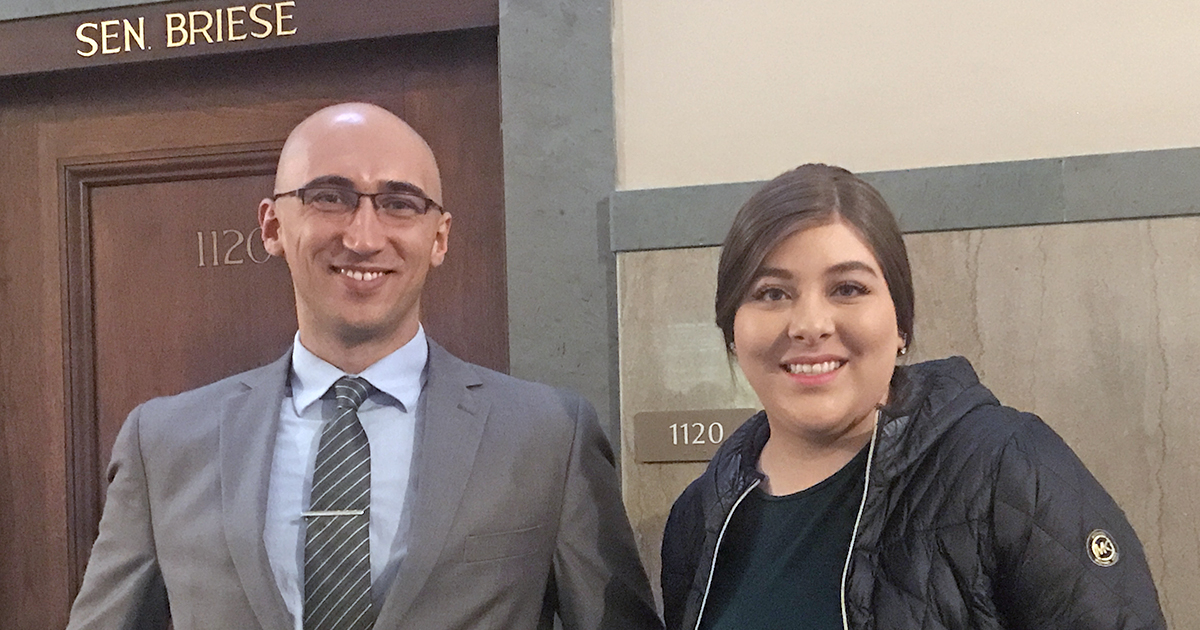
Feature photo: Jordan Feyerherm, left, and Dulce Castañeda, right, offered testimony on March 22 in favor of a bill in Nebraska to protect DACA. Feyerherm is a community organizer at the Center for Rural Affairs and Castañeda is the community assistance director for the City of Crete.