At Robinette Farms, funds from the Value-Added Producer Grant (VAPG) program help pay for processing, marketing, distribution, and sales of pasture-raised chickens, eggs, and microgreens.
This year, $18 million in funding is available through the U.S. Department of Agriculture’s (USDA) VAPG program. Paper applications are due Jan. 31, 2018, and electronic applications through grant.gov are due Jan. 24.
Robinette Farms is a small farming operation near Lincoln, Nebraska, that received a working capital grant in 2015, and now sells meat and produce at local grocery stores. They were able to develop new products and access higher-value markets with the assistance from the Programa VAPG.
Administered by USDA Rural Development, the VAPG program provides grants to producers for working capital, feasibility studies, business plans, and marketing efforts used to establish value-added businesses. Value-added grants can also be used to develop new product lines from raw agricultural products or promote additional uses for established products.
Los productores independientes, los grupos de productores agrícolas, las cooperativas de agricultores o ganaderos y las empresas comerciales controladas mayoritariamente y basadas en productores son todos eligible to apply for these grants.
The program prioritizes funding for applicants who are beginning, veteran, or socially-disadvantaged farmers and ranchers; operators of small- and medium-sized family farms and ranches; farmer and rancher cooperatives; and majority-controlled, producer-based business ventures whose projects “best contribute” to creating or increasing marketing opportunities for the aforementioned groups of farmers.
Contact your local USDA Rural Development office or visit cfra.org para más información.
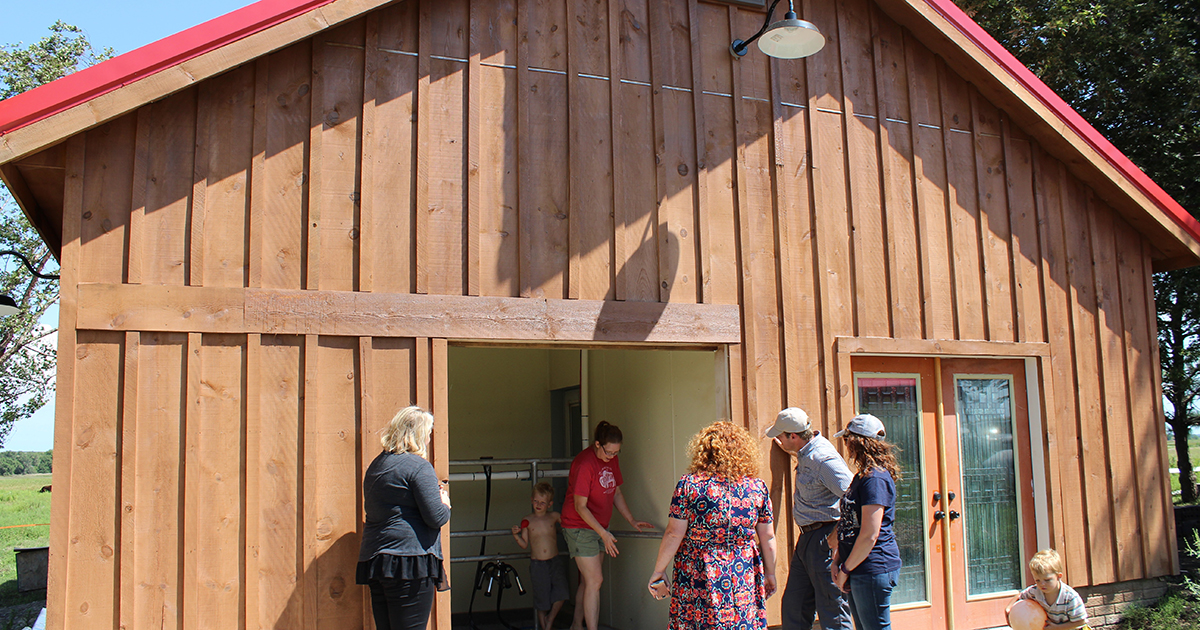
Feature photo: Crystal Powers, co-owner and co-operator of Darby Springs Farm near Ceresco, Nebraska, gives a tour of their microcreamery in August. She and her husband, William, received a $50,000 value-added grant in 2015 to create and expand their farmstead ice cream and milk carmel topping made from ingredients grown or produced on the farm. Their micro-creamery features a walk-through milking station and three separate rooms - one for milk, one for ice cream, and one for a store.