Por Nathan Beacom, ex miembro del personal
El ciudadano vigilante
“La salvación del Estado está en la vigilancia del ciudadano”. —Hartley Burr Alexander
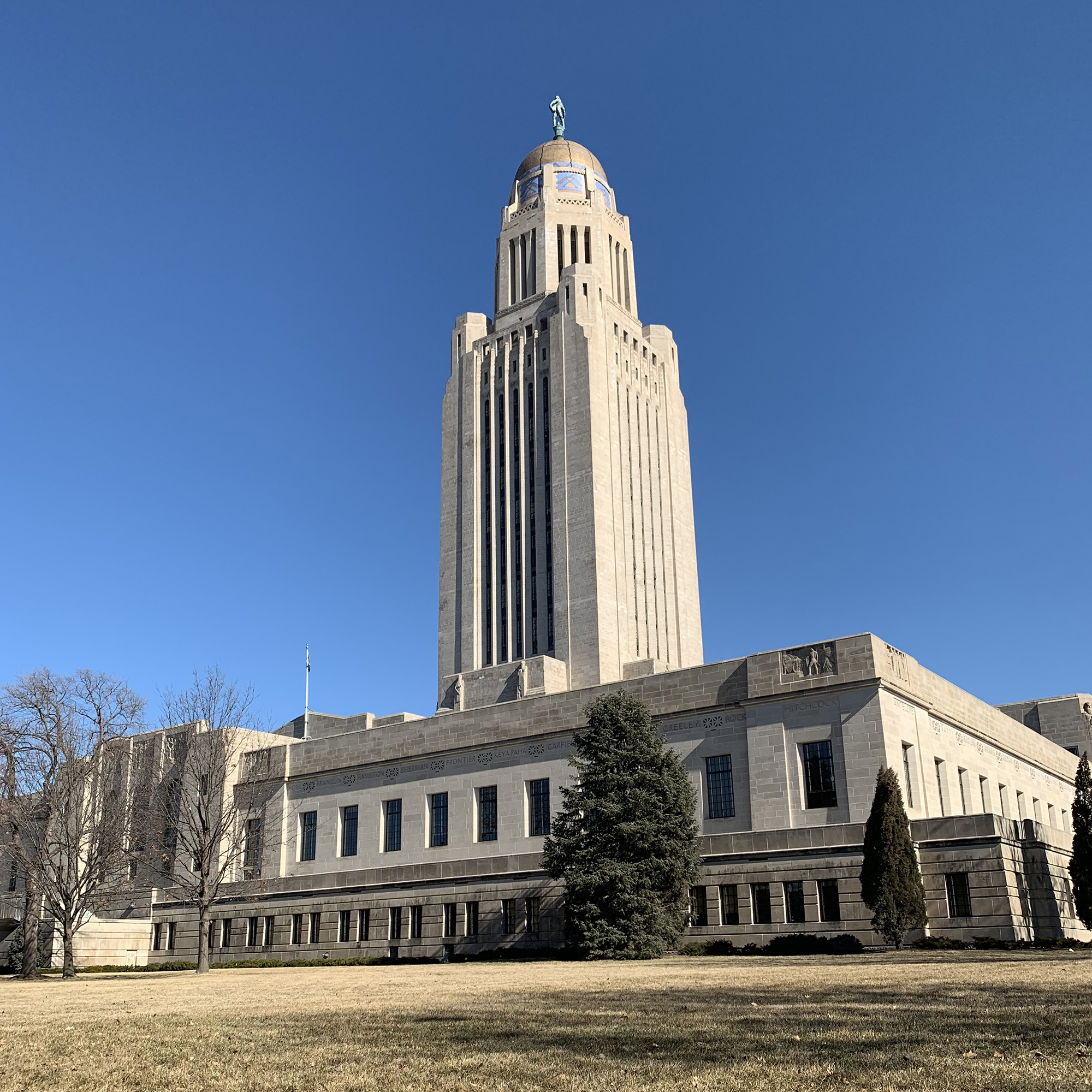
La semana pasada concluyó anticipadamente la primera sesión de la 107.ª Legislatura del Estado de Nebraska. Los proyectos de ley prioritarios para las zonas rurales, apoyados por el Centro este año, tuvieron un éxito rotundo.
Proyecto de ley legislativa 324, developed in partnership with Sen. Tom Brandt, passed unanimously. Starting in August, the law will make it easier for customers to purchase meat directly from a farmer, and will provide funding assistance to small meat processors through the Independent Processors Assistance Program.
LB 366, developed with Sen. Tom Briese, passed with only one “no” vote. In August, it will double the size of the Microenterprise Tax Credit, remove barriers to applying, and extend the program for 10 years. This is the only state incentive program targeted toward our smallest businesses, which make up a significant portion of the rural economy.
LB 396, a bill to create a state Farm to School Network passed unanimously. The bill funds a new position with the department of education to coordinate the growth of programs in the state, as well as establishing new markets for local farmers and giving school children access to healthy, fresh foods and education on where their food comes from.
LB 388 passed unanimously and dedicated $20 million over the next few years to bring high speed internet access to more businesses and homes in the state. The bill relies on the Broadband Data Improvement Program, developed by the Center in conjunction with Sen. Tom Brandt, as a method of determining where scarce resources should be spent.
LR 5, a resolution to recommend the findings of the Healthy Soils Task Force to the Legislature also passed without opposition.
LB 507, a bill to ban the use of treated seed corn in ethanol production in the wake of the disaster in Mead, also passed unanimously.
Two goals supported by the Center—an extension of the Beginning Farmer Tax Credit and the standardization of plumbing codes in the state—were passed as amendments to other bills. The first continues a Center program that supports generational farm transfer, the second ensures that schoolchildren will have easy access to fresh drinking water throughout the day.
Finally, two Center-supported bills overcame vetoes from the governor. LB 108, which addressed the “cliff effect” problem in the Supplemental Nutrition Assistance Program, passed with 30 votes, enough to override a veto. This change will help thousands of working families in Nebraska feed their families without disincentivizing workplace advancement. Another bill, LB 306, has a similar effect for the Low Income Home Energy Assistance Program, while also dedicating funds to weatherizing houses to make them more efficient. This bill also passed the threshold for a veto override, and will help rural Nebraskans who may live in older, harder to heat, homes.
All in all, it was a successful session for a number of rural priorities. The bills passed this year will help small rural businesses and farmers, and working rural families. We look forward to ensuring these bills are implemented well.
A special thanks goes out to Sens. Tom Brandt, Tom Briese, and John McCollister for their work on LB 324, 366, and 108, respectively. If you’d like to send a note of thanks, Puedes encontrar su información aquí..
Thanks to you all for your support. As residents of Nebraska, you constitute the proverbial second house of our Legislature, and your involvement is important and necessary.
No dude en contactarnos en [email protected] or 402.687.2100 if you have questions about these bills.
Desarrollo economico
LB 366 (Briese)—Apoyo: Amplía y mejora el crédito fiscal para microempresas Nebraska Advantage de las siguientes maneras:
-
Increase the maximum credit from $10,000 over an applicant’s lifetime to $20,000. This simply reflects the increased cost of doing business since 2005.
-
Update restrictions on related parties. Current eligibility limits prohibit any linear family member from using the program once it has been used by another relative. This update would allow family members to use the credit so long as the businesses and ownership are completely separate.
Audiencia celebrada el 4 de febrero en el Comité de Ingresos. Los defensores, incluido el Centro, argumentaron que esta ayuda específica para las pequeñas empresas de Nebraska es una herramienta importante y única para el desarrollo económico rural. Numerosos representantes de pequeñas empresas y del desarrollo económico rural también testificaron sobre la importancia de mantener este programa.
Este proyecto de ley ha sido colocado en el Archivo General con AM 436, which extends the program 10 years, to 2032, and increases the refundable credit amount to 20 percent of new investment or new employment at the small business.
This bill became law on May 26.
LB 388/ LB 456 (Friesen)—Support: Establishes the Broadband Bridge Program/Nebraska Enhancing Broadband Act to fund the development of broadband networks in unserved or underserved areas in the state. Under this act, a cooperative, internet provider, or political subdivision may apply for grants to develop these networks. Both bills rely upon the Broadband Data Improvement Program, which was developed by the Center for Rural Affairs in cooperation with Sen. Tom Brandt, to identify where grant funds should be allocated. LB 388 would appropriate $20 million for this effort, and LB 456 would appropriate $10 million.
La audiencia fue celebrada el 8 de febrero por el Comité de Transporte y Telecomunicaciones. El Centro testificó a favor, destacando el papel crucial de la recopilación de datos mediante colaboración ciudadana sobre las necesidades de banda ancha en zonas desatendidas para el uso eficiente de los fondos destinados a este fin.
This bill became law May 26.
Comida y Agricultura
LB 324 (Brandt)—Apoyo: Modifica la Ley de Inspección de Carne y Aves de Corral de Nebraska para apoyar a los pequeños procesadores independientes ante los desafíos que enfrentan como resultado de la pandemia de COVID-19. El proyecto de ley apoyaría a los procesadores independientes, agricultores y consumidores facilitando la compra de paquetes individuales de carne directamente a procesadores y productores locales mediante la creación del Programa de Asistencia para Procesadores Independientes, que otorgaría subvenciones a pequeños procesadores independientes para el crecimiento de sus negocios, y mediante la creación de una hoja de ruta para la expansión de los mercados locales de carne.
This bill became law May 24.
LB 254 (Williams)—Apoyo: Se amplía el plazo de solicitud del Crédito Fiscal para Agricultores Principiantes. Este crédito es una herramienta importante para facilitar la transferencia generacional de tierras agrícolas, ya que otorga créditos fiscales tanto a los propietarios como a los jóvenes arrendatarios, y proporciona arrendamientos de tres años y formación financiera a los agricultores principiantes. Esto constituye un importante incentivo para que los propietarios de mayor edad colaboren con los jóvenes agricultores en la creación de nuevos negocios, garantizando así que la nueva generación de agricultores pueda continuar el trabajo donde lo deja la generación anterior.
This bill’s provisions were incorporated into LB 432.
Gobernanza
LB 83 (Inundación)—Apoyo: Actualiza la Ley de Reuniones Públicas para incorporar nuevas tecnologías de videoconferencia y aumentar su disponibilidad durante emergencias. En un año normal, la mitad de las reuniones públicas de un organismo público pueden celebrarse virtualmente. En caso de declaración de emergencia, este proyecto de ley elimina dicha limitación.
The Center testified in favor of this bill, recommending that teleconference participation be required at public meetings.
On Feb. 9, the bill was amended (AM 127) to clarify that decisions made at public meetings held during the period in which the El gobernador renunció ciertos requisitos de la Ley de reuniones abiertas no quedaría invalidada. La enmienda añadió subdivisiones políticas adicionales, tal como se contempla en la ley, y exigió que un miembro de la entidad que celebrara la reunión estuviera presente en el lugar físico donde se llevara a cabo.
This bill became law on April 21.
Educación
LB 108 (McCollister)—Apoyo: This bill addresses what is known as the SNAP “cliff effect.” The cliff effect occurs when SNAP (Supplemental Nutrition Assistance Program) beneficiaries reach a certain threshold of income that causes them to lose their assistance, but not to make enough money to replace the benefit, resulting in a net loss in income. As a result, it may discourage people from seeking wage increases. LB 108 will raise the level of income an individual can earn while remaining eligible for the benefit just high enough to account for this unintended effect.
AM 1082 was added, which set a hard sunset on the bill of Sept.30, 2023 and expressed the intent of the Legislature to fund any administrative costs involved with monies from the American Rescue Plan was added, along with AM 1196, que exige que los beneficiarios de SNAP afectados por este proyecto de ley sean remitidos al Programa SNAP Next Step del Departamento de Trabajo para su inscripción, si dicho programa está disponible en su condado.
The last provision was later amended AM 1421 to say that SNAP beneficiaries would merely be encouraged to enroll in the Next Step program, in order to avoid implicating additional money from the state’s General Fund.
This bill passed notwithstanding the objections of the governor on May 26.
Vea “Ayudando a las familias a alcanzar el éxito y la estabilidad”.
LB 396 (Brandt)—Apoyo: Crea el Programa De la Granja a la Escuela. Este proyecto de ley establecerá un puesto permanente en el Departamento de Educación estatal para coordinar un programa estatal que promueva la colaboración entre la granja y la escuela en Nebraska. Este programa permite que los distritos escolares adquieran ingredientes para las comidas de los estudiantes directamente de agricultores locales, generalmente con un componente educativo que enseña a los niños sobre la agricultura y el origen de sus alimentos.
This bill became law May 25.
LB 132 (DeBoer)—Apoyo: Crea la Comisión de Revisión del Financiamiento Escolar dentro del Departamento de Educación para reunir a administradores, expertos financieros, miembros del público y funcionarios de educación con el fin de estudiar mejores maneras de financiar la educación pública en el estado.
The Center testified in favor of this bill, citing the need to solve the complex problems in school financing in a way that adequately supports our schools without putting undue burden on farmers.
The bill was moved to Select File 37-5, with the promise of further compromise to make the Legislature a more active part of the commission and to ensure representation of non-educator members.
This bill stalled out at the end of session.
Recursos naturales y medio ambiente
LR 5 (Gragert)—Apoyo: Acepta las conclusiones y recomendaciones del Grupo de Trabajo sobre Suelos Saludables, presentadas al gobernador y al Comité de Agricultura. El Centro respalda los esfuerzos del Grupo de Trabajo e insta al estado a implementar sus recomendaciones para preservar y restaurar la salud del suelo, fundamental para mantener nuestras tierras productivas y saludables.
This resolution was passed unanimously with AM 197, que establece que la Legislatura reconoce las conclusiones y recomendaciones del Grupo de Trabajo.
Otras facturas
LB 40 (Groene): Establece la Ley de Proyectos Rurales de Nebraska, que proporciona fondos estatales de contrapartida para el acceso ferroviario industrial a parques empresariales construidos por corporaciones de desarrollo económico. The bill was signed by the governor on May 24.
LB 306 (Brandt): Eleva el umbral de ingresos para acceder a la ayuda para la calefacción y la refrigeración de una vivienda al 150% del nivel federal de pobreza, y destina fondos al aislamiento térmico de las viviendas. This bill passed on May 26, notwithstanding the objections of the governor.
LB 338 (Bostelman): Permite a la Comisión de Servicio Público considerar planes comunitarios para la reasignación de fondos destinados al servicio inalámbrico provenientes del Fondo de Servicio Universal de Telecomunicaciones de Nebraska. AM 110, AM 845, y AM 977 fueron agregados. The bill was signed by the governor on May 5.
LB 507 (Bostelman): This bill’s content is very brief, and the new section may be quoted in full: “The use of treated seed corn in the production of agricultural ethyl alcohol shall be prohibited if such use results in the generation of a byproduct that is deemed unsafe for livestock consumption or land application.” AM 256, AM 323, AM 365, AM 567, AM 859 added. The bill was signed by the governor on May 5.