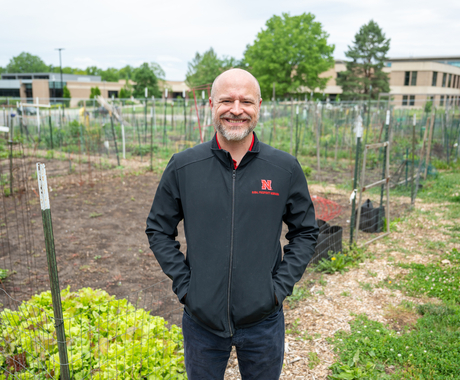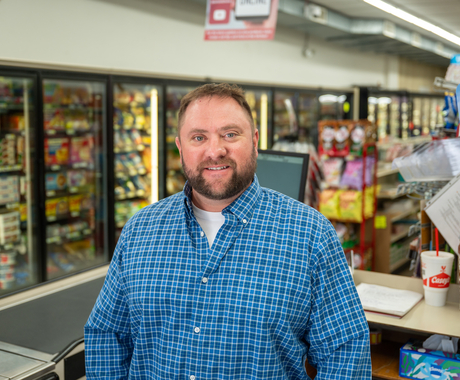

Cora Fox, policy associate, joined our organization in May. In our second highest viewed post of 2017, Cora shares that she looks forward coming back to her roots to work with Midwestern farmers, and talks about growing up in rural Iowa. She works primarily on agricultural policy, and can answer questions on our farm bill work or anything regarding "Answering the Call: Veteran Farmers Conference" set for March 24, in Hastings, Nebraska. We are glad to have her on our team.
Cora grew up in the middle of everywhere
I am an Iowa native, raised on a century farm in the heart of the Loess Hills. I grew up in Monona County, near the town with the little star on the hill, to be exact. As part of the sixth generation to live and work on my family farm, I’ve learned farming isn’t an occupation, but rather a livelihood.
Looking back, all of my favorite childhood memories happened on the farm. I remember spending countless hours exploring in the Loess Hills, following worn cattle trails and looking for Pasque flowers. I loved riding in the tractor with my dad and grandpa. During the summer, I’d pick apples from our orchard to make pie for the local county fair (Iowa State Fair-worthy, I might add).
Why is it we often want to get away from the rural way of life when we are young? In my high school years, I found myself wanting to live in a big city. I didn’t really have a reason other than wanting to experience something far different from what I had known.
I left home to start college at the University of Nebraska-Lincoln, studying political science. Though I enjoyed what I was studying, I felt an intrinsic motivation to serve my country and to be a part of something bigger than myself. After my freshman year, I decided I would enlist in the Air Force.
As an enlisted member in the Iowa Air National Guard, I spent most of the next four years supporting various contingencies worldwide, either deployed or on temporary duty in Operation Enduring Freedom and Operation Inherent Resolve. I commissioned in 2016 and currently serve as an officer.
During this time, I continued to further my education at Morningside College in Sioux City, Iowa. I graduated with a Bachelor of Arts, majoring in political science and minoring in environmental sustainability. I am currently pursuing a Masters in Public Health with an emphasis on health policy and ethics at Creighton University in Omaha, Nebraska.
Over the past year, life has drastically changed for me. I now serve in a part-time capacity, which allows me to pursue other ventures. I no longer keep packed bags by the door pending a call for the next trip halfway around the world. My boots aren’t worn; my hands aren’t covered in grease. Although I had loved my job in the Air Force, after each and every deployment and trip I found myself back on the farm. During these trips home, I developed a greater appreciation for rural Iowa and our family farm.
I think my parents knew all along I would come “home.” I didn’t just wake up one day to decide I would live on a farm the rest of my life. My life took a long, meandering path to where I am today. Though my experiences in the Air Force and in higher education have helped shape me, the rural way of life has always been a part of me.
Last week, I had a conversation with the Center’s executive director, Brian Depew. I casually mentioned I came from a rural county in the middle of nowhere. Brian made an insightful comment that really stuck with me — he’d stated that he disliked the phrase “the middle of nowhere.” After some thought, I responded, “You’re right, it’s the middle of everywhere.” Rural America isn’t empty, boring, or bland — it’s thriving, full of life, and anything but average.
I look forward to coming back to my roots and working with the most resilient, hardworking, and innovative people I know — Midwestern farmers. The Center for Rural Affairs has a longstanding history with the farming community, and I am excited to join the team. I understand many challenges rural communities face firsthand, and I am grateful for the opportunity to serve rural America.